The Château de Saumur is a historic fortress and museum situated on a hill overlooking the town of Saumur and the Loire River in western France. This guide covers opening hours, ticket prices, transport, parking, accessibility, and practical visitor tips.
This comprehensive visitor guide was updated in May 2026 to confirm that access to the panoramic belvedere is now strictly closed during heatwave alerts for safety and comfort reasons.
Quick facts
| Feature | Details |
| Opening hours | April to June: 10:00 to 18:00 (Tuesday to Sunday). |
| Ticket prices | Adults: €9.50. Reduced rate: €7. Children under seven: Free. |
| Address | Esplanade Hubert Landais, 49400 Saumur, France. |
| Nearest public transport or parking | Saumur railway station. Free on-site car park at the esplanade. |
| Typical time needed to visit | One and a half hours for the main museum. |
Château de Saumur opening hours
This French castle‘s schedule changes throughout the year, but it generally opens from Tuesday to Sunday and on bank holiday Mondays. During the spring months of April to June, the site is open continuously from 10:00 until 18:00. In July and August, it opens every day of the week from 10:00 to 19:00, including the major national holidays on July 14 and August 15.
During the quieter winter months, the site implements a strict lunch closure between 13:00 and 14:00, and shortens its afternoon hours until 17:30. The final entry time is always exactly 30 minutes before the scheduled closing hour. The attraction is entirely closed on Christmas Day, New Year’s Day, and for an annual maintenance break from the beginning of January until early February.
Château de Saumur ticket prices
Standard adult admission costs €9.50, while students, job seekers, and young people between seven and 18 years old pay a reduced rate of €7. Children under seven enter the site for free, and a dedicated family ticket for two adults and two children costs €26.50.
Opening hours and ticket prices were checked on the official website and last updated in May 2026.
Access to the guided belvedere tour requires an additional €3 supplement, and themed children’s tours require a €2 supplement. The site is part of the Pass destination Anjou scheme, which grants discounted admission to other regional heritage sites like the Château d’Angers, the Château de Brissac, and the Bioparc de Doué-la-Fontaine.
How to get to the Château de Saumur
The fortress is located in the town of Saumur, which sits between Angers and Tours in the Pays de la Loire region. Visitors can travel by train to the Saumur railway station, which is a 20-minute ride from Angers or a two and a half hour journey directly from Paris.
From the town centre, visitors can walk up to the elevated esplanade via a series of steep pedestrian paths. If you are arriving by car, you must navigate the local roads leading up from the riverbank to the dedicated castle grounds.
Parking at the Château de Saumur
Visitors driving private vehicles can use the large, free public car park located directly on the Esplanade Hubert Landais outside the main castle walls. This immediate proximity makes it exceptionally easy to park and walk straight to the entrance without a lengthy hike.
During peak summer weekends, this primary parking area can fill up quickly with tourist traffic and coach buses. If the esplanade is completely full, you must find paid municipal street parking down in the town centre and walk up the hill.
How long to spend at the Château de Saumur
According to the official site management, you should allocate one and a half hours to complete the self-guided tour of the primary museum rooms. This provides ample time to read the historical displays and navigate the interior courtyards.
If you book the supplementary guided tour of the elevated belvedere, you must add an extra 30 minutes to your schedule. Visitors exploring the exterior defensive ramparts and taking photographs of the Loire Valley often stay for two full hours.
Accessibility at the Château de Saumur
As a highly fortified historical monument, the site presents significant accessibility challenges for wheelchair users and those with restricted mobility. The primary approach features uneven cobblestones, and the interior museum spaces lack modern elevators to bypass the historical stone staircases.
The guided belvedere tour is completely inaccessible for visitors who cannot climb steep, narrow stairs. During extreme summer temperatures, the management will close the belvedere to all visitors due to safety concerns and a lack of comfortable ventilation.
Inside / what to see at the Château de Saumur
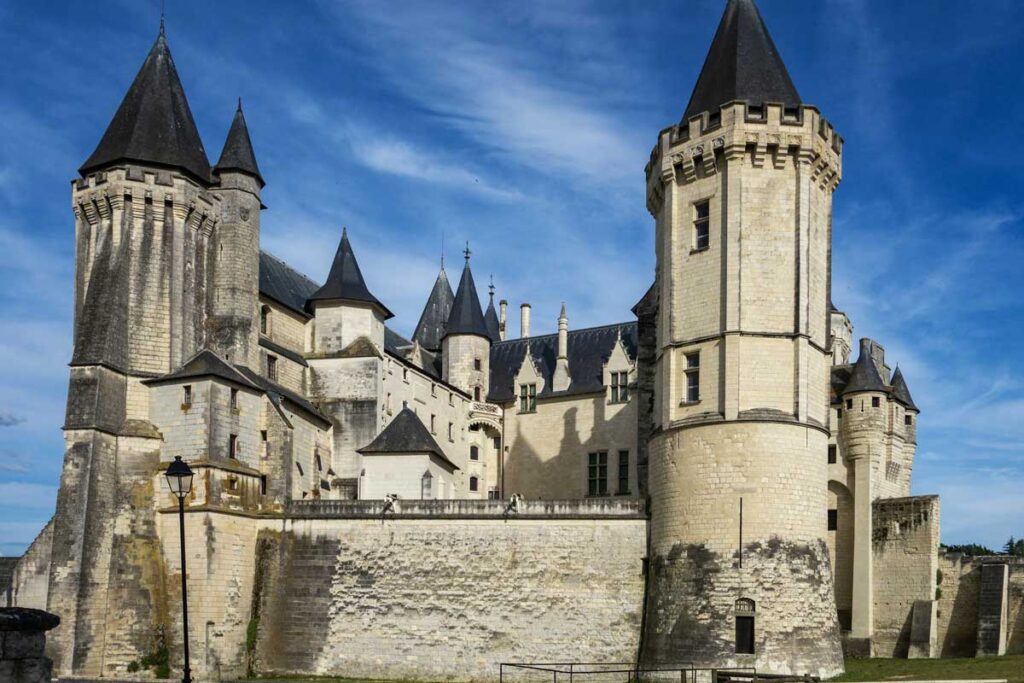
The interior of the fortress functions as a municipal museum rather than a traditionally furnished royal residence. The first floor houses the decorative arts collection, featuring extensive displays of medieval tapestries, historical furniture, and delicate ceramics from the local region.
A major highlight is the dedicated equestrian museum located within the historic abbey church on the grounds. This specific collection explores the history of horseback riding, showcasing an array of saddles, stirrups, and riding equipment spanning from antiquity to the early 20th century.
Visitors can walk through the central courtyard to observe the architectural transition between severe medieval military fortifications and later Renaissance residential alterations.
During the summer months, small groups can book the guided belvedere tour to access the highest points of the southern tower. This elevated vantage point provides spectacular, unobstructed panoramic views across the tiled roofs of the town and the expansive Loire River below.
Practical visitor tips
| Tip category | Advice |
| Timing | Arrive for the morning opening at 10:00 to explore the museum before the intense afternoon heat affects the upper floors. |
| Crowds | Visit during the shoulder season months of May or September to avoid the massive crowds that arrive in July and August. |
| Layout | Request the free tour leaflets provided at the front desk, which are available in seven different languages including English. |
| Entry process | You do not need to book a specific date or timeslot in advance, as individual tickets are sold directly at the entrance. |
| On-site logistics | You must book the supplementary guided belvedere tour in person at the front desk on the exact day of your visit. |
Frequently asked questions about the Château de Saumur
| Question | Answer |
| Is the Château de Saumur suitable for children? | Yes, children under seven enter for free, and there are themed activity tours available in French for a €2 supplement. |
| Do you need to book tickets in advance for the Château de Saumur? | No, individual visitors do not need to reserve entry times or purchase standard museum tickets before arriving. |
| Is the Château de Saumur open on Sundays? | Yes, the castle is open every Sunday during its operational season, but it is closed completely in January. |
| Are bags allowed at the Château de Saumur? | Small day bags and standard rucksacks are permitted, but bulky luggage cannot be brought into the historical museum rooms. |
| Are dogs allowed at the Château de Saumur? | No, dogs and other pets are strictly prohibited from entering the castle grounds, except for registered assistance animals. |
Things to do near the Château de Saumur
- Cadre Noir de Saumur: The prestigious French national riding school offering guided tours of the stables and public equestrian gala performances.
- Musée des Blindés: A massive military history museum displaying one of the world’s largest collections of historic tanks and armoured vehicles.
- Bouvet-Ladubay: A historic local winery offering guided underground tours of their extensive tufa chalk cellars and sparkling wine tastings.
- Musée du Champignon: An unusual subterranean museum dedicated entirely to the cultivation and history of edible mushrooms in the local caves.
- Pierre et Lumière: An underground attraction featuring intricate miniature sculptures of famous Loire Valley landmarks carved directly into the soft tufa rock.
What to visit tomorrow
- Château d’Angers: A massive medieval fortress located down the river, famous for its distinctive striped towers and the Apocalypse Tapestry.
- Château de Brézé: A unique historic castle known for its extraordinary network of deep dry moats and extensive underground troglodyte tunnels.
- Château de Villandry: A Renaissance castle situated near Tours, universally celebrated for its meticulously restored formal geometric gardens and water features.
- Château d’Azay-le-Rideau: An elegant, early Renaissance chateau built on an island in the Indre River, noted for its romantic reflecting pools.
- Château de Chinon: A ruined medieval fortress situated on a rocky outcrop above the Vienne River, heavily associated with Joan of Arc.
More France travel
Other France travel guides on Planet Whitley include:
- Planning a visit to Gavarnie Falls.
- Practical guide to visiting the Palais des Papes in Avignon.
- French castle guides: Foix Castle near Toulouse, Chateau de Castelnaud in the Dordogne, plus Chenonceau Castle, the Chateau de Bouges and Chambord Castle in the Loire Valley.
- Important visitor information for Chateau de Compiegne and Chateau de Pierrefonds in Hauts-de-France.
- Visitor guides for National Monuments around Paris: The Chateau de Vincennes, the Chateau de Maisons and Villa Savoye..