
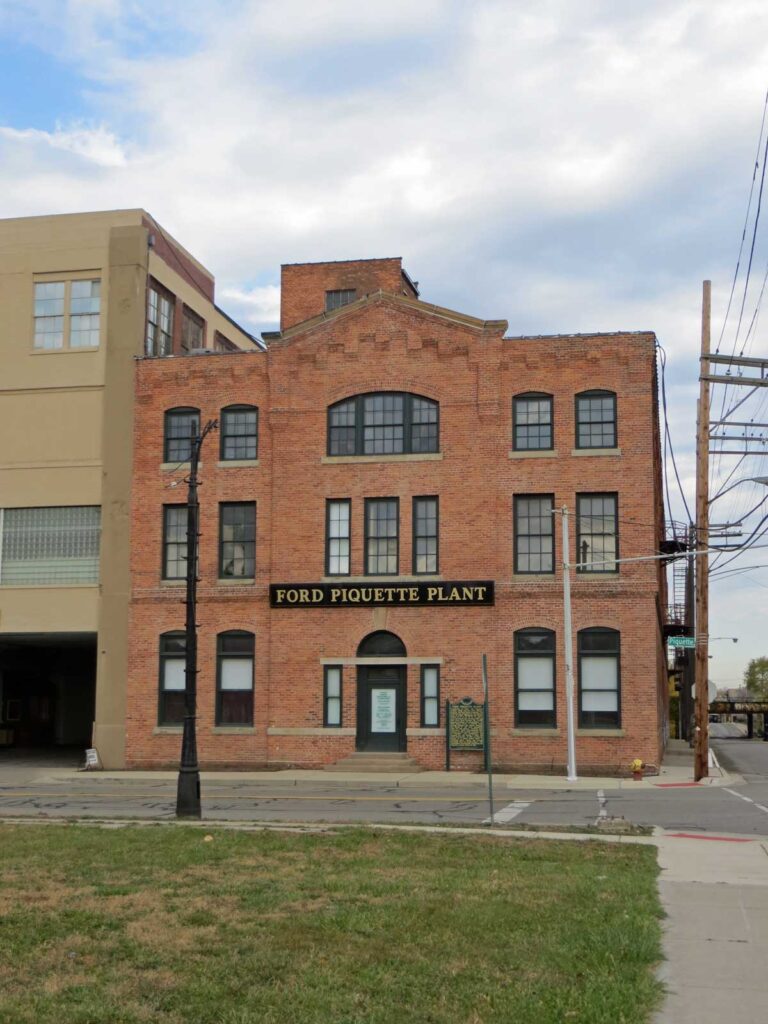
The modest-looking Ford Piquette Avenue Plant in Detroit is one of the most important sites in motoring history. It was here that Henry Ford developed the revolutionary Model T, the car that helped put the world on wheels.
The birthplace of mass motoring
The factory does not initially look all that impressive. It has been refurbished somewhat since the first decade of the 20th century, but the building still appears relatively stripped back, its large rooms filled with historic vehicles.
Those vehicles, however, carry immense significance. Even visitors with little interest in cars can sense the history inside the Ford Piquette Avenue Plant.
This is effectively where modern motoring began.
Henry Ford’s ambition
Henry Ford did not invent the car. That achievement is usually credited to Karl Benz in Germany.
What Ford did manage was arguably just as transformative. He made the automobile affordable enough for ordinary people to buy.
The story of how he achieved that goal is what makes a visit to the Piquette Plant so interesting.
Henry Ford’s early failures
Ford’s first attempt at building cars lasted less than 18 months.
The vehicles he produced for the Detroit Automobile Company were considered too expensive and too unreliable to succeed.
At the same time, however, Ford was secretly working on a different project – building a race car. That car proved successful and helped spread his reputation.
The company that became Cadillac
Ford’s second attempt came with the creation of the Henry Ford Company.
Despite the name, Ford himself was not fully in charge. After disagreements with investors – largely because he continued designing racing cars – he was pushed out of the business.
The company later changed its name to Cadillac.
Ford soon gathered a new group of investors and began his third attempt.
The rise of the Ford Motor Company
The Ford Motor Company quickly expanded. Soon after launching, it purchased the factory on Piquette Avenue in Detroit.
In 1904, the factory employed around 30 workers. By 1910, that number had grown to more than 1,000.
The breakthrough came in October 1908, when the Model T was introduced.
The revolutionary Model T
The Model T Ford finally delivered Ford’s vision: a reliable car that could be mass-produced at a price ordinary people could afford.
For many years, more than half of all cars being driven worldwide were Model Ts.
Achieving that success required a major internal battle. Early investors pushed Ford to produce more luxurious cars in order to maximise profits.
Only when Ford gained greater control of the company in 1906 could he fully pursue his goal of creating an affordable vehicle.
The Henry Ford Museum in Dearborn
The best place to see a Model T today is the Henry Ford Museum in Dearborn, just a few miles west of central Detroit.
Many visitors consider it one of the finest museums in the world.
Among the exhibits are the chair President Abraham Lincoln was sitting in when he was assassinated, the bus associated with Rosa Parks and the American civil rights movement, and the car in which John F. Kennedy was assassinated.
Unsurprisingly, that vehicle is also a Ford.
Inside the Model T exhibit
The museum’s Model T display is particularly striking.
The car is presented in pieces, with each component arranged in its correct position – as if the vehicle has been carefully exploded apart.
The exhibit also explains the revolutionary production line system introduced when Ford moved operations from Piquette Avenue to the much larger Highland Park Plant.
The assembly line revolution
The assembly line dramatically accelerated car production.
Processes became so streamlined that a complete car could be built in just 93 minutes.
Film footage from the era shows how repetitive the work was. Ford tackled worker boredom and high staff turnover by introducing a dramatic pay rise.
Workers were paid $5 a day – more than double the previous wage.
How the Model T changed the world
Better wages had another advantage for Ford.
Well-paid factory workers were more likely to buy the cars they helped produce. The Model T quickly became the obvious choice.
In total, more than 15 million Model Ts were built.
Even after production of the car stopped, replacement engines continued to be manufactured for many years.
The final Model T
The last Model T rolled off the production line in March 1927.
Behind the wheel sat Henry Ford’s son. In the passenger seat was Henry Ford himself – the man who transformed how people travel.
Nearby attractions to the Ford Piquette Avenue Plant
- The Henry Ford Museum: One of the largest and most important museums in the United States, covering innovation, transport and American history.
- Greenfield Village: An outdoor living history museum featuring historic buildings and demonstrations of early American life.
- Motown Museum: The original studio where many of the legendary Motown records were recorded.
- Detroit Institute of Arts: Major art museum known for its extensive global collections and the famous Diego Rivera murals.
- Belle Isle Park: A large island park in the Detroit River offering gardens, waterfront views and historic buildings.
Ford Piquette Avenue Plant visitor information
| Question | Answer |
|---|---|
| Where is the Ford Piquette Avenue Plant? | The Ford Piquette Avenue Plant is located in Detroit, Michigan, in the United States. |
| Why is the Ford Piquette Avenue Plant important? | It is the factory where Henry Ford developed the Model T, the car that helped make motoring affordable to the general public. |
| Can you see a Model T at the Piquette Plant? | Yes. Historic Model T vehicles and other early Ford cars are displayed inside the museum. |
| Where is the Henry Ford Museum? | The Henry Ford Museum is located in Dearborn, Michigan, just a short drive from central Detroit. |
| When did Model T production end? | The final Model T rolled off the production line in March 1927 after more than 15 million cars had been produced. |
Disclosure: This guide contains affiliate links. If you book through them, I may earn a small commission at no extra cost to you.

