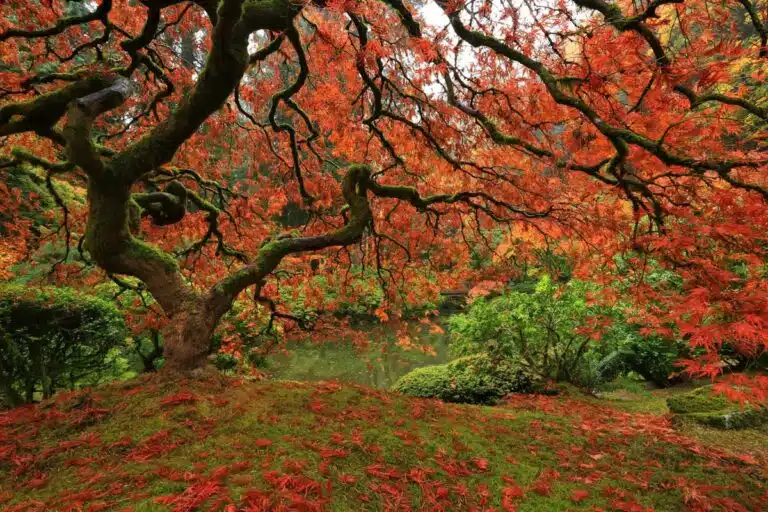
Portland is one of America’s most distinctive cities — a place with a genuine independent character shaped by its bookshops, food carts, craft breweries, and an almost stubborn commitment to doing things differently. Straddling the Willamette River in the shadow of Mount Hood, it combines a walkable, neighbourhood-driven city core with outstanding green spaces including Washington Park, which alone contains a world-class zoo, one of the finest Japanese gardens outside Japan, and the country’s oldest public rose test garden. Beyond the parks, Portland rewards those willing to dig into its stranger history — the network of underground passages known as the Shanghai Tunnels offers one of the more unusual historical tours in the Pacific Northwest. These guides cover Portland’s key attractions with practical information on ticket prices, opening hours, and what to expect on arrival.
Washington Park: Portland’s Premier Green Space
Washington Park sits on the forested hills west of downtown and contains several of Portland’s most-visited attractions within a short distance of each other. It’s worth planning a dedicated half-day or full day here rather than treating each attraction as a separate trip — a shuttle bus connects the main sites within the park, and combination tickets are available for some attractions.
- Oregon Zoo Portland: ticket prices, opening hours and visitor guide — one of the most visited zoos in the Pacific Northwest, with notable elephant, great cat and Steller sea lion habitats, and a scenic railway running through the park.
- Portland Japanese Garden: ticket prices, hours and must-know visitor tips — widely regarded as one of the most authentic Japanese gardens outside Japan, with eight distinct garden styles spread across 12 acres above the city.
- International Rose Test Garden Portland: visitor guide with hours and admission information — the oldest continuously operating public rose test garden in the United States, with over 10,000 rose plants and panoramic views toward Mount Hood on clear days.
- Hoyt Arboretum, Portland: What to see, best walks and opening times — an extraordinary of 6,000 trees, representing 2,300 species from around the world.
- World Forestry Center, Portland: Opening hours, ticket prices and visitor guide — the Discovery Center is devoted to the Pacific Northwest eco-system and the role of trees, with the five screen immersive theatre the highlighy.

Portland City Attractions and Experiences
Away from Washington Park, Portland’s city centre and surrounding hills offer a mix of architectural history, underground legends, and the kind of self-aware cultural character that has made the city famous — and frequently caricatured. These guides look at what Portland is actually like to visit, and cover two of the city’s most interesting non-park attractions.
- Pittock Mansion Portland: ticket prices, opening hours and visitor guide — a beautifully restored 1914 French Renaissance château in the West Hills, with remarkable interiors and views across Portland to Mount Hood and Mount St Helens.
- Portland Shanghai Tunnels tour: the city’s underground history — a guided tour through the subterranean passages beneath Old Town, exploring Portland’s 19th-century reputation for crimping, vice and the press gangs who gave the tunnels their name.
- Is Portland really full of hipsters? An honest assessment of the city’s reputation — a frank look at what Portland is actually like to visit, who it suits, and how much truth there is behind the cultural clichés.
- Portland Art Museum guide: What to expect after the multi-million dollar renovation.
- All you need to know about visiting the Lan Su Chinese Garden in Portland.
Planning Your Portland Visit
Portland is a walkable city with good public transport, and TriMet’s MAX light rail connects the airport directly to the city centre. Washington Park is served by the MAX Blue and Red lines, though the stop sits at the bottom of the hill — the free park shuttle is the most practical way to move between attractions once you’re up there. Portland’s mild but wet climate means rain gear is advisable for most of the year; the driest months are July and August, which also coincide with peak rose season at the International Rose Test Garden. Most major attractions are open year-round, though hours are reduced in winter.
How many days do you need in Portland?
Two to three days covers Portland’s main attractions comfortably. A first day dedicated to Washington Park — combining the Japanese Garden, Rose Test Garden and Oregon Zoo — accounts for a full day if you take your time. A second day works well for the city centre: the Pittock Mansion, a walk through the Pearl District, Powell’s Books, and an evening in one of the city’s neighbourhood restaurants. Three days allows you to add a day trip to the Columbia River Gorge or Mount Hood.
What is Portland, Oregon best known for?
Portland is best known for its food cart scene, craft beer culture, Powell’s Books (one of the world’s great independent bookshops), and Washington Park’s gardens and zoo. It has a strong reputation as one of America’s most progressive and idiosyncratic cities, and a sometimes-exaggerated association with hipster culture that the city itself tends to treat with good humour. The Columbia River Gorge — easily reached as a day trip — is one of the most dramatic natural landscapes in the Pacific Northwest.
Is Portland safe to visit?
Portland’s tourist areas — Washington Park, the Pearl District, Nob Hill, and most of the city’s main attractions — are safe and pleasant to visit. Like many American cities, Portland has areas with visible homelessness and social deprivation, concentrated in parts of Old Town and along some downtown streets. This can be surprising to first-time visitors but doesn’t meaningfully affect most sightseeing itineraries. Standard city-travel awareness applies.