
Visitor tips for Tangalooma dolphin feeding on Moreton Island, Queensland. Learn how the evening wild dolphin encounter works, how to reach the island from Brisbane, and what to expect at this popular coastal attraction.
Watching the Tangalooma dolphin feeding
As the rangers stand at the water’s edge, their backs are turned to the buckets of fish behind them.
This presents a perfect opportunity for a brazen pelican to wander in and help itself. The bird casually dips into the bucket and grabs a fish, to the amusement of the crowd, until one of the rangers notices and chases it away with an umbrella.
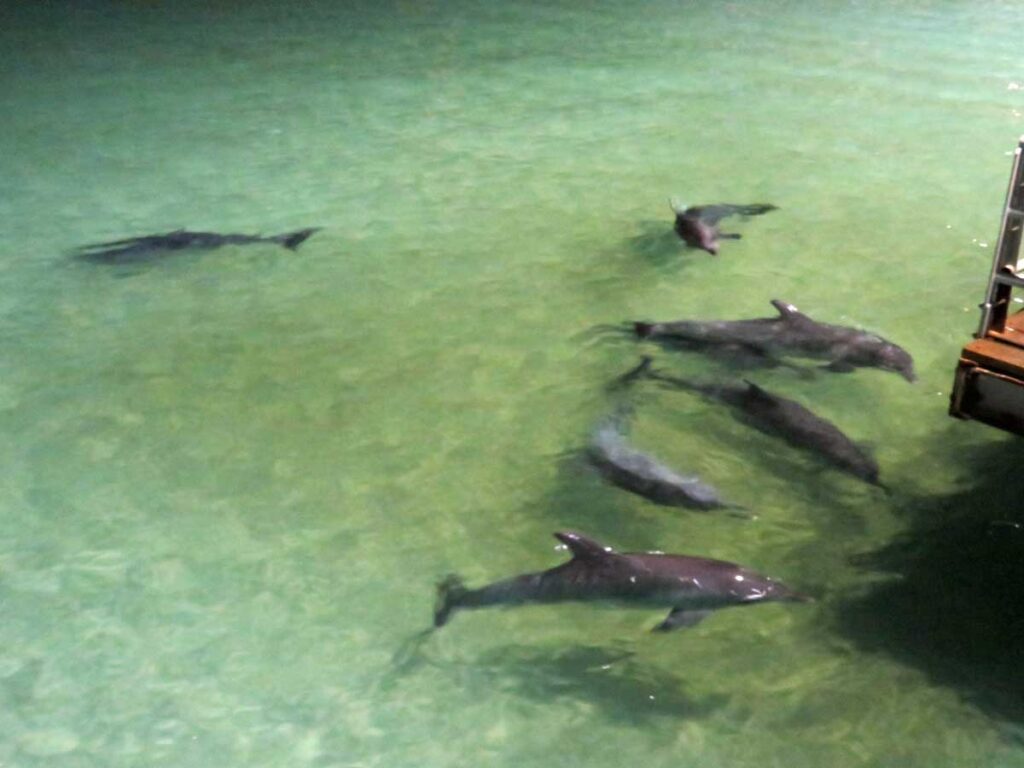
The fish, however, are not intended for pelicans. They are meant for the wild dolphins of Moreton Island, which arrive each evening at Tangalooma Resort.
Hundreds of resort guests and day visitors gather by the jetty at sunset, waiting for the dolphins to appear.
Where Moreton Island is located
Moreton Island lies about a 75 minute ferry journey from Brisbane.
The island offers spectacular coastal scenery and a surprisingly wide range of outdoor activities.
Many visitors come for snorkelling trips around the Tangalooma Wrecks, kayaking tours, fat biking along the beach or sandboarding down the island’s enormous inland dunes.
Despite this long list of activities, the Tangalooma dolphin feeding experience remains the main attraction.
Why book the Moreton Island Kayaking & Sandboarding Tour?
- 🤿 Tangalooma Wrecks Snorkeling: Dive into the crystal-clear waters to explore 15 deliberately sunken shipwrecks that are now home to a vibrant array of tropical fish and marine life.
- 🛶 Transparent Kayaking: Glide over the wrecks in a unique clear-bottom kayak, offering a “window” to the reef and coral below as you paddle through the turquoise bay.
- 🏜️ High-Speed Sandboarding: Head to “The Desert” for an adrenaline-pumping experience, sliding down massive sand dunes at speeds of up to 40km/h on a waxed board.
- 🚐 4WD Island Adventure: Travel across the rugged terrain of the world’s third-largest sand island in a specialized 4WD vehicle, reaching hidden spots inaccessible to standard cars.
- 🥪 Beachside Picnic Lunch: Take a break from the action with a fresh, buffet-style picnic lunch served right on the pristine white sands of Moreton Island’s coast.
The history of Tangalooma Resort
The setting may feel peaceful today, but the location once had a very different purpose.
In the centre of the resort stands a simple open-air concrete structure. It now contains table tennis tables and a basketball hoop.
Originally, however, it served as the flensing deck of the Tangalooma Whaling Station.
The station opened in 1952, taking advantage of Moreton Island’s sheltered waters, reliable bore water and proximity to the major shipping port in Brisbane. The site also sat along a key humpback whale migration route.
By the time the station closed ten years later, whale numbers had been dramatically reduced. Humpback populations have only gradually recovered since that period.
How the dolphin feeding tradition began
The property was converted into a resort in 1963. In 1980, regular visitors the Osborne family purchased the site.
They soon noticed that the lights on the jetty attracted bait fish at night.
These small fish in turn began attracting dolphins.
The most frequent visitor was a dolphin originally named Eric. In 1986, Eric appeared with a calf and was renamed Beauty.
Beauty gradually began accepting fish thrown into the water by fishermen on the jetty.
The start of the Tangalooma dolphin feeding programme
Concerned about the quality of fish being given to the dolphins, Betty Osborne started leaving a bucket of fresh fish on the jetty.
Guests could throw the fish into the water for Beauty.
In 1992, the resort began the first controlled hand-feeding experiment.
Beauty started approaching in shoulder-deep water to take fish directly from Betty’s hand. Soon afterwards, she began encouraging her calves to do the same.
5 Great Brisbane Experiences to Book
- 🛴 Sightseeing Segway Tour: Glide past the city’s most iconic landmarks and scenic riverfront paths on a fun, guided Segway adventure.
- 🐨 Lone Pine Koala Sanctuary Cruise: Enjoy a relaxing boat trip down the Brisbane River followed by a visit to the world’s oldest and largest koala sanctuary.
- 🏝️ Moreton Island Day Trip: Head to the coast for an action-packed day of snorkeling through shipwrecks, kayaking, and sandboarding down giant dunes.
- 🧗 Kangaroo Point Abseiling: Challenge yourself by descending the iconic cliffs for a unique adrenaline rush and spectacular views of the city skyline.
- 🌉 Story Bridge Adventure Climb: Scale one of Brisbane’s most recognizable structures to see the city from a breathtaking 360-degree perspective.
Rules that protect the wild dolphins
As more dolphins from the local pod began appearing at the jetty, the resort introduced rules to ensure the animals remained wild.
Feeding is limited to specific times in the evening and never continues beyond 9pm.
After consultation with marine biologists, another important rule was introduced.
No dolphin can receive more than 20% of its normal daily food intake from hand-feeding.
This ensures the animals continue to hunt naturally in the ocean.
The dolphin family at Tangalooma
Beauty was last seen in 1995, but her influence continues.
Many of the 14 dolphins that regularly visit the jetty are believed to be her children or grandchildren.
Their family tree and history are explained at the resort’s Eco-Centre, where the dolphins are discussed with unmistakable affection.
The tone can feel almost like a proud family member recounting stories about beloved relatives.
From whaling station to wildlife attraction
The transformation of Tangalooma is striking.
The same shoreline that once supported industrial-scale whaling now hosts one of Queensland’s most popular wildlife encounters.
Watching wild dolphins glide through the shallows at sunset offers a reminder of how much attitudes towards marine life have changed.
The pelican, however, remains unimpressed by the symbolism. As soon as the rangers turn their backs, it heads straight back towards the fish bucket.
Things to do near Tangalooma Resort
- Tangalooma Wrecks snorkelling: Explore the line of deliberately sunk ships that create a popular snorkelling site.
- Moreton Island sandboarding: Slide down the massive sand dunes at speeds that can reach 40mph.
- Moreton Island kayaking tours: Paddle along the coast with opportunities to spot turtles and dolphins.
- Moreton Island fat biking: Cycle along the wide sandy beaches using specially designed bikes.
- Cape Moreton Lighthouse: Visit Queensland’s oldest lighthouse for sweeping views over the island.
Tangalooma dolphin feeding visitor information
| Question | Answer |
|---|---|
| Where is Tangalooma Resort? | Tangalooma Resort is located on Moreton Island in Queensland, Australia, about 75 minutes by ferry from Brisbane. |
| When does the Tangalooma dolphin feeding take place? | The dolphin feeding usually occurs after sunset, with sessions ending before 9pm. |
| Are the dolphins wild at Tangalooma? | Yes. The dolphins that visit the jetty are wild dolphins, and feeding is limited to ensure they continue hunting naturally. |
| How many dolphins visit Tangalooma? | About 14 dolphins regularly visit the resort jetty, many believed to be descendants of the original dolphin known as Beauty. |
| How do you get to Moreton Island? | Visitors typically reach the island via a ferry service from Brisbane, which takes around 75 minutes. |
More Brisbane travel
Other Brisbane travel articles on Planet Whitley include:
- Plan your visit to the Lone Pine Koala Sanctuary in Brisbane.
- Guide to Old Government House in Brisbane.
- Plan your visit to the Queensland Maritime Museum in Brisbane.
- Why it’s worth popping into St John’s Cathedral in Brisbane.
- See the city from above with the Story Bridge Adventure Climb.
Disclosure: This guide contains affiliate links. Book through them, and I earn a small commission at no extra cost to you.

