South Carolina‘s coastline is one of the finest stretches of bottlenose dolphin habitat on the US Atlantic seaboard. The state’s network of tidal creeks, salt marshes and sheltered sounds creates ideal conditions for the resident pods that live here year-round. Add the Intracoastal Waterway threading its way from Myrtle Beach to Hilton Head and you have a continuous corridor of productive dolphin habitat backed by some of the most atmospheric coastal scenery in the American South.
Sightings are reliable at every location below. South Carolina dolphins are year-round residents, not seasonal visitors, though numbers and activity vary. Summer and early autumn see the most surface activity. The Lowcountry’s salt marshes, shrimping culture and barrier island geography give each location a distinctly different character.
Hilton Head Island
Hilton Head Island is the undisputed centre of South Carolina dolphin tourism. The island sits at the confluence of Port Royal Sound, Calibogue Sound and Broad Creek — a tidal maze that supports a large, well-studied resident population of Atlantic bottlenose dolphins. They bow-ride alongside boats, feed in the shallows around oyster beds and are visible from the beach at low tide.
Several operators run dolphin-focused cruises from Hilton Head’s marinas. The guided dolphin-spotting wildlife boat tour from Hilton Head Harbour Marina has over 1,500 reviews and is consistently rated among the top wildlife experiences on the island. Guides cover dolphin biology and behaviour while navigating the sounds and creek systems where the pods are most reliably found.
For something more intimate, a sunset dolphin cruise from Harbour Town departs from below the famous Harbour Town Lighthouse as the light turns amber over Calibogue Sound. An onboard naturalist provides commentary. Reviewers frequently note dolphins surfacing directly alongside the vessel in the golden-hour light — this is one of the more photogenic dolphin experiences in the state.
Kayakers have good options too. The Broad Creek Estuary is calm, sheltered and rich in dolphin activity. Several operators run guided kayak tours through this area, with dolphins a near-certain sighting among the herons, egrets and oystercatchers of the salt marsh edge.
Charleston and Folly Beach
Charleston is not usually marketed as a dolphin destination, but the tidal waterways surrounding the city — Folly River, Folly Creek, the marshes around the Hammock Islands — hold a healthy resident pod and are easily accessible from the city. The combination of dolphin watching and Charleston’s exceptional food and architecture makes this one of the most satisfying wildlife stops in the South.
Five great things to do in Charleston
- ⛴️ Enjoy a luxury dinner cruise – on Charleston Harbour with live music.
- 🏰 Take the ferry to Fort Sumter – where the American Civil War started.
- 🍴 Taste the best of the French Quarter – on a food tour with multiple tastings.
- 🐎 Take a horse-drawn carriage ride – past historic mansions, churches and sights.
- 📚 Guided by a professor of history – enjoy an absorbing historical walking tour.
A two-hour dolphin boat tour from Folly Beach explores the barrier island coastline and the tidal creeks south of Charleston, landing on Morris Island for a beach stop beside the historic lighthouse. Captains cover the area’s pirate history alongside the wildlife. The distinctive pluff mud — the pungent, dark estuary sediment that defines Lowcountry tidal flats — makes an appearance on most tours.
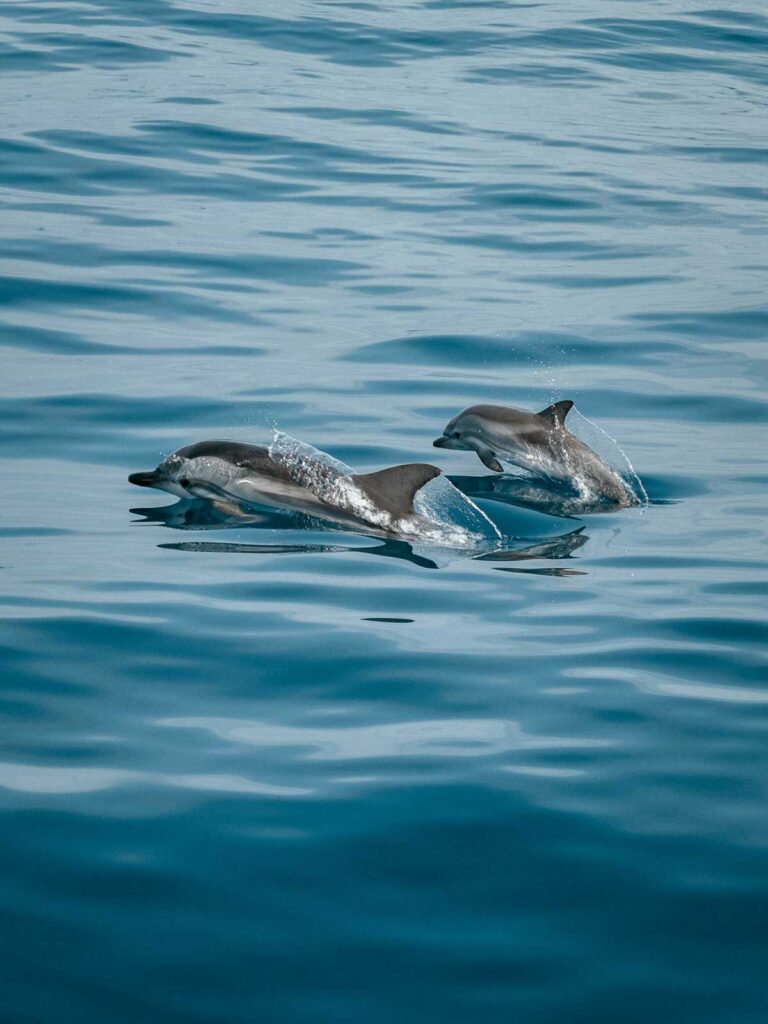
The same waters are excellent by kayak. A small-group kayak eco tour paddles through the tidal marshes and creeks around Folly Creek and the Hammock Islands, with dolphin sightings alongside loggerhead turtles, pelicans and the occasional manatee. Groups are capped at 12 and the pace is deliberately unhurried. Multiple reviewers describe watching dolphins fish in the shallows just metres from their kayak.
For a more scenic approach, a classic tall ship cruise on Charleston Harbour sails past Fort Sumter and the Arthur Ravenel Jr Bridge with dolphins a regular sighting in the harbour approaches. The 84-foot schooner runs morning and afternoon departures and is a particularly atmospheric setting for dolphin watching in a historically rich landscape.
Myrtle Beach
Myrtle Beach is better known for its golf courses, amusement parks and seafood restaurants than for wildlife. But the Intracoastal Waterway running behind the barrier strand here holds a resident dolphin population, and the Atlantic just offshore is productive territory for common dolphins and, during the right season, spotted dolphins moving in from deeper water.
A dolphin cruise from Myrtle Beach travels from the Intracoastal Waterway and out into the Atlantic, passing the coastlines of Calabash and Sunset Beach on the North Carolina border. Reviewers report consistently high sighting numbers — one describes seeing more than 60 dolphins on a single trip. The captain and crew are noted for their knowledge and their ability to locate the pods quickly.
The Myrtle Beach area is less studied and less celebrated than Hilton Head or Charleston as a dolphin destination, but the sheer numbers visible on good days make it a strong option for families based in the resort area.
Beaufort and the sea islands
Beaufort, a small antebellum city between Charleston and Hilton Head, sits at the edge of one of the most extensive salt marsh systems on the Atlantic coast. The sea islands surrounding the town — St Helena, Lady’s, Port Royal, Cat Island — are separated by tidal creeks and sounds that form the heart of the ACE Basin, one of the largest undeveloped estuaries in the eastern United States.
Dolphin sightings in and around Beaufort are common but largely self-guided. The town’s waterfront gives views over the Beaufort River, where dolphins surface regularly. Charter boats and kayak rentals operate from the marina, and the surrounding sea island waterways — particularly around St Helena Sound and the channels of the ACE Basin — are productive territory for independent paddlers.
This is the quietest and most atmospheric of the South Carolina dolphin destinations. Beaufort itself rewards time — its antebellum streetscapes, oyster bars and proximity to Hunting Island State Park (one of the few remaining maritime forests in the state) make it an excellent base for a couple of days of Lowcountry exploration beyond the dolphin watching.
Practical tips for seeing dolphins in South Carolina
Year-round versus seasonal
South Carolina’s bottlenose dolphins are permanent residents — they do not migrate. Sightings are possible in every month of the year. Summer and early autumn produce the most surface activity, including feeding, play and calf behaviour. Winter sightings are less dramatic but entirely reliable, particularly in the sheltered sounds around Hilton Head and Beaufort.
Strand feeding
South Carolina’s Lowcountry is one of the few places in the world where bottlenose dolphins practise strand feeding — a cooperative hunting behaviour in which a pod herds fish onto a mudflat, then lurches onto the bank to catch them before sliding back into the water. It is extraordinary to witness and is specific to this stretch of the South Atlantic coast. Ask your tour guide about the best locations and timing.
What to bring
South Carolina in summer is hot and humid. Sunscreen, a hat and water are non-negotiable on any boat or kayak tour. Afternoon thunderstorms are common from June to September — morning departures are more reliably comfortable. Polarised sunglasses make a significant difference when spotting dolphins in the bright coastal light.