Planning a visit to Tiritiri Matangi Island from Auckland? This guide explains the remarkable New Zealand bird sanctuary, the rare species you can see, and the conservation story behind Tiritiri Matangi Island.
The little fella bobs along the seaweed washed up on the beach, clearly in search of something to eat. The North Island saddleback is only a small bird with a distinctive brown patch on its back, and it shouldn’t get you as excited as, say, a panda or tiger sighting. But that it exists at all is a remarkable story.
Tiritiri Matangi – a 75 minute ferry ride from downtown Auckland – is one of several offshore islands that New Zealand has turned into sanctuaries for its native birds. Some of these are essentially closed off to all but the Department of Conservation and scientists, but Tiritiri Matangi is kept open to visitors in an ambassadorial role. Essentially, seeing what’s being done here gives a window into the heroic work being done elsewhere to stop these birds fluttering off into extinction.
Why book the Tiritiri Matangi Island Discovery?
- 🐦 Rare & Endangered Birdlife: Spot some of New Zealand’s rarest avian residents, including the prehistoric-looking Takahē, the North Island Robin, and the melodious Kōkako in their predator-free sanctuary.
- 🚢 Scenic Hauraki Gulf Cruise: Enjoy a relaxing ferry ride through the sparkling waters of the Hauraki Gulf, often accompanied by sightings of dolphins or seabirds before you even reach the island.
- ⚓ NZ’s Oldest Working Lighthouse: Visit the historic 1864 Tiritiri Matangi Lighthouse, a beautifully preserved landmark that provides panoramic views over the ocean and the distant Auckland skyline.
- 🚶 Expert Volunteer-Led Walks: Enhance your visit with a guided walk led by passionate volunteers who share the incredible story of the island’s reforestation and help you identify unique bird calls.
- 🏖️ Pristine Beaches & Trails: Hike through lush native bush or relax on the white sands of Hobbs Beach, offering a peaceful environment for a picnic or a swim in crystal-clear waters.
Why New Zealand’s native birds became endangered
Fate has thrown the mother of all curve balls at New Zealand’s bird life. The land broke off from the Gondwana supercontinent before mammals came on the scene, which allowed the birds millions of years to evolve in isolation.
With the only danger coming from the air, many species learned that the best way to avoid being eaten was to just sit still so falcons and swamp harriers couldn’t see them moving. Some stopped flying altogether, preferring to just scuttle along in the leaf litter.
Then, between 800 and 1,000 years ago, incredibly late in the evolutionary scale, the Maori showed up. And they brought rats and dogs with them. Suddenly the tactic of just sitting quietly on the ground was catastrophically counterproductive.
Five great things to do while you’re in Auckland
- Spot whales and dolphins on a half day Hauraki Gulf Marine Park cruise.
- Indulge in Waiheke Island’s finest produce on a food and wine tour.
- See the city from above at the top of the Auckland Sky Tower.
- Enjoy a sunset cruise on Auckland Harbour – with a three course dinner.
- Explore Auckland’s wild side – visiting the city’s black sand beaches and rainforest.
The impact of introduced predators on New Zealand bird species
Then came the Europeans, with their cats and stoats and ferrets, stripping the natural habitat as they went. For the native birds, this became a bloodbath of epic proportions, with some species only surviving in remote mountain valleys or on offshore islands that the interlopers weren’t much interested in. In the saddleback’s case, there were just 500 left in total, all on Hen Island in the country’s far north.
Intervention came just in the nick of time. Thomas Potts, a naturalist from Dunedin, first proposed island sanctuaries in the 1870s. The first temporary sanctuary was set up in 1891, with a permanent haven being declared on Little Barrier Island in 1895.
Tiritiri Matangi conservation and Predator-Free 2050
Little Barrier Island is visible from the hilltop on Tiritiri Matangi, and is off-limits to the public. Many of the birds on Tiritiri Matangi have been translocated from there in a bid to expand the range of the threatened species.
This before-its-time conservation drive has now morphed into one of the most ambitious environmental projects on earth – Predator-Free 2050. New Zealand is attempting to eradicate all introduced mammalian predators by the middle of the century, and the islands are the trailblazers. The interim aim is to eradicate all island nature reserves of non-native predators by 2025. Tiritiri Matangi had a head start – it was already largely free of the pests, and a controversial poison drop in 1993 did for the remaining Polynesian rats.
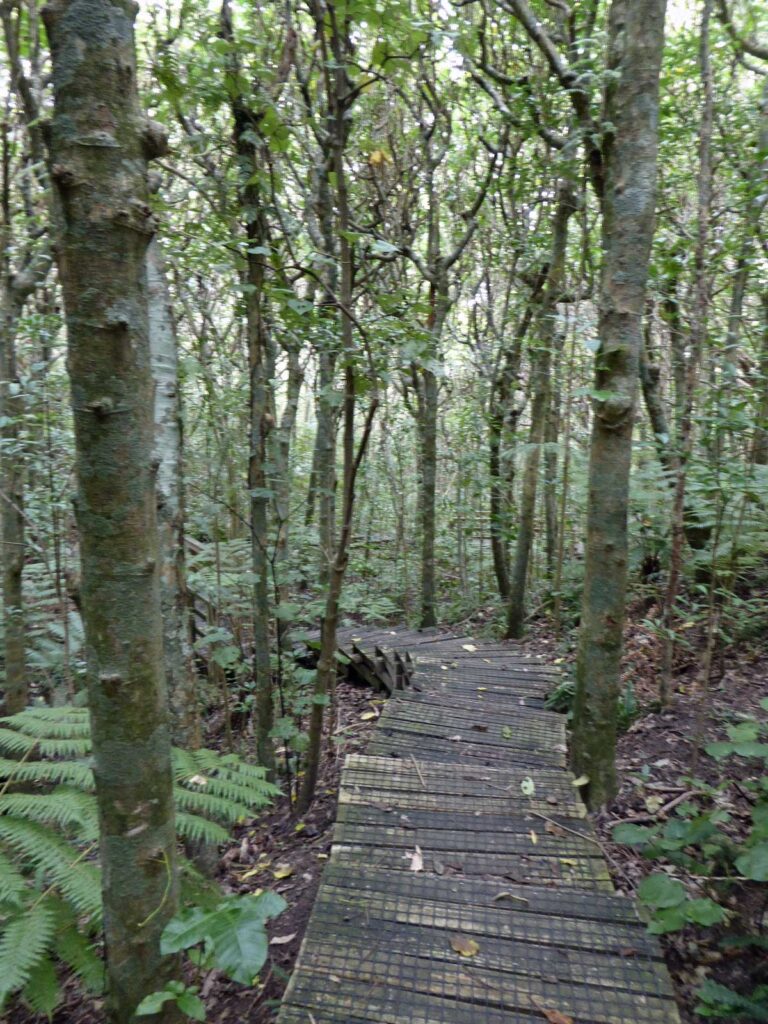
Walking trails and forest regeneration on Tiritiri Matangi Island
But it’s not just about the birds, as becomes clear on the guided walk from the ferry wharf up to New Zealand’s oldest working lighthouse. For the volunteers who lead the walks, this is the easy job. They get to walk through the forests, pointing out the flax plants used for weaving and the red-flowering pohutukawas that are known as the New Zealand Christmas tree.
But those forests didn’t exist thirty years ago. Old photos by the wharf show how bare Tiritiri Matangi once was in its former incarnation as a farm. Once it became clear that the island wasn’t going to regenerate on its own accord, a massive planting programme was embarked upon. Between 1984 and 1994, 283,000 trees were planted.
Rare birds to see on Tiritiri Matangi Island
The results, combined with the translocation of birds from elsewhere, are extraordinary. The birdsong in the forest is a near constant. Tiny riflemen shoot through, as noisy green bellbirds and bright blue kokako drop into feeding stations. Somewhere in there are the little spotted kiwis, but New Zealand’s totemic animal is unlikely to stir until dusk.
Then, near the top of the hill, comes the most remarkable sighting of all. Two robust strutters with distinctive red beaks are ambling along the track. They are takahe, a bird so rare that they were thought extinct for fifty years until a few survivors were found in a nigh-on inaccessible alpine valley. Even today, there are only around 275 of them in the world. To be able to stop and watch them is both a remarkable privilege, and testament to a conservation drive that has been going for over a century in a place where humans have otherwise brought little but pain.
Things to do near Tiritiri Matangi Island: Auckland and Hauraki Gulf experiences
- Auckland waterfront: Explore restaurants, ferry terminals and harbour views before boarding the ferry.
- Waiheke Island: Another popular Hauraki Gulf destination known for wineries and beaches.
- Rangitoto Island: A volcanic island with walking tracks and panoramic views over Auckland.
- Devonport: A historic seaside suburb with cafes, beaches and heritage buildings.
- Auckland War Memorial Museum: Learn more about New Zealand history, Maori culture and natural heritage.
Tiritiri Matangi Island visitor information: Ferry times, prices and facilities
| Question | Answer |
|---|---|
| Where is Tiritiri Matangi Island? | In the Hauraki Gulf, approximately 75 minutes by ferry from downtown Auckland |
| How do you get to Tiritiri Matangi Island? | By passenger ferry from Auckland. Return tickets cost NZ$110 for adults and NZ$55 for children. |
| What is Tiritiri Matangi known for? | Rare native birds, conservation projects and walking trails |
| Can you see takahe on Tiritiri Matangi Island? | Yes, the island is one of the best places to see takahe in the wild |
| Are there guided walks on Tiritiri Matangi? | Yes, volunteer-led guided walks are available |
| Is there parking for the Tiritiri Matangi ferry? | Yes, parking is available near central Auckland ferry terminals |
| What facilities are available on Tiritiri Matangi Island? | Walking tracks, picnic areas, toilets and visitor information |
More Auckland travel
Other Auckland travel articles on Planet Whitley include:
- 7 memorable things to do in Auckland.
- How to get the best out of the Waitakere Ranges Regional Park.
- Tackling Auckland’s 16km Coast-to-Coast Walkway via One Tree Hill and Mount Eden.
- Sailing an Americas Cup yacht in Auckland.
- Why Karekare Beach is the best beach in Auckland.