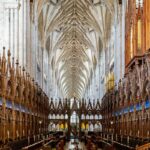
Murcia Cathedral (Catedral de Santa María) is an active Catholic place of worship located on the Plaza del Cardenal Belluga in Murcia, Spain. This guide covers opening hours, ticket prices, transport or parking, accessibility, and practical visitor tips.
This guide was last updated in September 2026, noting that all guided tours of the bell tower are currently conducted exclusively in Spanish, though foreign language brochures are provided for international visitors.
Quick facts
| Opening hours | Varies daily due to religious services; typically 10:45 am to 5:00 pm or 10:00 am to 12:30 pm |
| Ticket prices | €6.00 for standard cathedral entry; €12.00 for combined cathedral, museum, and tower access |
| Address | Plaza del Cardenal Belluga 1, 30001 Murcia, Spain |
| Nearest public transport or parking | Glorieta de España underground car park; local bus stops on Gran Vía |
| Typical time needed to visit | 1 to 1.5 hours |
Murcia Cathedral opening hours
Murcia Cathedral operates a variable schedule for cultural visits because it remains an active place of worship. On most standard weekdays, the tourist entry hours run from 10:45 am to 5:00 pm. On days with expanded religious services, the opening window is often restricted to a morning session between 10:00 am and 12:30 pm.
The cathedral doors close to visitors one hour before the end of the scheduled timetable. Because times fluctuate heavily depending on the liturgical calendar, visitors should always check the specific daily schedule on the official website before arriving.
Murcia Cathedral ticket prices
Like many Spanish cathedrals, such as Jaen Cathedral and Baeza Cathedral, there is a charge to enter here.
A standard adult ticket for Murcia Cathedral costs €6.00, while individual entry to the Cathedral Museum costs €5.00. For comprehensive access, a combined ticket including a guided tour of the tower, the museum, and the cathedral costs €12.00. Discounted tariffs are available for pensioners, unemployed individuals, and youths aged 5 to 16.
Opening hours and ticket prices were checked on the official website and last updated in September 2026.
How to get to Murcia Cathedral
To get to Murcia Cathedral, visitors must travel to the pedestrianised historic centre of Murcia. The cathedral sits prominently on Plaza del Cardenal Belluga, adjacent to the Segura River.
The site is well connected by the city’s public transport network, with multiple local bus lines stopping along the nearby Gran Vía Escultor Francisco Salzillo. Murcia del Carmen railway station is approximately a 15-minute walk south across the river.
Parking at Murcia Cathedral
There is no on-site parking at Murcia Cathedral because it is situated in a heavily restricted pedestrian zone. Visitors arriving by car must use one of the paid public parking garages located a short distance away.
The closest facility is the Glorieta de España underground car park, situated just a three-minute walk from the plaza. Alternative parking is available at the Plano de San Francisco car park, near the vibrant Mercado de Verónicas.
How long to spend at Murcia Cathedral
A typical visit to Murcia Cathedral takes between 1 and 1.5 hours. The official audio-video tour for the cathedral and museum takes approximately 65 minutes to complete.
If you purchase a combined ticket that includes the guided tour of the bell tower, you should allocate a total of two hours to allow for the scheduled departure time and the climb to the viewing platform.
Accessibility at Murcia Cathedral
Accessibility at Murcia Cathedral varies across the different sections of the complex. The main floor of the cathedral and the ground-level museum areas, located within the 14th-century cloister, are mostly flat and accessible to wheelchair users and visitors with limited mobility.
However, the bell tower is strictly inaccessible to those with mobility limitations. Accessing the tower viewing platforms requires climbing a steep, narrow internal ramp. The official guidelines strongly advise against the tower tour for pregnant women or individuals with cardiac, respiratory, or claustrophobia issues.
Inside / what to see at Murcia Cathedral
Inside Murcia Cathedral, visitors observe a mixture of architectural styles ranging from Mediterranean Gothic to 19th-century historicism. The main sanctuary features ribbed vaulting, extensive side chapels, and a prominent monumental organ built in the mid-19th century.
The Cathedral Museum is housed within the original 14th-century Gothic cloister, the oldest surviving part of the complex. The museum exhibits religious artefacts, historical paintings, and ecclesiastical vestments recovered from the cathedral’s history.
The exterior is dominated by its ornate Baroque facade facing the plaza and its 90-metre-tall bell tower. The tower is the second tallest in Spain and serves as the primary spiritual and urban axis of the city. Guided tours of the tower allow visitors to reach the balcony level for unobstructed views over Murcia and the surrounding valley.
Practical visitor tips
| Tip Category | Visitor Advice |
| Timing | Arrive at least 90 minutes before the scheduled closing time to ensure you have enough time to complete the 65-minute audio tour. |
| Crowds | Visit during the earlier morning slots (10:00 am or 10:45 am) to avoid the midday heat and the peak volume of tourist groups. |
| Layout | The cathedral, museum, and tower have separate access points, so confirm your starting location at the ticketing desk when purchasing a combined pass. |
| Entry process | Purchase tickets directly at the venue; remember that children aged four and under enter for free but still require an access count ticket. |
| On-site logistics | Dress appropriately for an active place of worship; bare shoulders and shorts above the knee are discouraged inside the sanctuary. |
Frequently asked questions about Murcia Cathedral
| Question | Answer |
| Is Murcia Cathedral suitable for children? | Yes, the cathedral is suitable for children, and those aged four and under are admitted entirely free of charge. |
| Do you need to book tickets in advance for Murcia Cathedral? | No, standard tickets can be purchased at the door, but tower tours have limited capacity and may sell out during busy periods. |
| Is Murcia Cathedral open on Sundays? | Yes, it is open for limited cultural visits on Sundays, though times are heavily restricted due to multiple Mass services. |
| Are bags allowed at Murcia Cathedral? | Yes, standard day bags are allowed, but eating, drinking, and smoking are strictly prohibited inside the museum and cathedral. |
Things to do near Murcia Cathedral
- Real Casino de Murcia – A few minutes’ walk along Calle Trapería, this ornate 19th-century building combines a historic social club with lavish interiors including an Arab-inspired courtyard, library and ballroom.
- Museo de Santa Clara – This former convent contains a 13th-century Islamic palace pool alongside religious art and archaeological remains, providing a different perspective on Murcia’s history.
- Plaza de las Flores – Walk west through the historic centre to this attractive square, surrounded by traditional buildings, restaurants and cafés and close to the covered Verónicas Market.
- Museo Salzillo – About 15 minutes’ walk from the cathedral, this museum displays the elaborate religious sculptures of Murcia’s celebrated Baroque sculptor Francisco Salzillo.
- Romea Theatre – Continue north through the historic centre to this 19th-century theatre on Plaza Julián Romea, one of Murcia’s principal historic cultural buildings.
Alternative attractions
- San Patricio Collegiate Church, Lorca – About 50 minutes by car from Murcia, this substantial Renaissance and Baroque church dominates Lorca’s historic centre and is one of the city’s principal monuments.
- Lorca Castle – Around 50 minutes from Murcia, this hilltop medieval fortress contains archaeological remains and the former Jewish quarter, offering a very different setting from an urban cathedral.
- Basílica-Santuario de la Vera Cruz, Caravaca de la Cruz – Roughly 1 hour 10 minutes from Murcia, this major pilgrimage church stands above the historic town and is associated with the veneration of the True Cross.
- Santuario de la Fuensanta – About 20 minutes south of central Murcia, this hilltop sanctuary has panoramic views across the city and surrounding huerta and is one of the region’s important religious sites.
More Spanish cathedrals
Other Spain travel guides on Planet Whitley include:
- A practical guide to Malaga Cathedral.
- What to expect at Segovia’s cathedral.
- What you need to know before visiting Tarragona Cathedral.
- What to see when visiting Toledo Cathedral – and how much it will cost.
- All the key information about visiting Zamora Cathedral in Spain.