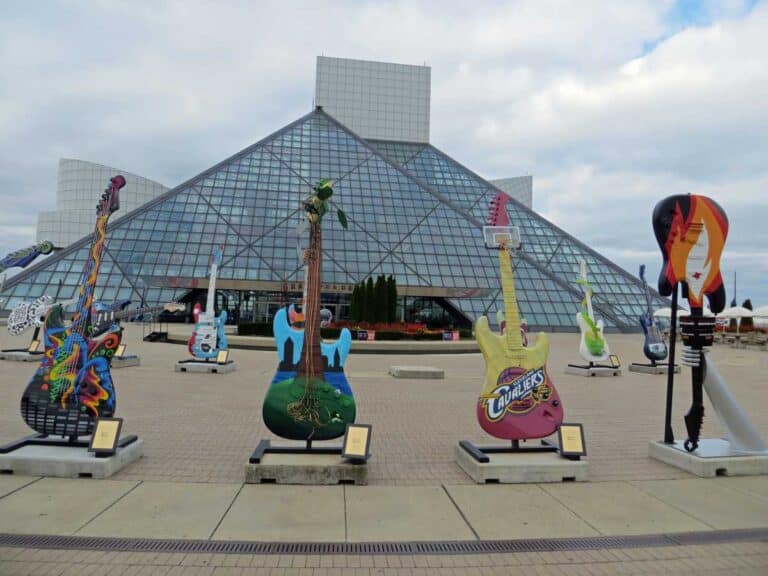
Cleveland occupies a stretch of Lake Erie shoreline that was the industrial heart of the American Midwest for a century, and the reinvention of its North Coast Harbor waterfront into a cultural destination — anchored by the Rock and Roll Hall of Fame — is one of the more successful urban transformations in recent American history. The city’s University Circle neighbourhood contains one of the finest free art museums in the United States alongside a major history museum, while the Cuyahoga Valley National Park to the south offers some of the most accessible natural scenery in the Great Lakes region.
Cleveland is also a natural hub for road trips across Ohio and into neighbouring states — positioned midway between Pittsburgh and Chicago, and within a few hours of Detroit, Indianapolis and Philadelphia. These guides cover the city’s key attractions with practical information on ticket prices, opening hours and what to expect on arrival, alongside road trip guides for nine of the most popular routes to and from the city.
The North Coast Harbor and lakefront attractions
Cleveland’s North Coast Harbor on the Lake Erie shoreline is the city’s most dramatic public space — a waterfront development that combines the Rock and Roll Hall of Fame‘s glass pyramid with the Great Lakes Science Center and views across the lake that can stretch to the horizon on clear days. Both attractions are within easy walking distance of each other and can be combined in a single day.
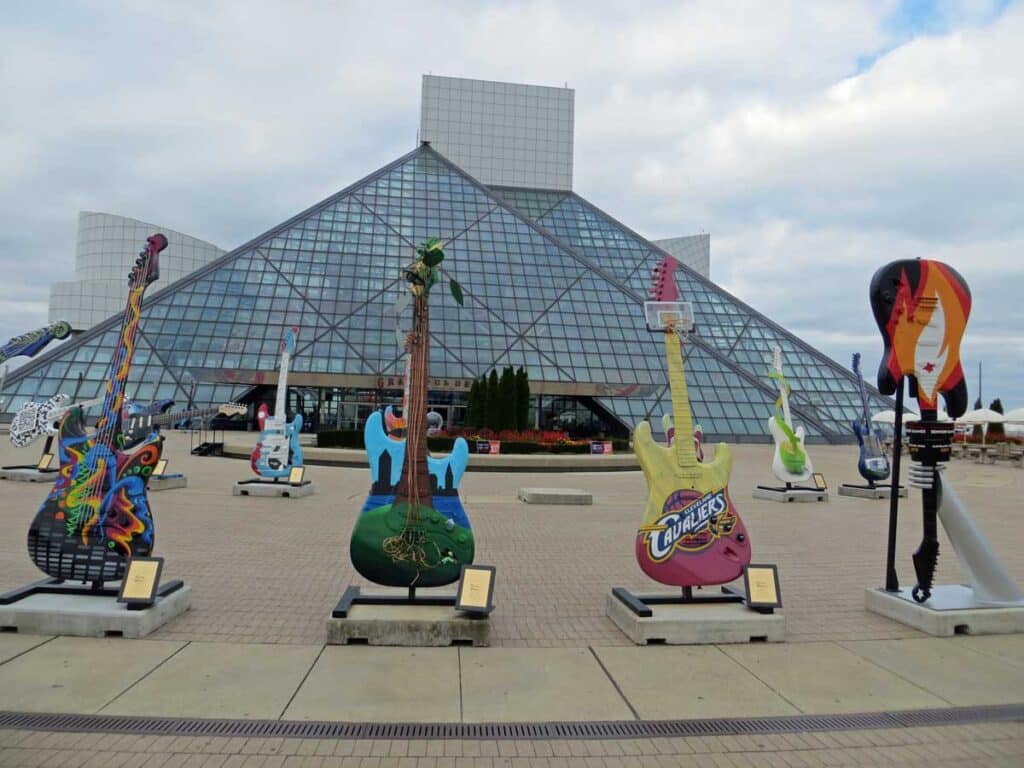
- Rock and Roll Hall of Fame, Cleveland: an honest review — an I. M. Pei-designed glass pyramid on the Lake Erie waterfront housing the definitive museum of rock and roll history, with permanent galleries covering everything from Robert Johnson to the British Invasion to hip hop, alongside rotating special exhibitions and an annual induction ceremony that remains one of music’s most debated honours.
- Great Lakes Science Center, Cleveland: ticket prices, hours and visitor guide — a hands-on science museum on the North Coast Harbor with over 400 interactive exhibits across six galleries, a NASA Glenn Visitor Center housing a genuine Apollo-era space capsule, and an OMNIMAX Theatre with a six-storey domed screen.
University Circle: art, history and culture
University Circle, a mile-square neighbourhood east of downtown, is one of the most concentrated cultural districts in the United States — a cluster of museums, galleries, hospitals and university buildings around a landscaped park. The two institutions below are its anchor attractions and between them justify a full day in the neighbourhood.
- Cleveland Museum of Art: visitor guide with ticket prices and hours — one of the finest encyclopaedic art museums in the United States and free to enter, with a permanent collection of over 61,000 works spanning 6,000 years of human creativity, from ancient Egyptian artefacts and medieval armour to Picasso, Monet and a particularly strong collection of Asian art.
- Cleveland History Center: opening hours, ticket prices and parking guide — the Western Reserve Historical Society’s main museum in University Circle, with permanent collections covering Cleveland’s industrial and civic history, a remarkable Crawford Auto-Aviation Museum with historic vehicles and aircraft, and a research library holding one of the most significant genealogical collections in the Midwest.
Nature, wildlife and Cuyahoga Valley National Park
South of the city, the Cuyahoga Valley National Park follows the river that gave Cleveland its industrial lifeblood through a landscape of forested ravines, sandstone ledges and cascading waterfalls that feels remarkably remote given its proximity to a major city. Cleveland’s zoo, set in the wooded hills of the southwest, is one of the finest in the Great Lakes region.
- Cleveland Metroparks Zoo: ticket prices, opening hours and visitor guide — one of the oldest zoos in the United States, set across 183 acres of wooded parkland in the Cleveland Metroparks system, with notable African elephant, Australian Adventure and Primate collections alongside a RainForest exhibit housing over 600 animals in a climate-controlled tropical environment.
- Brandywine Falls, Cuyahoga Valley National Park: access, hours and visitor tips — the most dramatic waterfall in northeast Ohio, a 65-foot bridal veil cascade in the Cuyahoga Valley National Park reached via a short boardwalk trail from a well-signposted car park, making it one of the most accessible natural landmarks within day-trip range of Cleveland or Akron.
- Guides to state parks near Cleveland: Punderson State Park, Headlands Beach State Park.
Road trips to and from Cleveland
Cleveland’s position on Lake Erie at the northeastern corner of Ohio places it within comfortable driving distance of several major Midwest and East Coast cities. The Ohio Turnpike connects it west to Toledo, Chicago and Detroit; Interstate 77 heads south through the Cuyahoga Valley toward Canton and Akron; and Interstate 80 east leads through Pennsylvania toward Pittsburgh and ultimately Philadelphia. These guides cover nine of the most popular routes, with best stops, distances and realistic drive times.
- Toledo to Cleveland drive: best stops, distance and drive time — the drive east along the Lake Erie shore through the Ohio Turnpike corridor, with options to detour through Sandusky and Cedar Point — one of the world’s premier roller coaster parks — on the way.
- Columbus to Cleveland drive: best stops, distance and drive time — the drive north through the heart of Ohio on Interstate 71, passing through Mansfield and the Malabar Farm State Park, with Akron and the Cuyahoga Valley National Park as natural stops on the approach to Cleveland.
- Cincinnati to Cleveland road trip: best stops, distance and drive time — the longest of the Ohio intrastate routes, running the full length of the state north through Dayton, Columbus and the Ohio heartland, connecting two of the state’s most distinctive cities.
- Pittsburgh to Cleveland drive: best stops, distance and drive time — the drive west from western Pennsylvania along the I-80 corridor, following the Lake Erie shoreline through Youngstown and the Ohio-Pennsylvania border towns with their steel heritage landscapes.
- Indianapolis to Cleveland drive: best stops, distance and drive time — the drive northeast from Indiana across the Ohio border, passing through the Muncie and Lima corridor before picking up the Lake Erie approach to Cleveland.
- St Louis to Cleveland road trip: best stops, distance and drive time — the longest approach route in these guides, crossing Illinois, Indiana and Ohio on a drive that passes through Indianapolis and the Ohio flatlands before the Lake Erie horizon appears.
- Cleveland to Chicago road trip: best stops, distance and drive time — the drive west along the southern Lake Michigan and Erie shoreline through Toledo, Indiana and into Illinois, with options to detour through the Indiana Dunes National Park before the Chicago skyline appears.
- Cleveland to Detroit road trip: best stops, distance and drive time — the drive northwest along the Lake Erie shore through Toledo and across the Michigan state line, connecting two of the Great Lakes‘ great industrial cities with a route that passes through some of the most historically significant automotive heritage landscapes in America.
- Cleveland to Philadelphia road trip: best stops, distance and drive time — the drive east through Pennsylvania on the I-80 or Pennsylvania Turnpike corridors, with options to detour through Pittsburgh, the Laurel Highlands and the Lancaster County Amish Country before reaching the Delaware Valley.
- Plan your Cleveland to Baltimore road trip.
Planning your Cleveland visit
Cleveland’s compact geography makes it an easy city to navigate — the North Coast Harbor lakefront, downtown and University Circle are all connected by the HealthLine rapid transit corridor, and most of the city’s headline attractions can be reached without a car for visitors staying in the centre. The Cleveland Museum of Art is free to enter, making it one of the best-value days in any Ohio itinerary. Spring and autumn are the most comfortable visiting seasons; Lake Erie moderates temperatures but also generates lake-effect snow in winter that can be significant. The Cuyahoga Valley National Park is best visited in autumn when the deciduous forest colour peaks, typically in mid-October.
How many days do you need in Cleveland?
Two full days covers Cleveland’s main attractions comfortably. A first day suits the North Coast Harbor — the Rock and Roll Hall of Fame needs a minimum of two to three hours, the Great Lakes Science Center another two — with an evening walk along the waterfront. A second day works well in University Circle: the Cleveland Museum of Art in the morning, the Cleveland History Center in the afternoon. A third day suits a trip to the Cuyahoga Valley National Park for Brandywine Falls and the Metroparks Zoo.
What is Cleveland best known for?
Cleveland is best known for the Rock and Roll Hall of Fame, which has become the city’s defining cultural landmark since opening in 1995. It is also known for the Cleveland Cavaliers and LeBron James, the Cleveland Browns and the Cleveland Guardians baseball team. Among cultural visitors, the Cleveland Museum of Art is considered one of the finest encyclopaedic art museums in the United States. The city’s food scene — particularly the West Side Market and the Ohio City neighbourhood — has developed a strong regional reputation over the past decade.