The United States holds an extraordinary range of preserved homes, from presidential plantations in Virginia to Gilded Age mansions in California. This guide brings together visitor guides to historic houses, plantations and birthplaces across the country. Many are tied to presidents, writers and inventors, including Mount Vernon, the Hermitage and Thomas Edison’s birthplace. Others, particularly across the Carolinas and Louisiana, confront the harder history of slavery in the antebellum South. There are Gilded Age extravagances too, from Hearst Castle to Vizcaya, alongside modest birthplaces such as Abraham Lincoln’s cottage and Ernest Hemingway’s childhood home. Each linked guide covers ticket prices, opening hours and practical visitor tips, organised here by region to help with planning a wider trip.
Virginia and Washington DC: presidential homes and plantations
Virginia and the neighbouring capital hold one of the densest clusters of presidential history in the country. These guides cover plantations owned by founding fathers, wartime residences and sites confronting the legacy of slavery directly.
- Sherwood Forest, Virginia: guide to John Tyler’s presidential plantation — home to the 10th US president, this working plantation near Charles City, Virginia, remains privately owned by Tyler’s descendants.
- Berkeley Plantation, Virginia: discovering presidents and the first Thanksgiving — birthplace of William Henry Harrison and site of one of the earliest recorded Thanksgiving celebrations in America.
- Virginia’s best presidential homes: a visitor’s guide — a round-up of the state’s presidential estates, useful for planning a wider trip beyond a single site.
- Mount Vernon, Virginia: confronting the plantation’s slavery legacy — an honest look at how George Washington’s estate addresses the enslaved people who built and ran it.
- Booker T Washington National Monument, Hardy: ticket prices, hours and top tips — the birthplace of the influential educator, set on a reconstructed tobacco farm near Roanoke.
- The White House of the Confederacy, Richmond: ticket prices, hours and tips — Jefferson Davis’s wartime residence, now a museum on the Confederacy’s civilian leadership.
- Maymont Mansion, Richmond: parking, prices, hours and top tips — a Gilded Age estate with formal gardens and a wildlife exhibit, free to visit.
- Lincoln’s Cottage, Washington DC: visiting Abraham Lincoln’s former home — where Abraham Lincoln escaped the pressures of the White House and drafted the Emancipation Proclamation, in Washington DC.
Kentucky and Tennessee: Lincoln, Jackson and Nashville’s grand estates
Kentucky and Tennessee hold the homes of a First Lady, a Founding-era statesman and two of the region’s most visited estates, alongside a lesser-known mansion in Bowling Green.
- Riverview at Hobson Grove, Bowling Green: a first-time visitor’s guide — an Italianate mansion overlooking the Barren River in Kentucky, once home to a local mill owner.
- Mary Todd Lincoln House, Lexington: opening hours, ticket prices and parking — the childhood home of the First Lady, restored to show her privileged upbringing before the White House.
- Ashland: The Henry Clay Estate, Lexington: ticket prices, hours and top tips — the estate of the influential 19th-century statesman Henry Clay.
- Belmont Mansion, Nashville: opening hours, ticket prices and parking — an Italianate villa built for one of the wealthiest women in the antebellum South, in Nashville.
- Andrew Jackson’s Hermitage, Nashville: visitor guide with ticket prices, hours and must-know tips — the plantation home of the 7th US president, including his grave and original outbuildings.
- Cheekwood Estate and Gardens, Nashville: Guide to the gardens and art museum on a 1930s estate.
- Woodruff-Fontaine House Museum, Memphis: visitor tips, prices, hours and parking — a French Second Empire mansion furnished with Victorian-era antiques in Memphis’s Victorian Village.
Georgia, the Carolinas, Mississippi and Louisiana: the Deep South’s plantation legacy
The Deep South holds the largest concentration of plantation museums in the country, from Savannah’s townhouses to Louisiana’s River Road. Many of these sites address the region’s history of slavery directly, rather than glossing over it.
Georgia and the Carolinas
Coastal Georgia and South Carolina are dense with preserved townhouses and rural plantations, several now grappling openly with their history.
- Andrew Low House Museum, Savannah: prices, hours, parking and visitor tips — a 19th-century townhouse where Juliette Gordon Low, founder of the Girl Scouts, once lived, in Savannah, Georgia.
- Nathaniel Russell House Museum, Charleston: ticket prices, hours and tips — a Federal-style mansion famous for its free-standing spiral staircase, in Charleston, South Carolina.
- Boone Hall Plantation and Gardens, Mount Pleasant: ticket prices, hours and tips — one of the oldest working plantations in the US, with a well-known avenue of oaks.
- Drayton Hall, Charleston: ticket prices, hours and tips — the oldest unrestored plantation house in the US still open to the public, dating from 1738.
- Magnolia Plantation and Gardens, Charleston: ticket prices, hours and tips — one of the oldest public gardens in America, alongside a restored plantation house.
- Middleton Place, Charleston: ticket prices, hours and tips — billed as America’s oldest landscaped gardens, with a stableyard depicting plantation-era life.
- Aiken-Rhett House Museum, Charleston: parking, prices, hours and top tips — a preserved townhouse and slave quarters, left largely untouched since the 19th century.
- Margaret Mitchell House, Atlanta: visitor guide with ticket prices, hours and must-know tips — where the author wrote Gone with the Wind in a cramped ground-floor apartment, in Atlanta, Georgia.
Mississippi and Louisiana
Further west, Mississippi and Louisiana hold a musical birthplace and a run of river plantations tracing the region’s agricultural history.
- Elvis Presley Birthplace Museum, Tupelo: a first-time visitor’s guide — the small two-room shotgun house where Elvis Presley was born in 1935.
- St Joseph Plantation, Vacherie: a first-time visitor’s guide — a working sugar plantation on Louisiana’s River Road, still owned by the same family.
- Felicity Plantation, Vacherie: a first-time visitor’s guide — a Creole-style plantation house offering smaller, more personal tours than its River Road neighbours.
- Laura Plantation, Vacherie: a first-time visitor’s guide — a Creole plantation known for tours focused on the enslaved families who lived and worked there.
- Hermann-Grima House, New Orleans: a first-time visitor’s guide — tells stories of slavery in the antebellum South from an urban rather than rural setting, in New Orleans.
- Practical guide to visiting the BK House and Gallier House in New Orleans.
Florida: writers, presidents and Gilded Age retreats
Florida’s historic homes range from a plantation with a complex ownership story to the winter retreats of a former president and one of America’s best-known writers.
- Kingsley Plantation, Jacksonville: ticket prices, hours and visitor guide — one of the oldest surviving plantations in Florida, with a history involving Anna Kingsley, a formerly enslaved woman who became a plantation owner herself, near Jacksonville.
- Hemingway Home and Museum, Key West: ticket prices, opening hours and visitor guide — where Ernest Hemingway wrote several novels, now home to dozens of polydactyl cats, in Key West.
- Harry Truman’s Little White House, Key West: inside the presidential retreat — the winter White House used by Harry Truman for extended working holidays.
- Bonnet House Museum and Gardens, Fort Lauderdale: parking, prices, hours and top tips — an eccentric plantation-style house built by an artist, set within subtropical gardens.
- Vizcaya Museum and Gardens, Miami: first-time visitor guide with prices and hours — an early 20th-century Italian Renaissance-style villa on Biscayne Bay, in Miami.
- Edison and Ford Winter Estates, Fort Myers: a visitor’s guide — the adjoining winter homes of inventors Thomas Edison and Henry Ford.
New England, New York, Pennsylvania and Delaware: the historic Northeast
The Northeast holds birthplaces, national memorials and Gilded Age estates, many tied to the American Revolution or to figures who shaped the young republic.
New England and New York
- Paul Revere House, Boston: ticket prices, hours and visitor guide — the oldest building in downtown Boston, home to the silversmith before his famous midnight ride.
- Frederick Law Olmsted National Historic Site, Brookline: hours, prices and tips — the home and office of the landscape architect behind Central Park and dozens of other American parks.
- JFK Birthplace, Brookline: hours, prices and tips — the modest house where John F Kennedy was born in 1917, in Massachusetts.
- Hamilton Grange National Memorial, New York City: hours, prices and tips — the only home Alexander Hamilton ever owned, relocated twice to its current site in New York City.
- Dyckman Farmhouse Museum, New York City: hours, prices and tips — the last surviving Dutch colonial farmhouse on Manhattan island.
- Van Cortlandt House Museum, New York City: hours, prices and tips — the oldest building in the Bronx, used briefly by George Washington as a headquarters.
- Edward Hopper House Museum, Nyack: a first-time visitor’s guide — the childhood home of the painter Edward Hopper, now a museum and gallery.
Pennsylvania, Delaware and Gettysburg
- Thaddeus Kosciuszko National Memorial, Philadelphia: how Australia’s highest mountain got its name — the modest lodgings of the Polish military engineer, with an unexpected link to Australia’s tallest peak, in Philadelphia.
- Betsy Ross House, Philadelphia: visitor guide with opening hours and tickets — the home traditionally credited to the seamstress who sewed the first American flag.
- Nemours Estate, Delaware: parking, prices, hours and top tips — a French neoclassical chateau built by a du Pont family member, with formal gardens modelled on Versailles.
- Winterthur Museum, Garden and Library, Delaware: a first-time visitor’s guide — a sprawling du Pont family estate with one of the largest collections of Americana in the country.
- Jennie Wade House, Gettysburg: a first-time visitor’s guide — the home where the only civilian killed during the Battle of Gettysburg died.
Beyond the South: Midwestern and western estates
Further from the coasts, historic homes across the Midwest and West cover inventors, presidents and Gilded Age fortunes, ending on the Pacific coast.
- Thomas Edison Birthplace Museum, Milan: ticket prices, hours and tips — the small brick house where inventor Thomas Edison was born in 1847, in Ohio.
- William Howard Taft National Historic Site, Cincinnati: ticket prices, hours and tips — the childhood home of William Howard Taft, the only person to serve as both president and chief justice, in Cincinnati.
- Harriet Beecher Stowe House, Cincinnati: ticket prices, hours and tips — where the author began writing Uncle Tom’s Cabin, addressing slavery from a free state.
- Ernest Hemingway Birthplace Museum, Oak Park: prices, hours, parking and visitor tips — the Queen Anne-style house where the writer was born, near Chicago.
- Pabst Mansion visitor guide: Explore the Gilded Age home of a Milwaukee brewing legend.
- Riordan Mansion State Historic Park, Flagstaff: visitor guide with ticket prices, hours and must-know tips — a 40-room Arts and Crafts mansion shared by two lumber baron brothers, in Flagstaff, Arizona.
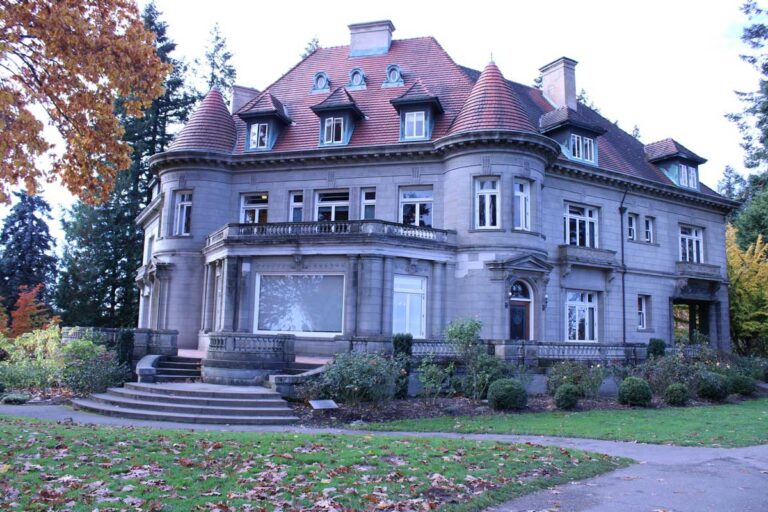
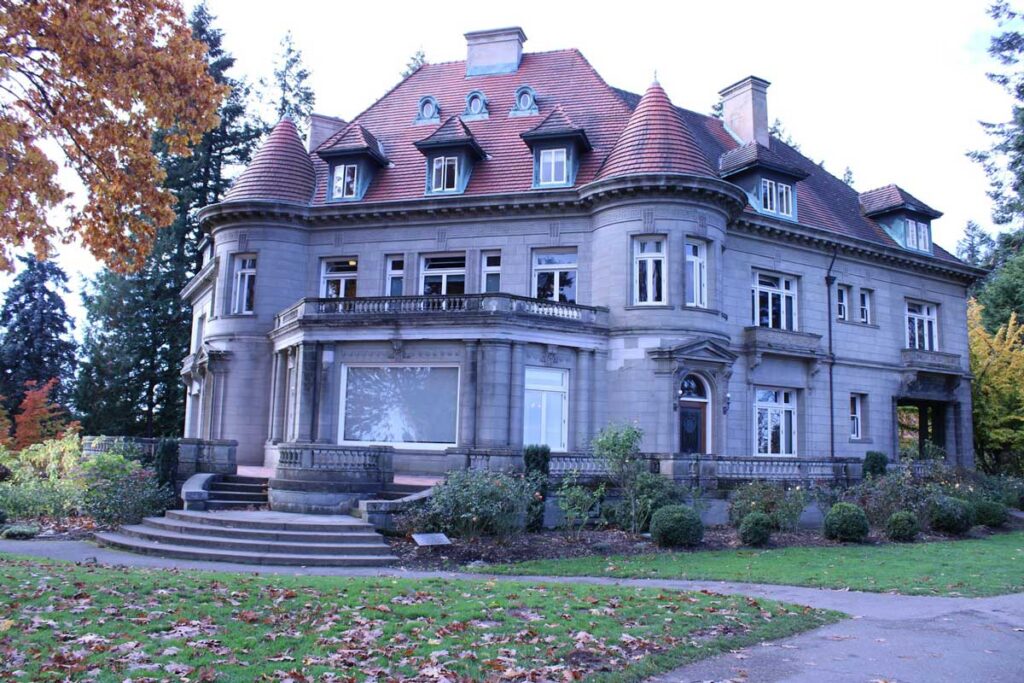
- Pittock Mansion, Portland: visitor guide with ticket prices, hours and must-know tips — a French Renaissance-style chateau with sweeping views over the city and Mount Hood.
- Prepare to meet the ghosts at the Whaley House Museum in San Diego.
- Getty Villa, Los Angeles: a practical guide with hours, prices and tips — a recreation of an ancient Roman country house, filled with the Getty’s antiquities collection.
- Inside Hearst Castle, California: the most expensive home ever built — the extravagant hilltop estate built by newspaper magnate William Randolph Hearst, in California.
- Filoli visitor guide: What to expect at the historic house and gardens south of San Francisco.
Planning your visit
Most of these sites are easiest to reach by car, especially the rural plantations along Louisiana’s River Road and around Charleston, where public transport rarely runs. City-centre sites, such as those in Boston, Philadelphia and New York, are usually walkable from downtown hotels or reachable by metro.
Many house museums operate on timed-entry or guided-tour tickets, particularly in peak summer months, so booking ahead is worth doing for popular sites like Mount Vernon or Hearst Castle. Smaller, volunteer-run properties in the Northeast and Midwest often close for winter or reduce their opening days, so check the hours in each guide before travelling. Indoors, expect standard conservation rules: no flash photography and no touching furniture or wall coverings.
Frequently asked questions
Is Mount Vernon the oldest historic house museum in the United States?
Mount Vernon is widely regarded as the country’s first successfully preserved historic house museum. The Mount Vernon Ladies’ Association purchased the estate in the late 1850s and opened it to the public, in what is often described as the first successful nationwide preservation effort in the US.
How do plantation museums address the history of slavery?
Approaches vary widely. Some sites, such as Laura Plantation and Kingsley Plantation, build their tours specifically around the enslaved families who lived and worked there. Others focus mainly on architecture or the family who owned the house, with slavery covered as part of the wider estate history.
Which US presidents have preserved homes open to the public?
Several presidents’ homes appear in this guide, including George Washington’s Mount Vernon, John Tyler’s Sherwood Forest, William Henry Harrison’s Berkeley Plantation, Andrew Jackson’s Hermitage and William Howard Taft’s childhood home in Cincinnati. Abraham Lincoln’s wartime cottage in Washington DC and JFK’s birthplace in Brookline are also open to visitors.