The Deutsches Museum is a large museum of science and technology located on Museum Island in the centre of Munich. This guide covers opening hours, ticket prices, transport or parking, accessibility, and practical visitor tips.
To skip the detail and just buy your tickets, head this way.
This guide was updated in May 2026 to reflect current entry policies, noting the updated €16 adult admission price and the ongoing second phase of major building renovations that limits access to certain historical exhibits.
Quick facts
| Opening hours | Daily 9am to 5pm. |
| Ticket prices | Adults €16, Concessions €9, Children under 6 free. |
| Address | Museumsinsel 1, 80538 Munich, Bavaria. |
| Nearest public transport | Isartor S-Bahn station (five-minute walk). |
| Typical time needed | Three to four hours. |
Deutsches Museum opening hours
The Deutsches Museum opens to visitors every day from 9am to 5pm year-round. These standard hours remain consistent throughout the year, with the final permitted entry strictly enforced at 4.30pm each afternoon.
You should always check the official calendar before travelling, as the museum closes completely on several specific public holidays. The building remains closed to sightseers on New Year’s Day, Good Friday, Labour Day, Christmas Eve, Christmas Day, and New Year’s Eve.
Deutsches Museum ticket prices
Standard admission to the Deutsches Museum costs €16 for adults and €9 for concessions, which includes children over six, students, and seniors visiting on weekdays. Children under six years old and registered carers accompanying severely disabled visitors receive free entry to the museum.
Ideally, you should buy tickets online in advance.
Opening hours and ticket prices were checked on the official website and last updated in May 2026. The attraction is included in the Munich City Pass, which provides free admission alongside other regional attractions like Nymphenburg Palace, the Munich Residenz, and the Alte Pinakothek.
Why book the Deutsches Museum Entry Ticket?
- 🔬 World’s Largest Science & Tech Museum: Explore a monumental collection of human ingenuity housed on Munich’s “Museum Island,” featuring everything from the first motorized aircraft to modern robotics.
- 🧪 20+ Permanent Exhibitions: Dive into diverse fields including aerospace, maritime history, chemistry, and telecommunications, with curated displays that span the history of scientific discovery.
- ⚡ Hands-On Interactive Stations: Engage with numerous “push-button” experiments and tactile stations designed to make complex scientific principles easy to understand for visitors of all ages.
- 🚢 Iconic Original Objects: See world-famous artifacts up close, such as the first diesel engine, the original Wright brothers’ glider, and a full-scale reconstruction of a traditional sailing ship.
- 🏙️ Iconic Isar River Location: Enjoy the unique atmosphere of the museum’s historic building located in the heart of the city, perfectly positioned for a full day of exploration alongside other Munich landmarks.
How to get to the Deutsches Museum
The most straightforward way to get to the Deutsches Museum is by using the local public transport network, as it sits a five-minute walk from Isartor S-Bahn station. This station connects directly to the central Munich rail tunnel and is served by all major suburban train lines.
Visitors arriving by tram can take line 16 directly to the Isartor stop or line 18 to the Fraunhoferstraße stop. If you are driving into the city centre, you should note that private vehicles are not permitted to drive directly onto Museum Island.
Five great things to do in Munich
- 🏛️ On a Third Reich walking tour – learn about the rise of Hitler where it happened.
- 🚂 Visit the Dachau Concentration Camp Memorial – by train from Munich.
- 🥨 Take a foodie walking tour – tasting 10+ Bavarian specialities.
- 🏰 Combine Neuschwanstein Castle and Linderhof Palace – on a classic Bavarian day trip.
- 👻 On an evening walking tour – hear tales of Munich’s ghosts and spirits.
Parking at the Deutsches Museum
There is no dedicated visitor car park directly on the grounds at the Deutsches Museum, as the island location restricts access to official service traffic only. Visitors travelling by car should use nearby public pay-and-display facilities, such as the Böhringer parking garage at Baaderstraße or the Parkhaus Rieger near Isartor.
There are designated accessible parking spaces available for Blue Badge holders located just before the Bosch Bridge on the approach to the island. These disabled parking bays operate strictly on a first-come, first-served basis and cannot be reserved prior to your arrival.
How long to spend at the Deutsches Museum
Most visitors spend between three and four hours at the Deutsches Museum to explore the modernised exhibitions, participate in the interactive displays, and examine the historical artifacts. Because the site is one of the largest science museums in the world, it is physically difficult to see every open gallery in a single day.
If you plan to attend specific daily science demonstrations or take a guided tour of the popular aerospace section, you should allow at least half a day. Visitors should also factor in additional time if they wish to eat at the rooftop restaurant or explore the outdoor areas of the island.
Accessibility at the Deutsches Museum
The Deutsches Museum provides barrier-free access throughout the newly modernised Collection Building, featuring ramped walkways, wide doors, and multiple spacious lifts. The museum features accessible visitor toilets and provides tactile floor guidance systems for visually impaired guests.
The renovated exhibitions incorporate inclusively designed stations with multi-sensory features for seeing, hearing, and touching. The official museum app also provides interactive digital maps, videos in German Sign Language, and audio descriptions for tactile models scattered throughout the galleries.
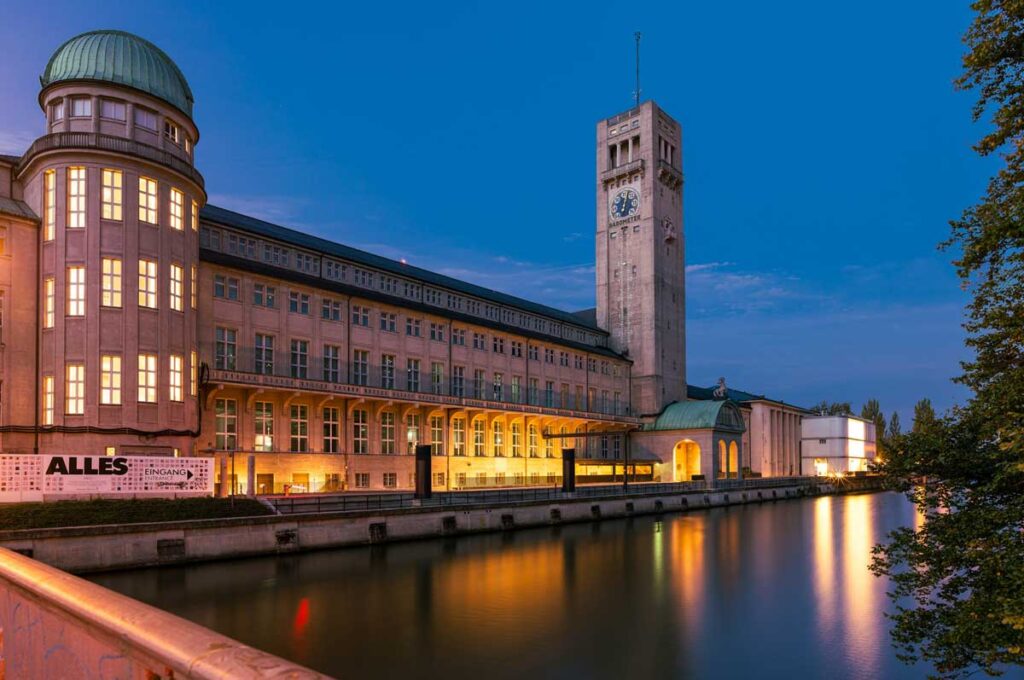
Inside / what to see at the Deutsches Museum
The museum is currently undergoing a multi-year modernisation project, with roughly 20 renewed permanent exhibitions open to the public within the first completed phase. These updated galleries feature interactive elements and cover subjects ranging from classical optics to modern robotics.
The Aeronautics hall remains a primary focal point, featuring suspended historical aircraft, early helicopters, and a prominent Junkers Ju 52 transport plane. Visitors can walk among these restored machines and learn about the aerodynamic principles that allow human flight.
The Health exhibition allows visitors to explore the human body and the historical development of medical technology. This gallery includes detailed anatomical models, historical surgical instruments, and interactive stations explaining modern diagnostic imaging techniques.
The Chemistry section provides a visual history of the periodic table, historic laboratory equipment, and the industrial applications of chemical engineering. The museum staff conduct daily live science demonstrations here, safely showcasing chemical reactions to public audiences.
The Electronics and Mathematics galleries feature historical computers, early telecommunications equipment, and interactive logic puzzles. These sections highlight how abstract mathematical theories were practically applied to build the digital infrastructure of the modern world.
Practical visitor tips
| Tip category | Advice |
| Timing | Arrive right at 9am to explore the popular Aeronautics hall before large school trip groups arrive. |
| Crowds | Weekday mornings are generally quieter than weekends, particularly during the busy Bavarian school holiday periods. |
| Layout | Download the free official museum app before you arrive to access the interactive maps and English audio guides. |
| Entry process | Purchase your tickets online in advance to bypass the physical queues at the main entrance. |
| On-site logistics | The rooftop restaurant offers views over the city, but you can also bring your own food to eat in the designated indoor picnic areas. |
Frequently asked questions about the Deutsches Museum
| Question | Answer |
| Is the Deutsches Museum suitable for children? | Yes, the museum is highly family-friendly and features a dedicated interactive Kids’ Kingdom area for children aged three to eight. |
| Do you need to book tickets in advance for the Deutsches Museum? | No, walk-up tickets are available at the desk, but booking online in advance is highly recommended during busy holiday periods. |
| Is the Deutsches Museum open on Sundays? | Yes, the museum is open every Sunday from 9am to 5pm. |
| Are bags allowed at the Deutsches Museum? | Yes, small day bags are permitted, but large backpacks and luggage must be left in the on-site cloakrooms or lockers. |
| Are dogs allowed inside the Deutsches Museum? | No, general pet dogs are not permitted inside the museum, but registered assistance dogs are fully welcome. |
Things to do near the Deutsches Museum
- Viktualienmarkt: A large daily food market located in the city centre, featuring fresh produce, Bavarian specialties, and a central beer garden.
- Marienplatz: The central square of Munich, known for the New Town Hall and its mechanical Glockenspiel clock.
- Hofbräuhaus München: A 16th-century beer hall offering traditional Bavarian food, regional beer, and live brass band music.
- Munich Residenz: The former royal palace of the Wittelsbach monarchs, featuring decorated state rooms, a treasury, and the Antiquarium.
- Isartor: One of the four original medieval city gates of Munich, which currently houses a museum dedicated to comedian Karl Valentin.
What to visit in Germany tomorrow
- Deutsches Museum Verkehrszentrum: A dedicated transport branch of the museum located in Munich, focusing on the history of cars, bicycles, and trains.
- Flugwerft Schleißheim: An aviation branch of the Deutsches Museum situated in Oberschleißheim, 30 minutes north, featuring military jets and historic aircraft.
- BMW Museum: An automotive museum located near the Olympic Park in Munich, exploring the design and history of the Bavarian car manufacturer.
- ESO Supernova Planetarium & Visitor Centre: An interactive astronomy centre located in Garching, roughly 30 minutes north of the city centre.
- Audi museum mobile: A glass-fronted museum showcasing the history of the Audi car brand, located roughly one hour north in Ingolstadt.
More Bavaria travel
Other Bavaria travel articles on Planet Whitley include:
- Plan your visit to Bamberg Cathedral in Bavaria.
- Exploring Bavarian beer culture in Munich.
- What to expect on a Third Reich tour of Munich.
- 19 reasons to visit Munich.
- Why it’s worth visiting the Museum Brandhorst in Munich.