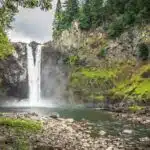
Gavarnie Falls (Grande Cascade de Gavarnie) is a 422-metre waterfall within the Cirque de Gavarnie, a UNESCO World Heritage amphitheatre of limestone cliffs on the French-Spanish border in the Pyrenees, Hautes-Pyrénées, France. This guide covers opening times, parking, accessibility and practical tips for visiting one of Europe’s highest waterfalls.
The easiest way to get to Gavarnie Falls is on a day tour from Lourdes.
Quick facts
| Detail | Information |
|---|---|
| Opening times | Open year-round, 24 hours. Cirque accessible at all times. Best visited April-November. |
| Admission | Free entry to the cirque. Parking €8 per 24 hours. |
| Address | Village of Gavarnie, Gavarnie-Gèdre, 65120, Hautes-Pyrénées, France |
| Getting there | 52 kilometres south of Lourdes via D921. Seasonal bus services from Lourdes. 90 minutes from Lourdes by car. |
| Time needed | 2.5 to 3.5 hours for roundtrip walk from village to waterfall base. |
Gavarnie Falls opening times
The Cirque de Gavarnie and Gavarnie Falls are accessible year-round, 24 hours a day. There are no gates or operating hours. The site is unstaffed.
Best visiting periods:
- April to November for hiking access
- Late spring to early autumn (May-September) for optimal conditions
- Winter visits possible with snowshoes when snow covers trails
The waterfall flow varies significantly by season. Maximum flow occurs during spring snowmelt (April-June). Summer flow (July-August) reduces as glacial melt decreases. Autumn (September-October) offers moderate flow. Winter flow can reduce to a trickle when temperatures freeze the upper reaches. Opening times and admission information were checked and updated January 2026.
Gavarnie Falls admission and parking
Entry to the Cirque de Gavarnie and Gavarnie Falls is completely free. There are no admission charges to hike or view the waterfall.
Parking costs €8 per 24 hours in the village of Gavarnie. Payment at automated machines accepting coins and cards. Several car parks are located at the village entrance on the road from Gèdre.
Motorhome parking: A dedicated aire for motorhomes is available with drain points and drinking water. Cost: €10 per 24 hours.
Vehicle access to Gavarnie village centre is restricted. All visitors must park in designated car parks at the village entrance.
How to get to Gavarnie Falls
From Lourdes, take the D921 south through Luz-Saint-Sauveur and Gèdre to Gavarnie village (52 kilometres, 90 minutes). The road is winding with narrow sections and tunnels. Drive cautiously. Check Infoway for real-time traffic conditions in winter.
By public transport, seasonal bus line 965 operates from Lourdes to Gavarnie during summer and winter. The service connects the Gavarnie valleys. Timetables available on the Vallées de Gavarnie website. The nearest train station is Lourdes (52 kilometres).
Day tours to the Cirque de Gavarnie depart from Lourdes.
From Spain, access via Ordesa y Monte Perdido National Park requires crossing mountain passes and is more challenging. Most visitors approach from the French side.
Parking at Gavarnie
Multiple paid car parks are located at the village entrance. Parking costs €8 per 24 hours. Car parks accommodate cars, minibuses and coaches. The surface is tarmac.
Parking capacity can be exceeded during peak season (July-August), weekends and French public holidays, particularly between 10:00 and 15:00. Arriving before 09:00 or after 16:00 helps secure spaces.
From the car parks, it is a short walk (5-10 minutes) through Gavarnie village to the trailhead.
How long to spend at Gavarnie Falls
Most visitors spend 2.5 to 3.5 hours on the roundtrip walk from Gavarnie village to the base of Gavarnie Falls. The distance is approximately 8 kilometres return (4 kilometres each way).
Walking time:
- Village to Hôtellerie du Cirque: 45-60 minutes (easier terrain)
- Hôtellerie du Cirque to waterfall base: 30-45 minutes (steeper, rockier)
- Return journey: 60-90 minutes
Visitors stopping only at the Hôtellerie du Cirque (1.5 hours walk) still experience impressive cirque views without the steeper final section to the waterfall base. Photography enthusiasts and those exploring alternative routes may spend 4-5 hours.
Accessibility at Gavarnie Falls
The trail to Gavarnie Falls has limited accessibility. The path from the village to the Hôtellerie du Cirque is relatively gentle and wide, suitable for families with pushchairs and less experienced walkers. This section covers 3 kilometres with minimal elevation gain.
Beyond the Hôtellerie, the path becomes significantly steeper and rockier with stream crossings. This final section to the waterfall base is unsuitable for wheelchairs, pushchairs or those with limited mobility.
The entire route is unpaved. Sturdy footwear is essential, particularly for the rocky final approach. The path can be slippery when wet.
Alternative access: Visitors can rent horses, donkeys or ponies in the village for transport to the Hôtellerie du Cirque. Contact local providers in Gavarnie village.
What to see at Gavarnie Falls
Gavarnie Falls (Grande Cascade de Gavarnie) plunges 422 metres in multiple tiers, making it the highest waterfall in mainland France and one of Europe’s tallest. The waterfall flows from glacial melt and springs high in the cirque.
The Cirque de Gavarnie is a massive limestone amphitheatre 6.5 kilometres in circumference with walls reaching 1,700 metres high. The cirque formed through glacial erosion over millions of years. The concentric terraces of limestone strata create a natural theatre.
Peaks surrounding the cirque include Mont Perdu (3,352 metres), Pic du Marboré (3,248 metres), Taillon (3,144 metres) and the famous Brèche de Roland, a 40-metre-wide gap in the ridge at 2,804 metres altitude. Legend states the breach was cut by Roland’s sword during Charlemagne’s retreat from Spain.
The Hôtellerie du Cirque is a historic mountain inn at the base of the cirque offering refreshments and toilets. The building provides shelter and a rest point.
The site is within Pyrenees National Park and forms part of the UNESCO World Heritage Pyrénées-Mont Perdu site, recognised for both natural and cultural significance. The area supports diverse flora including Pyrenean saxifrage, gentians and edelweiss. Fauna includes marmots, izard (Pyrenean chamois), golden eagles and lammergeiers.
Practical tips for visiting Gavarnie Falls
| Tip |
|---|
| Start early (before 09:00) to avoid crowds, secure parking and enjoy cooler temperatures on the walk. |
| Wear sturdy hiking boots. The final section to the waterfall base involves crossing streams on stepping stones and walking on loose rocks. |
| Bring waterproof clothing. Weather in the Pyrenees changes rapidly and the waterfall generates spray. |
| Carry water and snacks. The Hôtellerie du Cirque sells refreshments but at elevated mountain prices. |
| The waterfall is most impressive after heavy rain or during spring snowmelt. Dry summer periods reduce flow significantly. |
| Dogs must be kept on leads. Regulations within Pyrenees National Park restrict dog access to certain areas; stay on the main path. |
| Download offline maps. Mobile phone signal is unreliable in the cirque. |
Facilities at Gavarnie Falls
Limited facilities exist at the waterfall itself. The Hôtellerie du Cirque (approximately 1 hour walk from the village) provides:
- Toilets
- Refreshments and light meals
- Shelter from weather
- Seating areas
Gavarnie village (at the trailhead) offers:
- Restaurants, crêperies and cafés
- Small supermarket (Vival) selling bread, snacks and basic supplies
- Tourist office with maps and information
- Equipment shops selling hiking gear
- Horse, donkey and pony rentals for transport to the cirque
No facilities exist beyond the Hôtellerie. Carry out all rubbish.
Frequently asked questions about Gavarnie Falls
| Question | Answer |
|---|---|
| Is the walk to Gavarnie Falls suitable for children? | Yes, to the Hôtellerie du Cirque. The final steep section to the waterfall base requires good balance and is challenging for young children. |
| Do you need to book tickets in advance for Gavarnie Falls? | No. The site is free to access at all times with no booking required. Simply arrive, park and walk. |
| Is Gavarnie Falls open on Sundays? | Yes. The cirque and waterfall are accessible 24 hours a day, seven days a week, year-round. |
| Can you visit Gavarnie Falls in winter? | Yes, with appropriate equipment. Snow covers the trail from November to April. Snowshoes or crampons may be required. Avalanche risk exists in certain areas. |
| How difficult is the walk to Gavarnie Falls? | Moderate. The path to the Hôtellerie is easy. The final section to the waterfall is steep with stream crossings and loose rocks. |
| Are there guided tours to Gavarnie Falls? | Yes. Mountain guides offer accompanied hikes explaining geology, flora, fauna and local history. Book through the tourist office or online. |
Alternative routes and longer hikes
Plateau de Bellevue (scenic route): An alternative path leads to a plateau offering panoramic views of the cirque and waterfall from above. This route is steeper but less crowded. Allow 3-4 hours roundtrip.
Corniche des Espuguettes (technical route): An advanced route follows a ledge carved into the cliff face. This path offers dramatic views but requires good fitness and a head for heights. Not suitable for inexperienced hikers.
Multi-day treks: The Three Cirques Traverse (Gavarnie, Troumouse, Estaubé) is a 33-kilometre moderate trek over 2-3 days. The Gavarnie-Ordesa circuit crosses into Spain via the Brèche de Roland over 4-6 days. These routes require mountain experience.
Things to do near Gavarnie Falls
Cirque de Troumouse (20 kilometres) is the largest of the three cirques with a 10-kilometre circumference. A tourist train operates in summer from the valley to 2,100 metres altitude. Walking trails explore the cirque.
Cirque d’Estaubé (15 kilometres) is the wildest and least visited cirque. Access via walking trail from Lac des Gloriettes. The cirque features dramatic cliffs and waterfalls.
Pont d’Espagne (45 kilometres via Luz-Saint-Sauveur and Cauterets) is a stone bridge at 1,496 metres altitude surrounded by waterfalls and mountain scenery. A chairlift accesses Lac de Gaube.
Lourdes (52 kilometres) is a major Catholic pilgrimage site with the Sanctuary of Our Lady of Lourdes, Grotto of Massabielle and Basilica of the Immaculate Conception.
Luz-Saint-Sauveur (20 kilometres) is a historic spa town with a fortified 12th-century church and thermal baths. The town serves as a base for exploring the Gavarnie valleys.