Singapore is one of Asia’s most rewarding city-states — a compact, walkable nation that packs extraordinary variety into a small space. The Mandai Wildlife Reserve sets the global standard for zoo design. The streets of Chinatown and Little India trace the migration stories that built the country. The island’s WWII history — from the secret underground Battlebox to the preserved surrender room at the Former Ford Factory — is among the most significant in Southeast Asia. And beyond the famous skyline, Singapore has nature reserves, coastal trails, hilltop parks and the beaches of Sentosa Island that most visitors never find. These guides cover the city-state’s key attractions with practical information on ticket prices, opening hours, transport options and what to expect on arrival.

Planning your Singapore visit: inspiration and orientation
These articles cover the practical and experiential foundations of a Singapore visit — whether you’re arriving for the first time, working out how to use a short layover, or looking for the city’s less-obvious attractions.
- Asia for beginners: why Singapore is the perfect introduction to the continent — why the city-state’s safety, efficiency and multicultural character make it the ideal first destination for visitors new to Asia, and how to use it as a gateway to the wider region.
- Singapore short break: personal recommendations — curated itinerary ideas and honest advice for making the most of a 48 to 72-hour layover, from someone who has spent significant time in the city.
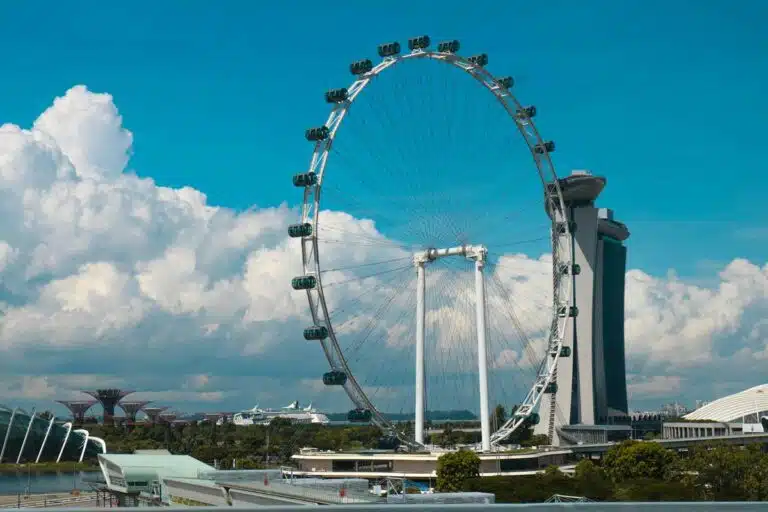
- Singapore Flyer: what to expect on the observation wheel — a first-hand account of riding one of the world’s largest giant observation wheels, with practical information on tickets, timing and the views over Marina Bay.
- Singapore Cable Car: practical guide with hours, prices and tips — the aerial cable car connecting Mount Faber to Sentosa Island, with panoramic views over the southern islands and the container port.
- Singapore City Gallery: where urban planning gets interesting — interactive exhibits and massive scale models revealing how this island nation engineered its modern landscape, in a free gallery in the URA Centre.
- Red Dot Design Museum, Singapore: practical guide for first-time visitors — a design museum in a former colonial building on Marina Bay, housing prize-winning industrial and product design from around the world.
Mandai Wildlife Reserve
The Mandai Wildlife Reserve in northern Singapore brings together five wildlife parks, a nature boardwalk and a cluster of family experiences within a single complex. It is one of the world’s great wildlife destinations. A complete guide to Mandai Wildlife Reserve covers all the parks together, with advice on combination tickets and how to plan your time across multiple days. Individual park guides are listed below.
- Singapore Zoo: why it might be the best zoo in the world — an in-depth look at what makes this open-concept rainforest zoo so consistently outstanding, with guidance on what to prioritise on your visit.
- Night Safari, Singapore: ticket prices, hours and visitor guide — the world’s first nocturnal wildlife park, where tram rides and walking trails through recreated tropical forest reveal animals rarely seen active in daylight.
- Bird Paradise, Singapore: ticket prices, hours and visitor guide — Asia’s largest bird park, with eight immersive walk-through aviaries housing over 3,500 birds across 400 species.
- River Wonders, Singapore: ticket prices, hours and visitor guide — Asia’s first and only river-themed wildlife park, with habitats representing eight of the world’s great river systems and a giant panda exhibit.
- Rainforest Wild Asia, Singapore: ticket prices, hours and visitor guide — Mandai’s newest wildlife park, focused on Asian rainforest ecosystems, with orangutans, clouded leopards and Malayan tigers.
- Curiosity Cove, Singapore: ticket prices, hours and visitor guide — an interactive indoor attraction aimed at younger children, with animal-themed play and learning experiences.
- Exploria, Singapore: visitor guide with ticket prices, hours and review — an outdoor adventure and nature-play space within the reserve, reviewed honestly for who it suits and whether it’s worth adding to your itinerary.
- Mandai Boardwalk: visitor guide with hours and access information — a 1.7km elevated walkway through secondary rainforest connecting the wildlife parks, with good birdwatching opportunities and a quieter atmosphere than the parks themselves.
Cultural heritage: Chinatown, temples and the Peranakan world
Singapore’s cultural heritage reflects the migration waves that built the city from the 1820s onward — Chinese, Malay, Indian and Peranakan communities each shaped the neighbourhoods, temples and traditions that give the city its distinctive layered character.
- Singapore’s Chinese heritage: migration, myth and modern Chinatown — an overarching guide to the sites that tell the story of the city’s largest ethnic community, from the early coolie trade to the shophouse-lined streets of Chinatown today.
- Haw Par Villa, Singapore: transport, tickets and visitor tips — the bizarre and fascinating cultural park famous for its Ten Courts of Hell dioramas, depicting the punishments awaiting sinners in Chinese Buddhist mythology in vivid, gruesome detail.
- Peranakan Museum, Singapore: ticket prices, hours and visitor guide — a beautifully restored colonial school building housing the world’s most significant collection of Peranakan (Straits Chinese) material culture, covering the unique hybrid identity that developed from Chinese-Malay intermarriage.
- Buddha Tooth Relic Temple, Singapore: visitor guide — a massive Tang Dynasty-style temple in the heart of Chinatown, built to house a tooth relic of the historical Buddha, with a rooftop garden, a museum of Buddhist art and a gold stupa.
- Sri Mariamman Temple, Singapore: planning your visit — Singapore’s oldest Hindu temple, famous for its towering, colourfully sculptured gopuram entrance tower and the annual Thaipusam and Thimithi fire-walking festivals.
- Thian Hock Keng Temple, Singapore: practical guide with hours and visitor tips — Singapore’s oldest Hokkien temple, built in 1839 as a place of thanksgiving for safe arrival by Chinese immigrants, with extraordinary Fujian craftsmanship and free entry.
National museums and galleries
Singapore’s national cultural institutions are housed in some of the city’s most significant buildings and cover both the island’s own history and the wider story of pan-Asian civilisation. All are air-conditioned, which is a practical consideration worth noting in the tropical heat.
- National Museum of Singapore: 2026 visitor guide with prices, hours and tips — the nation’s oldest museum, combining a restored colonial building with contemporary gallery extensions, with multimedia storytelling covering Singapore’s history from early settlement through to independence and beyond.
- Asian Civilisations Museum, Singapore: ticket prices, hours and visitor guide — a premier institution dedicated to the pan-Asian cultures and trade routes that shaped modern Singapore, in a restored neoclassical building on the Singapore River.
- National Gallery Singapore: practical guide with hours, prices and tips — the world’s largest public collection of Southeast Asian art, housed in two restored national monuments — the former Supreme Court and City Hall — with a permanent collection spanning the 19th century to the present day.
WWII history and memorials
The Fall of Singapore in February 1942 — described by Churchill as the worst disaster in British military history — left a profound mark on the nation. Singapore’s WWII sites are among the most significant and least-crowded historical attractions in Southeast Asia.
- The Battlebox, Singapore: opening hours, tickets and visitor guide — the secret underground WWII command centre beneath Fort Canning Hill where General Percival made the decision to surrender Singapore to the Japanese on 15 February 1942, now preserved as an immersive museum.
- Former Ford Factory, Singapore: opening hours, tickets and how to plan your visit — the boardroom where British forces officially surrendered Singapore to the Imperial Japanese Army, preserved within a free museum covering the Japanese Occupation of 1942 to 1945.
- Changi Museum and Chapel, Singapore: transport, tickets and visitor tips — a moving memorial documenting the experiences of Allied prisoners of war held at Changi Prison during the Japanese Occupation, with replicas of the murals painted by Corporal Stanley Warren in the prison chapel.
- Fort Siloso, Sentosa: 2026 visitor guide with opening hours and tickets — Singapore’s only preserved coastal fort, with original gun emplacements, underground tunnels and exhibitions on why the guns faced the wrong way when the Japanese attacked from the north by land.
- Changi Boardwalk, Singapore: complete visitor guide — a scenic coastal trail near the historic Changi area, offering a peaceful walk along the eastern shoreline with views toward Malaysia and the Riau Islands.
Parks, gardens and nature reserves
Singapore punches well above its size for green space — a UNESCO World Heritage botanic garden, primary rainforest within the city limits, coastal nature reserves and a network of hilltop parks make the island one of the most surprisingly green destinations in Southeast Asia. All the parks listed here are free to enter.
- Singapore Botanic Gardens: practical guide with hours, prices and tips — a UNESCO World Heritage Site and Singapore’s most visited attraction, with a National Orchid Garden housing over 1,000 orchid species and 160 years of horticultural history.
- Bukit Timah Nature Reserve, Singapore: practical guide with hours and access tips — primary tropical rainforest within the city, home to over 40% of Singapore’s plant species despite covering only 163 hectares, with trails ranging from easy paths to a summit hike to Singapore’s highest natural point.
- Labrador Nature Reserve, Singapore: practical guide with hours and access tips — a coastal nature reserve on the southern shore combining secondary forest with WWII fortifications, a rocky beach and rock pools, and a clifftop trail with views across the straits toward Indonesia.
- Fort Canning Park, Singapore: practical guide with hours and access tips — a hilltop park in the centre of the city with layers of history spanning Malay royalty, colonial fortification and the Battlebox WWII command centre, with regular outdoor concerts and events.
- Mount Faber Park, Singapore: practical guide with hours and access tips — the hilltop park above the HarbourFront waterfront, with the best elevated views over the southern islands and the container port, and the upper cable car terminal for Sentosa.
- Merlion Park, Singapore: practical guide with hours and free entry tips — the waterfront park housing Singapore’s most iconic symbol, the Merlion fountain, with direct views of the Marina Bay Sands hotel and the city skyline.
- Plan your visit to Sungei Buloh Wetland Reserve and Jurong Lake Gardens.
Sentosa Island: beaches and Fort Siloso
Sentosa Island, connected to the mainland by causeway, cable car and a pedestrian boardwalk, functions as Singapore’s dedicated leisure resort — home to three beaches, a preserved WWII fort, major resort hotels and the Resorts World Sentosa entertainment complex. The three beaches each have a distinct character.
- Siloso Beach, Sentosa: practical guide with hours, prices and tips — the liveliest of Sentosa’s three beaches, closest to the cable car station and Fort Siloso, with watersports facilities, beach volleyball and a string of beachfront bars that makes it the most popular after-dark option.
- Palawan Beach, Sentosa: practical guide with hours, prices and tips — the central and most family-oriented of Sentosa’s beaches, with a suspension bridge to a small offshore islet marking the southernmost point of continental Asia.
- Tanjong Beach, Sentosa: practical guide with hours, prices and tips — the quietest and most scenic of the three beaches, at the eastern end of Sentosa with a more relaxed atmosphere, a well-regarded beach club and the best swimming conditions of the three.
Planning your Singapore visit
Singapore is a year-round destination — the tropical climate means heat and humidity throughout, with short afternoon rain showers most likely between November and January. There is no single “best” time to visit. The city is small and extremely well-connected by the MRT rapid transit network, and most central attractions are reachable by public transport without a taxi or rideshare. The main exception is Mandai Wildlife Reserve in the north, which requires either the dedicated Mandai Khatib Shuttle from Khatib MRT or a taxi. Singapore is expensive by regional standards, but many of the city’s parks, temples and museums are free.
How many days do you need in Singapore?
Three days covers Singapore’s headline attractions. A first day suits the Chinatown cultural district — the Buddha Tooth Relic Temple, Thian Hock Keng, Sri Mariamman and Haw Par Villa. A second day works well at Mandai — Singapore Zoo in the morning and the Night Safari in the evening. A third day suits the national museums, a walk through the Botanic Gardens and the Marina Bay waterfront. Four or five days opens up the WWII sites, Sentosa and the nature reserves.
Is Singapore worth visiting for more than a stopover?
Yes, and it consistently surprises visitors who allocate only one or two days. The depth of the cultural heritage, the quality of the WWII historical sites, the extraordinary Mandai Wildlife Reserve and the unexpected greenness of the island all reward more time than the standard stopover allows. Five to seven days is the point at which most visitors feel they’ve seen what Singapore genuinely has to offer rather than just its surface.