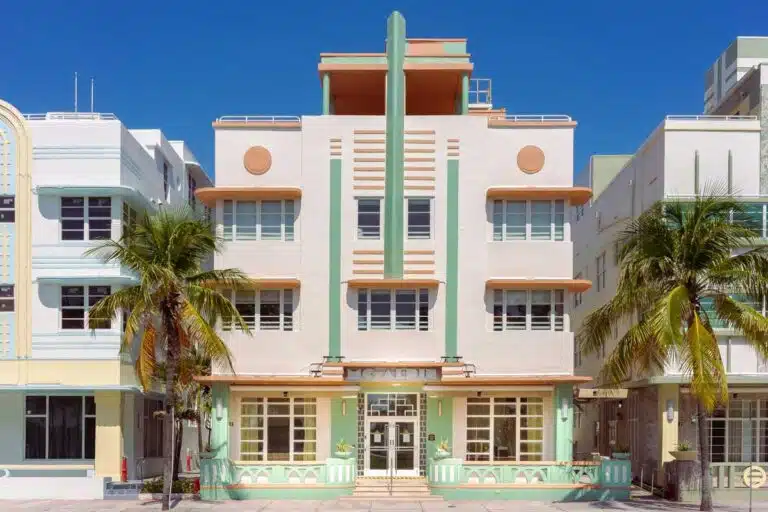
Miami is a city of sharp contrasts — the Art Deco architecture of South Beach alongside the spray-painted murals of Wynwood, the Gilded Age grandeur of Vizcaya beside the ancient mystery of the Coral Castle, and one of the world’s great subtropical wilderness areas beginning less than an hour from downtown. The Everglades — the largest tropical wilderness in the United States — are the most significant natural attraction within reach of the city, and understanding them properly is one of the most rewarding things a Miami visitor can do. Beyond the headline attractions, Miami’s surrounding region offers unexpected depth: a 12th-century Spanish monastery shipped stone by stone from Europe, a Japanese garden in Palm Beach County, and a flamingo sanctuary in Fort Lauderdale. These guides cover Miami’s key attractions and the most rewarding excursions from the city with practical information on ticket prices, opening hours and what to expect on arrival, alongside road trip guides for seven of the most popular routes from South Florida.
Art, architecture and cultural heritage
Miami’s cultural offer is more substantial than its beach reputation suggests. The Wynwood Arts District is one of the most significant outdoor mural spaces in the world. Vizcaya is among the finest Gilded Age estates in America. The Biltmore Hotel in Coral Gables is a Mediterranean Revival landmark that has hosted presidents and royalty. And the Ancient Spanish Monastery in North Miami Beach is one of the strangest and most compelling buildings in Florida — a 12th-century Cistercian monastery that William Randolph Hearst had dismantled and shipped to America block by block in the 1920s.

- Wynwood Walls, Miami: practical guide for first-time visitors — the curated outdoor museum at the heart of the Wynwood Arts District, where the world’s leading street artists have painted large-scale murals across a city block, transforming a former warehouse district into one of the most visited outdoor art spaces in the United States.
- Vizcaya Museum and Gardens, Miami: practical guide for first-time visitors — a Gilded Age Italian Renaissance villa built in 1916 for industrialist James Deering on the shores of Biscayne Bay, with 70 rooms of European antiques and decorative arts and ten acres of formal gardens that make it one of the finest historic estates in the American South.
- Biltmore Hotel, Coral Gables: practical guide for first-time visitors — the Mediterranean Revival landmark that has defined Coral Gables since 1926, with a tower modelled on the Giralda in Seville, the largest hotel swimming pool in the continental United States and a history that includes use as a military hospital, a VA hospital and a visit from every US president since its opening.
- Ancient Spanish Monastery, North Miami Beach: practical guide for first-time visitors — a 12th-century Cistercian monastery from Segovia, Spain, purchased by William Randolph Hearst in 1925, dismantled stone by stone, shipped to New York in 11,000 crates and eventually reassembled in North Miami Beach — now the oldest European building in the Western Hemisphere and one of the most extraordinary transplanted structures in America.
Wildlife and the Everglades
The Florida Everglades — a 1.5-million-acre subtropical wilderness of sawgrass prairies, cypress swamps and mangrove estuaries — begin less than an hour’s drive from downtown Miami. These guides cover both the most practical ways to experience the Everglades’ wildlife from the city and how to make sense of an ecosystem that is unlike any other on earth.
- Where to spot alligators in the Everglades: practical guide for first-time visitors — the most reliable locations, walking trails and viewing platforms for encountering wild American alligators in the Everglades, with honest guidance on what to expect, what time of day gives the best encounters and why some of the most accessible sites are also the most rewarding.
- Everglades airboat tours from Miami: practical guide for first-time visitors — what to expect from the various airboat tour operators along the Tamiami Trail and near Everglades City, covering tour lengths, wildlife encounter chances, the noise and heat realities of airboat travel, and which operators offer the most genuinely natural experience versus the most commercially packaged one.
- Miami Seaquarium: practical guide for first-time visitors — a marine theme park on Virginia Key in Biscayne Bay, with dolphin and sea lion presentations, a manatee exhibit and ongoing sea turtle rehabilitation programme, reviewed honestly for what it delivers in an era of increasing scrutiny around marine animal attractions.
Day trips from Miami: south Florida’s hidden attractions
Miami’s surrounding region contains several genuinely surprising attractions worth the drive — a mysterious stone structure built by a single man over 28 years, a flamingo sanctuary in Fort Lauderdale and a Japanese garden in Palm Beach County that is among the finest in the Western Hemisphere. All three work as standalone day trips or can be combined with a broader Fort Lauderdale or Palm Beach excursion.
- Coral Castle, Homestead: practical guide for first-time visitors — one of Florida’s most genuinely mysterious attractions, a collection of massive coral limestone sculptures and structures built single-handedly by Latvian immigrant Edward Leedskalnin between 1923 and 1951 using methods he never revealed, located in Homestead south of Miami on the way to the Florida Keys.
- Flamingo Gardens, near Fort Lauderdale: practical visitor guide — a 60-acre botanical garden and wildlife sanctuary in Davie with the largest collection of Florida native trees in the state, a free-flight aviary and a wildlife encounter programme featuring Florida panthers, American alligators and bald eagles.
- Morikami Museum and Japanese Gardens, Palm Beach County: practical visitor guide — a remarkable Japanese cultural museum and six-garden complex in Delray Beach, built on land donated by a Japanese farmer who came to South Florida in 1904 as part of an agricultural colony, with gardens spanning Shinden, Paradise and Karesansui styles and a museum covering Japanese art and the story of the Florida-Japan connection.
Road trips from Miami
Miami sits at the southern tip of Florida’s Atlantic coast, at the end of the road in most directions — but the drives north up both coasts, south into the Florida Keys and across to the Gulf coast are some of the most scenically distinctive in America. The Overseas Highway to Key West is one of the great American drives; the gulf coast routes north through Naples and across to Tampa offer a very different Florida from the Atlantic corridor. These guides cover seven of the most popular routes, with best stops, distances and realistic drive times.
- Miami to Key West drive: best stops, distance and drive time — the Overseas Highway south through the Florida Keys, crossing 42 bridges over the Gulf of Mexico and Atlantic Ocean, stopping at John Pennekamp Coral Reef State Park, Bahia Honda and the Seven Mile Bridge before reaching the southernmost point of the continental United States.
- Miami to Fort Lauderdale drive: best stops, distance and drive time — the short drive north along the Gold Coast, with options to take the scenic A1A coastal highway through Hollywood and Hallandale Beach rather than the direct I-95 corridor.
- Miami to Naples, Florida drive: best stops, distance and drive time — the drive west across the Everglades on the Tamiami Trail, one of the most atmospheric road journeys in Florida, passing through the heart of the Big Cypress National Preserve before arriving in the Gulf Coast city of Naples.
- Miami to Tampa drive: best stops, distance and drive time — the drive northwest along Florida’s Gulf coast corridor through Fort Myers, Sarasota and St Petersburg, or via the faster I-75 inland route through the Everglades and Alligator Alley.
- Miami to Orlando drive: best stops, distance and drive time — the drive north along Florida’s Turnpike or the I-95 and I-4 corridor to Florida’s theme park capital, with Lake Okeechobee and the Kissimmee Prairie as the most worthwhile detours on the inland route.
- Miami to Gainesville drive: best stops, distance and drive time — the drive north through the length of the Florida peninsula to the University of Florida city, with the Paynes Prairie State Preserve and Florida’s freshwater springs country as the most rewarding stops on the way.
- Miami to Jacksonville drive: best stops, distance and drive time — the longest of the Florida intrastate routes, heading north along the Atlantic coast on A1A or the faster I-95, connecting the subtropical south to the First Coast city of Jacksonville with St Augustine as the natural midpoint stop.
Planning your Miami visit
Miami’s subtropical climate means year-round warmth, but the dry season from November to April is the most comfortable visiting period — lower humidity, less rainfall and the peak of the snowbird season that fills hotels and restaurants. Summer (June to September) is hot, intensely humid and subject to daily afternoon thunderstorms, but brings significantly lower hotel prices and smaller crowds at most attractions. A car is essential for reaching most sites beyond the South Beach and Wynwood areas — the Everglades, Coral Castle, Vizcaya and the Ancient Spanish Monastery are all impractical without one. The Metromover covers downtown and Brickell; the Metrorail reaches Coral Gables and Coconut Grove. Traffic on I-95 is severe during rush hours and should be planned around rather than accepted.
How many days do you need in Miami?
Three to four days covers Miami’s main attractions comfortably. A first day suits South Beach and the Art Deco district alongside an afternoon in Wynwood. A second day works well for Vizcaya in the morning and the Ancient Spanish Monastery in the afternoon, with Coral Gables and the Biltmore between them. A third day suits the Everglades — an airboat tour in the morning and alligator spotting in the afternoon. A fourth day allows a day trip to Coral Castle and the Florida Keys corridor, or north to Fort Lauderdale for Flamingo Gardens.
What is Miami best known for?
Miami is best known internationally for South Beach, its Art Deco architecture, its nightlife and its status as a cultural gateway between the United States and Latin America. Among culturally focused visitors it is known for Wynwood, the Art Basel Miami Beach fair in December and the Pérez Art Museum Miami. The Everglades, which begin at the city’s western edge, are one of America’s great natural landscapes and increasingly recognised as one of Miami’s most significant visitor attractions rather than merely a regional aside.