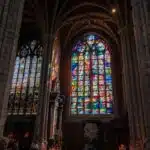
Belgium‘s oldest museum houses 600 years of European art in a neoclassical temple designed by architect Charles Van Rysselberghe. The collection at the Museum of Fine Arts in Ghent spans medieval altarpieces to contemporary installations, with Hieronymus Bosch, Rubens, Ensor, and Magritte hanging alongside ongoing restoration of seven panels from the Ghent Altarpiece — visible through glass while conservators work.
This guide was updated in March 2026 to reflect recent price increases. Other guides may contain outdated information.
Quick overview
Adult admission costs €15. The ticket includes the permanent collection, temporary exhibitions, and live viewing of Ghent Altarpiece restoration (weekdays only — weekends display the panels without conservators present). The museum opens Tuesday–Sunday with varying hours: 9:30am–5:30pm Tuesday–Friday, 10am–6pm weekends.
The Museum of Fine Arts (also known as the Museum voor Schone Kunsten or MSK) is in Citadelpark, a 10-hectare public park 15 minutes’ walk from Ghent-Sint-Pieters station. The location lies outside the low-emission zone, making car access easier than central Ghent attractions. Free parking exists in front of the museum, though spaces fill quickly.
At a glance
| Price | Opening hours | Address | Free for | Last entry |
|---|---|---|---|---|
| €15 adult | Tue–Fri 9:30am–5:30pm, Sat–Sun 10am–6pm | Fernand Scribedreef 1, 9000 Ghent | Under-19s, CityCard holders | 30 mins before closing |
How much does the Museum of Fine Arts cost?
As of 7 March 2029, standard admission is €19 for adults and includes the permanent collection, temporary exhibitions, and access to the Ghent Altarpiece restoration workshop. This represents good value compared to other European art museums of similar calibre.
Admission prices
| Ticket type | Price | Who qualifies |
|---|---|---|
| Adult | €19.00 | Ages 19+ |
| Young adult | €9.50 | Ages 19–25 |
| Teenager | Free | Ages 13–18 (ticket still required) |
| Child | Free | Under-12s (ticket still required) |
| CityCard Ghent | Free | Valid CityCard required |
| UiTPAS Ghent | €10.50 | Standard UiTPAS rate |
| UiTPAS social rate | €3.00 | UiTPAS at social rate |
| museumPASSmusées | Free | Valid museum pass |
First Sunday of the month: Ghent residents enter free (proof of address required). First Thursday of each month (except January, July, August, September), the museum stays open until 10pm with regular admission prices.
Group rates apply for 15+ visitors. School groups receive free admission but must book in advance. Persons with disabilities and their caregivers (with European Disability Card) receive reduced or free admission.
These MSK ticket prices were checked in March 2026
What time does the Museum of Fine Arts open?
Tuesday–Friday: 9:30am–5:30pm
Saturday–Sunday: 10am–6pm
Monday: Closed
During school holidays, the museum opens 10am–6pm daily (including Tuesday–Friday, which normally open at 9:30am).
First Thursday evening (except Jan, Jul, Aug, Sep): Open until 10pm for late-night viewing.
Annual closures: 25–26 December, 1–2 January. On 24 December and 31 December, the museum closes early at 4pm.
Important: Second-floor galleries begin closing 30 minutes before official closing time. If you want to see the entire collection, arrive at least 90 minutes before closing.
Do I need to book Museum of Fine Arts tickets in advance?
Online booking is recommended but not mandatory. During summer weekends, Belgian school holidays, and special exhibitions, walk-up tickets may sell out. Advance booking guarantees entry at your preferred time slot.
Online tickets cost the same as on-the-day prices — there’s no premium for advance purchase, just certainty. Tickets are valid for the permanent collection, current temporary exhibitions, and Ghent Altarpiece restoration viewing.
CityCard holders can bypass ticket queues by presenting their card at the entrance. No online booking is required for CityCard holders, though capacity limits may apply during extremely busy periods.
Groups (15+ people) must book through the museum’s group booking system by emailing the reservations team. Group bookings require at least one week’s notice.
Parking advice
MSK enjoys a rare advantage among Ghent museums — it sits outside the low-emission zone, meaning more vehicles can access it legally. Free parking exists directly in front of the museum, though spaces fill by late morning on sunny days.
On-site parking (free, limited spaces) — First-come, first-served. Approximately 20–30 spaces in front of the main entrance. Weekend mornings (10–11am) see heaviest demand. Weekday afternoons offer better chances.
Sint-Pietersplein underground car park (700m from MSK) — 700 spaces including accessible parking and electric vehicle charging. €2.50 per hour. This is the most reliable option when on-site parking fills.
Parking garage Zuid (1.5km from MSK) — 1,034 spaces, €2.80 per hour. Located under Gent-Zuid shopping centre. Walk takes 20 minutes or catch bus 5 or 8 (12-minute journey).
Street parking around Citadelpark is extremely limited and paid. Metres accept cards only.
Public transport: From Ghent-Sint-Pieters station, walk 15 minutes through Citadelpark (scenic route) or along Clementinalaan (faster). Buses 5, 8, and 9 stop at Heuvelpoort (5-minute walk from museum). Tram 1 reaches the city centre but requires a 15-minute walk from there to MSK.
History
In 1798, revolutionary France occupied Ghent and seized many of the city’s art treasures, shipping them to Paris. The Louvre still holds several of these works. Rebellious Ghent responded by establishing its own art collection in 1798 — making MSK Belgium’s oldest museum, predating Belgium’s independence by 32 years.
The collection initially resided in various Ghent buildings, moving between monasteries and city halls as space and politics dictated. By the late 19th century, the growing collection desperately needed permanent housing.
Architect Charles Van Rysselberghe (uncle of painter Théo van Rysselberghe) designed the current neoclassical building in Citadelpark. Construction began in 1897 and completed in 1902. Van Rysselberghe created a temple-like structure flooded with natural light — the large glass roof panels illuminating galleries from above remain a defining feature.
The museum opened to the public in 1902, displaying Flemish Old Masters alongside contemporary Belgian artists. The collection philosophy — showing old and modern art together rather than segregating by period — was unusual for the time and remains MSK’s signature approach.
World War I saw the collection evacuated to prevent German seizure. During World War II, the museum closed entirely. Post-war, MSK rebuilt its collection through purchases and donations, becoming particularly strong in Belgian Symbolism and Flemish Expressionism.
Major renovation occurred 2003–2007, modernising climate control and lighting whilst preserving Van Rysselberghe’s architecture. The restoration revealed original decorative details hidden by decades of overpainting.
Since 2012, MSK has housed the conservation studio for the Ghent Altarpiece from St Bavo’s Cathedral. Seven of the altarpiece’s upper panels currently undergo restoration on-site — a multi-year project completing in spring 2027. Visitors can watch conservators working weekdays, a rare opportunity to see art restoration in progress.
What to see at the Museum of Fine Arts
Ghent Altarpiece restoration — Seven upper panels from Van Eyck’s masterpiece occupy the museum’s heart, visible through floor-to-ceiling glass. Tuesday–Friday, watch conservators working on the 15th-century panels using microscopes and precision tools. Weekends, the panels are displayed without active restoration. This once-in-a-lifetime viewing opportunity ends when panels return to St Bavo’s Cathedral (spring 2027).
Hieronymus Bosch — MSK owns two authenticated Bosch paintings: Saint Jerome (c. 1505) and The Bearing of the Cross (c. 1515–1516). Bosch’s work is extraordinarily rare — fewer than 25 paintings are confidently attributed to him. Seeing two in one European art museum is significant.
Peter Paul Rubens — Multiple Rubens works demonstrate his evolution from early Baroque to mature style. Feeding of the Five Thousand (1632) shows his dramatic composition and flesh-tone mastery.
James Ensor — Belgium’s greatest symbolist is extensively represented. The Intrigue (1890) with its carnival masks and Skeletons Fighting Over a Pickled Herring (1891) demonstrate his macabre humour and social satire.
René Magritte — Several surrealist works including La Perspective amoureuse (1935) and Femme introuvable (1928). The collection demonstrates how Magritte challenged perception and reality through precise, unsettling imagery.
Théo van Rysselberghe — Extensive collection of Belgian Pointillist works by the architect’s nephew. Portrait of Alice Sèthe (1888) shows his mastery of neo-impressionist technique.
Museum café (Mub’art) — Excellent food overlooking Citadelpark. The café operates independently and can be accessed without museum admission through a separate entrance. Many locals use it simply as a park café, unaware they’re in a world-class art museum.
What’s included with your ticket?
- Permanent collection spanning 600 years
- All temporary exhibitions
- Live Ghent Altarpiece restoration viewing (weekdays) or panel display (weekends)
- Natural light-flooded galleries in Van Rysselberghe’s neoclassical building
- Access to museum library (by appointment)
- Free cloakroom for coats and bags
Not included: audio guides (check availability at desk), food and drink (Mub’art café operates separately), printed guidebooks (available in shop), parking (free but limited capacity).
Things to do near the Museum of Fine Arts
S.M.A.K. (Municipal Museum of Contemporary Art) (100m across Citadelpark, 2-minute walk) — Belgium’s premier contemporary art museum, housed in a 1949 former casino. The collection includes CoBrA, pop art, minimalism, and conceptual art by Karel Appel, Panamarenko, and international artists. The controversial collection divides opinion — some consider it world-class, others find it pretentious. Worth visiting if contemporary art appeals.
Citadelpark (surrounding the museum, free access) — A 10-hectare English-style park created 1875 on the site of a demolished fortress. Lakes, winding paths, mature trees, and sculptures create pleasant walking. The infamous aggressive geese patrol the main lake — locals warn visitors to maintain distance. Popular with joggers, students, and families. The park’s botanical gardens (separate entrance) adjoin the eastern side.
Ghent University Botanical Garden (200m, 3-minute walk) — A 2.5-hectare garden established 1797, maintained by Ghent University. Collections include tropical plants in historical glasshouses, medicinal herbs, and systematic plant displays. The Victoria House contains giant water lilies. Open daily, hours vary seasonally. Genuinely peaceful — far fewer tourists than Ghent’s main attractions.
STAM (Ghent City Museum) (1.2km, 15-minute walk or 7-minute bus) — Ghent’s history from Stone Age to present, told through multimedia displays and a massive aerial photo map covering the floor. Housed in a converted 14th-century abbey. Particularly strong on Ghent’s medieval textile wealth and 19th-century industrialisation. Underrated by visitors who spend all their time in the old town.
St Peter’s Abbey (300m, 5-minute walk) — A Benedictine abbey complex dating from the 7th century, though current buildings are 17th–18th century. Extensive gardens, baroque church, refectory, and museum. The abbey ruins and garden are free; museum sections charge admission (around €6). Far quieter than tourist-packed Gravensteen or St Bavo’s. The gardens offer exceptional views across Ghent.
Practical tips
Location and access: MSK sits at Fernand Scribedreef 1 in Citadelpark, approximately 1.5km south of Ghent’s historic centre. The museum lies between Ghent-Sint-Pieters railway station (1km) and the old town (1.5km). Unlike most Ghent attractions, MSK is outside the low-emission zone.
Getting there: From Ghent-Sint-Pieters station, walk 15 minutes through Citadelpark (follow signs). The scenic park route is flat and pleasant. Alternatively, buses 5, 8, and 9 from the station stop at Heuvelpoort (5-minute walk to MSK). From Brussels (30 minutes by train), Bruges (25 minutes), or Antwerp (50 minutes), arrive at Ghent-Sint-Pieters and walk or bus to MSK.
Time needed: Allow 2–3 hours for a thorough visit including the Ghent Altarpiece restoration. Visitors focusing only on highlights (Bosch, Rubens, Ensor, Magritte, altarpiece panels) can complete the circuit in 90 minutes. Art enthusiasts often spend 3–4 hours.
Accessibility: MSK is fully wheelchair accessible. Lifts serve all floors including the Ghent Altarpiece restoration area. Wheelchairs are available to borrow. Accessible toilets throughout. Visitors with disabilities receive reduced admission; caregivers with European Disability Cards enter free. Audio described tours can be arranged by advance request.
Photography: Permitted throughout for personal, non-commercial use without flash or tripods. The Ghent Altarpiece restoration studio prohibits photography as flash could damage the delicate panels. Some temporary exhibitions may restrict photography — signage indicates limitations. Commercial photography requires written permission.
Bags and cloakroom: Free cloakroom near entrance. Large bags, backpacks, and coats must be checked. Lockers require no deposit. Suitcases can be stored if space permits, but Ghent-Sint-Pieters station offers more reliable luggage storage.
Dogs: Not permitted except guide dogs and assistance dogs. The combination of valuable art, conservation work, and visitor safety precludes pets.
Food and facilities: Mub’art brasserie overlooks Citadelpark. Excellent food including lunch mains, sandwiches, cakes, and proper coffee. The café has a separate entrance and can be visited without museum admission. Many Ghent locals use it as their regular park café. Free toilets throughout the museum. The shop near the entrance sells books, postcards, and reproductions.
Altarpiece restoration schedule: Conservators work Tuesday–Friday during museum hours. Weekends display the panels without active restoration. The seven panels return to St Bavo’s Cathedral in spring 2027 — this viewing opportunity won’t repeat for decades (if ever). If seeing conservation work is important, visit on a weekday.
FAQs
Can you photograph the Ghent Altarpiece panels? No. The restoration studio prohibits photography to protect the 15th-century panels from flash damage. You can photograph the rest of the museum’s collection. The prohibition is strictly enforced — security will ask you to delete photos if you attempt it.
Are the altarpiece panels as impressive as the full altarpiece in the cathedral? They’re seven panels from the upper register, not the complete 24-panel work. You’re seeing meticulous conservation work rather than the assembled altarpiece. It’s a different experience — fascinating for understanding art restoration but not a substitute for seeing the complete work at St Bavo’s. Visit both if possible.
Is MSK suitable for children? Children under 19 enter free, but the museum isn’t specifically child-oriented. No interactive displays or children’s trails exist. Older children (10+) interested in art or the restoration process will engage. Younger children may become bored unless they’re unusually patient. The park outside offers more appeal for restless kids than the galleries.
Can you visit the café without a museum ticket? Yes. Mub’art has a separate entrance accessible from Citadelpark without entering the museum. Many locals use it as their regular café, unaware it’s technically inside an art museum. The food quality exceeds typical museum cafés — proper lunch mains, good coffee, decent cakes.
Is the Museum of Fine Arts better than other Belgian art museums? MSK, the Royal Museums in Brussels, Groeningemuseum in Bruges, and KMSKA in Antwerp each excel in different areas. MSK’s strength is its breadth — medieval to contemporary in one building — and the unusual “old masters meet modernists” presentation. The Bosch holdings are exceptional. For Flemish Primitives specifically, Groeningemuseum edges ahead. For Rubens, Antwerp wins. But for comprehensive Belgian art in one location, MSK is unmatched.