The National Museum of Denmark (Nationalmuseet) is the country’s primary cultural and historical institution, located at Ny Vestergade 10 in the centre of Copenhagen. This guide covers opening hours, ticket prices, transport or parking, accessibility, and practical visitor tips to help you efficiently plan your visit.
To skip the information and just book your ticket, head here.
This guide was updated in May 2026 to reflect the newly introduced online ticketing structure, which now offers a guaranteed 10% discount to visitors who purchase their general admission in advance.
Quick facts
| Feature | Details |
| Opening hours | Apr-Oct: Daily 10:00 am – 5:00 pm; Nov-Mar: Tue-Sun 10:00 am – 5:00 pm |
| Ticket prices | 150 DKK (Adult walk-up); 135 DKK (Adult online); Free (Under 18) |
| Address | Ny Vestergade 10, 1471 Copenhagen K, Denmark |
| Nearest public transport or parking | Gammel Strand Metro / BLOX parking garage |
| Typical time needed to visit | 2 to 3 hours |
National Museum of Denmark opening hours
The National Museum of Denmark operates on a seasonal schedule. During the summer season, which runs from April to October, the museum is open daily from 10:00 am until 5:00 pm. From Monday to Sunday, all permanent exhibitions and internal facilities are available to visitors during these hours.
During the winter season, from November to March, the operating days are reduced. In these colder months, the museum opens from 10:00 am to 5:00 pm between Tuesday and Sunday, and remains entirely closed on Mondays. The only exceptions during the winter season are the Danish school winter break in February and the Easter holiday, when the museum opens on Mondays.
National Museum of Denmark ticket prices
Opening hours and ticket prices were checked on the official website and last updated in May 2026. General admission for an adult walk-up visitor costs 150 DKK at the desk. Visitors who purchase their adult tickets online in advance receive a 10% discount, bringing the price down to 135 DKK. Anyone under the age of 18 is granted free entry to the museum.
The museum is included in the Copenhagen Card scheme. This digital city pass provides consolidated entry to the museum alongside dozens of other cultural institutions and public transport access across the capital region. Other major attractions included in this pass are the Tivoli Gardens, Rosenborg Castle, Amalienborg Museum, and Christiansborg Palace.
Why book the Copenhagen Card?
- 🏰 Access to 80+ Top Attractions: Enjoy entry to Copenhagen’s most iconic sites, including the world-famous Tivoli Gardens, Rosenborg Castle, the Round Tower, and the National Museum.
- 🚆 Unlimited Public Transport: Travel stress-free throughout the entire Capital Region with unlimited access to buses, trains, the metro, and the harbor buses (Zones 1-99), including transport to and from the airport.
- 🚤 Included Canal Tours: Experience the city from the water with a classic canal tour through the historic harbor and the charming canals of Christianshavn.
- 👨👩👧👦 Family-Friendly Savings: Maximize your budget with an adult card that allows up to two children under the age of 12 to accompany you for free, making it ideal for family adventures.
- 📲 Seamless Digital Experience: Use the 100% digital “Copenhagen Card City” app to activate your pass, navigate with offline maps, and check real-time opening hours directly from your smartphone.
How to get to National Museum of Denmark
Visitors can easily reach the National Museum of Denmark using the Copenhagen public transport network. The most direct train route utilises the Copenhagen Metro (Cityringen). Passengers should disembark at the Gammel Strand metro station, which is located a flat, five-minute walk away from the main entrance across the Frederiksholms Kanal.
Alternatively, visitors arriving via regional trains can alight at Copenhagen Central Station (København H). From the central station, it takes approximately ten minutes to walk to the museum via Tietgensgade. Traditional public bus routes also operate along the adjacent Stormgade, and dedicated bicycle parking racks are situated directly outside the museum entrance.
Parking at National Museum of Denmark
Drivers visiting the National Museum of Denmark should note that the institution does not possess a dedicated visitor car park. Parking directly on the historic streets surrounding the museum is extremely limited and subject to strict municipal time restrictions and premium central city tariffs.
The most convenient off-street parking option is the underground BLOX parking garage, located nearby at Vester Voldgade 129. This large automated facility operates 24 hours a day and uses a standard paid tariff system requiring payment by card or parking application. From the BLOX garage, it is a short three-minute walk to the museum’s main doors.
How long to spend at National Museum of Denmark
A standard visit to the National Museum of Denmark typically requires between two and three hours to complete comfortably. This duration provides enough time to walk through the expansive Danish Prehistory galleries and view the primary historical artefacts. It also allows visitors to comfortably examine the ethnographic collections at a steady walking pace.
If you intend to thoroughly read the detailed curatorial plaques or explore the extensive classical antiquities, allocate an additional hour to your itinerary. Families visiting with young children often spend up to three hours on-site, as the interactive Children’s Museum can occupy significant time on its own.
Accessibility at National Museum of Denmark
The National Museum of Denmark is designed to accommodate visitors with mobility requirements, featuring flat surfaces and modern public lifts connecting all exhibition floors. The main entrance is entirely wheelchair accessible, and complimentary manual wheelchairs or walking frames can be requested at the admissions desk. Accessible restroom facilities are situated on the ground floor.
Personal prams and large pushchairs are strictly prohibited from entering the gallery spaces to protect the artefacts. Visitors must secure their personal prams using loanable locks at the entrance and borrow one of the museum’s designated pushchairs instead. The museum is also a participating member of the Hidden Disabilities Sunflower network, offering free lanyards at the desk.
Inside / what to see at National Museum of Denmark
The core collections inside the National Museum of Denmark are organised chronologically, with the most significant artefacts located within the Danish Prehistory section. A primary highlight is the Trundholm Sun Chariot, an intricately cast Bronze Age sculpture demonstrating early Nordic religious beliefs regarding the movement of the sun.
Visitors will also encounter the Egtved Girl, a remarkably preserved Bronze Age burial located inside an excavated oak trunk. The acidic conditions of the burial mound preserved her original woollen clothing, hair, and fingernails. Nearby, the galleries display the Gundestrup Cauldron, a massive, highly decorated silver vessel featuring detailed Celtic and Thracian mythological motifs.
The museum houses exact replicas of the Golden Horns of Gallehus, as the original 5th-century solid gold horns were stolen and melted down in the 19th century. Moving forward in time, the Middle Ages and Renaissance galleries feature ecclesiastical art, medieval weaponry, and objects relating to the Danish monarchy and early state formation.
Beyond Danish history, the institution curates a vast Ethnographic Collection. This specific section features cultural items from across the globe, with a particularly strong emphasis on Arctic peoples and traditional Inuit culture from Greenland. You will find original kayaks, hunting equipment, and heavy winter garments constructed from animal hides.
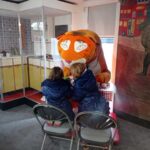
The facility also features a dedicated Children’s Museum, designed strictly as a tactile, interactive learning environment. In this specific area, younger visitors are encouraged to touch replicas, wear historical costumes, and physically explore scaled-down environments, including a Viking ship and a 1920s Danish classroom.
Practical visitor tips
| Tip Category | Practical Advice |
| Timing | Arrive at 10:00 am on a weekday morning to explore the popular Prehistory galleries before school groups arrive. |
| Crowds | Avoid visiting on rainy summer afternoons, as the museum frequently reaches maximum capacity as tourists seek indoor activities. |
| Layout | Start your visit on the ground floor to view the prehistoric highlights before experiencing museum fatigue in the upper ethnographic galleries. |
| Entry process | Purchase your general admission tickets online to secure the guaranteed 10% discount and avoid ticket desk queues. |
| On-site logistics | Secure your large backpacks and winter coats in the free basement lockers, as they are not permitted inside the exhibition rooms. |
Frequently asked questions about National Museum of Denmark
| Question | Answer |
| Is the National Museum of Denmark suitable for children? | Yes, the museum is highly suitable for children and features a dedicated Children’s Museum where physical interaction and play are strongly encouraged. |
| Do you need to book tickets in advance for the National Museum of Denmark? | No, advance booking is not strictly required, but purchasing adult tickets online in advance grants a flat 10% discount. |
| Is the National Museum of Denmark open on Mondays? | Yes, the museum is open on Mondays from April to October. It is strictly closed on Mondays during the winter season. |
| Are bags allowed at the National Museum of Denmark? | Small day bags are permitted, but large backpacks, umbrellas, and heavy travel luggage must be stored in the basement lockers. |
| Can you bring a pushchair into the National Museum of Denmark? | No, personal pushchairs must be parked at the entrance, but visitors can borrow the museum’s own compliant pushchairs free of charge. |
Things to do near National Museum of Denmark
- Christiansborg Palace: The functional seat of the Danish Parliament, featuring lavish royal reception rooms, historic underground ruins, and a panoramic viewing tower.
- Ny Carlsberg Glyptotek: A prominent art museum built around a winter garden, featuring an extensive collection of antique Roman sculptures and French impressionist paintings.
- Tivoli Gardens: A historic amusement park and pleasure garden situated in the city centre, featuring traditional wooden roller coasters and evening illuminations.
- Thorvaldsens Museum: A highly distinctive, brightly coloured museum building dedicated strictly to the comprehensive works of the Danish neoclassical sculptor Bertel Thorvaldsen.
- Strøget: Copenhagen’s primary pedestrian shopping district, stretching through the medieval city centre and featuring major retail stores and historic public squares.
What to visit tomorrow
- Designmuseum Danmark: A cultural institution showcasing Danish design history, featuring extensive collections of mid-century furniture, textiles, and applied arts.
- Statens Museum for Kunst (SMK): The national gallery of Denmark, featuring a massive permanent collection of classical European paintings and contemporary Danish art.
- Louisiana Museum of Modern Art: An internationally renowned modern art gallery located on the coast north of Copenhagen, blending modern architecture with an outdoor sculpture park.
- Viking Ship Museum: A maritime museum situated in Roskilde, explicitly built to display five original 11th-century Viking ships recovered from the nearby fjord.
- Natural History Museum of Denmark: A scientific institution located within the Botanical Garden, featuring extensive geological collections and interactive zoological exhibitions.