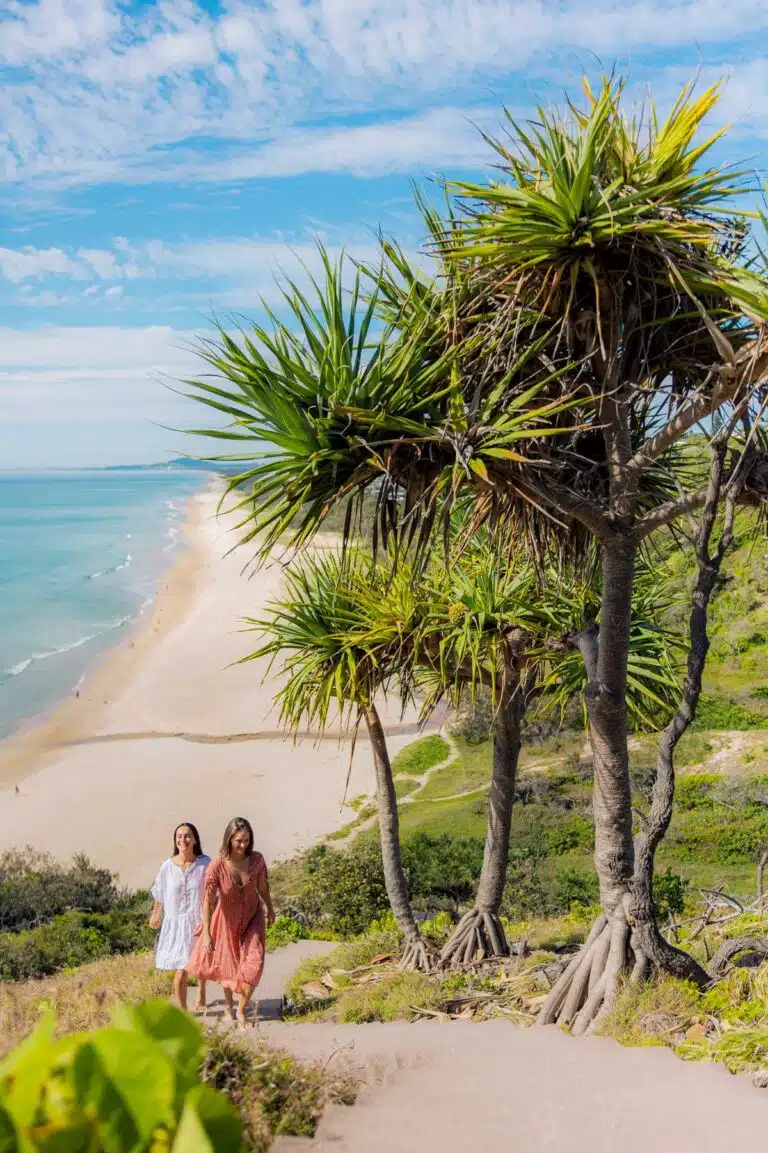
The Sunshine Coast stretches north of Brisbane along one of Queensland‘s most varied coastlines — a region that ranges from the boutique sophistication of Noosa and the surf beaches of Sunshine Beach to a lush hinterland of volcanic ridges, rainforest reserves and cascading waterfalls hidden in the ranges above the coast.
The contrast between the two halves of the region is one of its greatest strengths: a morning in the Blackall Range among subtropical rainforest and panoramic ocean lookouts can give way to an afternoon on a Noosa headland trail with dolphins visible in the water below. The region’s markets — particularly the famous Eumundi Markets — add a community character that distinguishes the Sunshine Coast from more resort-focused Queensland destinations.
These guides cover the hinterland’s scenic reserves and lookouts, five of the region’s most rewarding waterfalls, and the best of the Noosa coastal walk, with practical information on parking, trail access, swimming safety and opening hours.
Sunshine Coast Hinterland: scenic reserves, lookouts and markets
The Blackall Range hinterland above Maleny and Montville offers some of the best elevated scenery in southeast Queensland — views that sweep east across the coastal plain to the Pacific, with subtropical rainforest in the valleys below. The drive between the hinterland villages is rewarding in itself, and the lookouts and scenic reserves along the way are easy to combine into a well-paced half-day loop. Eumundi, in the flatter country between the hinterland and the coast, is worth planning around on market days.
- Mary Cairncross Scenic Reserve, Maleny: opening hours, entry and practical visitor information — a 55-hectare remnant of subtropical rainforest on the Blackall Range escarpment, with walking tracks, a wildlife discovery centre and sweeping views toward the Glass House Mountains across the coastal plain.
- Gerrards Lookout, Maleny: parking, opening hours and practical information — one of the finest viewpoints on the Blackall Range, looking east across the Sunshine Coast hinterland to the ocean, best visited in the morning before coastal haze builds.
- McCarthy’s Lookout, Maleny: what to see and where to park — a quieter alternative to Gerrards, with a different angle on the coastal panorama and easier parking, worth combining with Mary Cairncross and Gerrards on a hinterland loop.
- Eumundi Markets: Wednesday or Saturday — which day is better to visit? — an honest comparison of the two market days at one of Australia’s most celebrated regional markets, covering crowd levels, stall numbers, parking and what each day does better.
Sunshine Coast waterfalls
The hinterland ranges that rise behind the Sunshine Coast feed a series of waterfalls that range from gentle swimming holes accessible to families to more dramatic cascades set in national park rainforest. Swimming conditions, access tracks and facilities vary significantly between them — these guides cover what to expect at each, including whether swimming is safe, where to park and how far you’ll need to walk.
- Kondalilla Falls, Sunshine Coast: trails, parking, entry and visitor tips — the most dramatic waterfall in the hinterland, dropping 90 metres into a rainforest gorge in Kondalilla National Park near Montville, reached via a walking track that passes through subtropical rainforest.
- Mapleton Falls, Queensland: parking, walking tracks and visitor guide — a 120-metre drop into the Obi Obi Valley viewed from a lookout platform in Mapleton Falls National Park, with additional walking tracks through open eucalypt forest above the escarpment.
- Gardners Falls, Sunshine Coast: swimming, access and visitor tips — a popular swimming waterhole on Obi Obi Creek near Maleny, with a natural rock pool at the base of the falls that makes it one of the most accessible and family-friendly waterfall swimming spots in the hinterland.
- Buderim Falls, Sunshine Coast: entry, parking, trails and visitor tips — a compact waterfall in the Buderim Forest Park, close to the coast and reached via a short rainforest walk, making it the most convenient hinterland waterfall for visitors based on the coastal strip.
- Wappa Falls, Sunshine Coast: can you swim safely? 2026 visitor guide — a less-visited waterfall on the Yandina Creek downstream from Lake Wappa, with an honest assessment of whether swimming here is safe and what conditions affect access.
Five great things to do in the Sunshine Coast
- 🌅 Enjoy drinks as the sun goes down – on a sunset cruise along Mooloolaba’s waterways.
- 🌿 Spot wildlife in the Noosa Everglades – on the Everglades Explorer cruise.
- 🐋 On a whale-watching cruise – see migrating humpbacks from Noosa.
- 🍷 Combine food tastings with Hinterland highlights – on a scenic culinary tour.
- 🦐 On a bushtucker cruise – taste native food and learn about Aboriginal culture.
Noosa: headland walks and coastal beaches
Noosa’s headland offers one of the finest coastal walks in Queensland — a track that moves between sheltered coves, open ocean lookouts and patches of national park bush within a few kilometres. The beaches along the way each have distinct characters: Little Cove is sheltered and calm, Granite Bay is rockier and wilder, and Sunshine Beach beyond the headland is a full surf beach with its own community feel. Dolphins and, seasonally, whales are visible from the headland lookouts.
- Little Cove, Noosa: swimming, surfing, facilities and accommodation guide — the first and most sheltered beach on the Noosa headland walk, a favourite with locals for its calm water, shaded picnic spots and proximity to Hastings Street without the main beach crowds.
- Boiling Point Lookout, Noosa: walk length, dolphins and whale watching guide — the most dramatic viewpoint on the headland, where ocean swells converge around the rocky point below and dolphins are regularly visible in the water; the best spot on the headland for whale watching between June and November.
- Granite Bay, Noosa: location, access and swimming safety guide — a secluded rocky cove on the eastern side of the headland, reached via the national park walking track, with good snorkelling conditions and a wilder feel than the more accessible beaches closer to town.
- Sunshine Beach, Queensland: surf club, swimming and coastal walk guide — a long surf beach south of the Noosa headland with a strong local community, a well-regarded surf club, and a coastal walking track that connects it back toward Noosa without retracing the headland route.
Planning your Sunshine Coast visit
The Sunshine Coast is around 100 kilometres north of Brisbane, roughly 90 minutes by car, and is also served by Sunshine Coast Airport with domestic connections to Sydney and Melbourne. A car is more or less essential for exploring the hinterland — public transport between the coastal strip and the Blackall Range villages is limited, and the waterfalls are spread across a wide area. The coast itself, including Noosa, is more manageable without a car if you’re based in Noosaville or Noosa Heads. The best time to visit is April to October, when temperatures are warm and rainfall is lower; summer (December to February) is hot and humid with frequent afternoon storms, though the waterfalls are at their most impressive after rain.
How many days do you need on the Sunshine Coast?
Three to four days allows you to cover the coast and the hinterland without rushing. A first day suits the Noosa headland walk, taking in Little Cove, Boiling Point and Granite Bay before finishing at Sunshine Beach. A second day works well for the hinterland — the Maleny lookouts and Mary Cairncross in the morning, then Gardners Falls or Kondalilla in the afternoon. A third day can be spent waterfall-hopping further into the national parks, or at Eumundi on a Wednesday or Saturday market day. Those staying longer can combine the Sunshine Coast with a day trip to the Glass House Mountains or north toward Noosa’s Everglades.
What is the Sunshine Coast best known for?
The Sunshine Coast is best known for Noosa — its beaches, national park headland and restaurant scene — and for the Eumundi Markets, one of Australia’s most visited regional markets. The hinterland, with its rainforest reserves, waterfalls and escarpment views, is less famous but increasingly well regarded among visitors who explore beyond the coast. The region as a whole has a reputation for a slightly more relaxed and community-oriented atmosphere than the Gold Coast to the south.
Is the Sunshine Coast worth visiting?
Yes — and it tends to exceed expectations for visitors who arrive thinking it’s simply a beach destination. The combination of Noosa’s headland walk, the hinterland lookouts and the waterfall circuit gives the region a depth that keeps it interesting for three or four days. It works well as a standalone Queensland destination, as part of a Brisbane and Sunshine Coast itinerary, or as a first or last stop on a longer Queensland drive north toward the Whitsundays and Cairns.