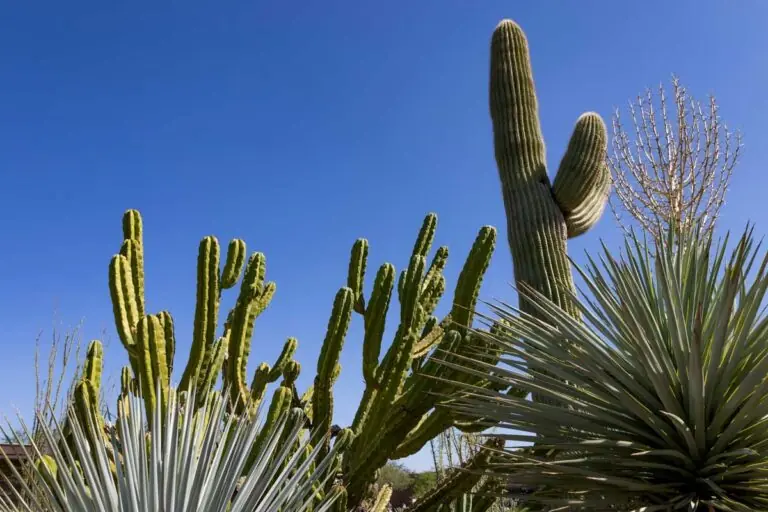
Phoenix sprawls across the Salt River Valley in one of the most dramatic natural settings of any major American city — a desert metropolis ringed by saguaro-studded mountain parks, flanked by the red rocks of Sedona to the north and the Sonoran Desert in every direction. The Valley of the Sun is a place that rewards those who look beyond its reputation as a winter sun destination: the Musical Instrument Museum is one of the finest specialist museums in the United States, the Heard Museum is internationally regarded for its Native American art and history collections, and Papago Park — just minutes from the city centre — packs a world-class botanical garden, one of America’s largest zoos and one of the desert Southwest’s most photographed hiking landmarks into a single urban park. These guides cover Phoenix’s key attractions with practical information on ticket prices, opening hours and parking, alongside day trip and road trip guides for the most rewarding excursions from the city.
Papago Park: desert gardens, wildlife and hiking
Papago Park sits just east of the city centre, its distinctive red sandstone buttes rising from the desert floor to create one of the most recognisable landscapes in Phoenix. Three of the city’s most visited attractions are clustered here within easy reach of each other — making a combined visit across a full day entirely practical.

- Desert Botanical Garden, Phoenix: ticket prices, hours and visitor guide — 140 acres of Sonoran Desert flora in the heart of Papago Park, with trail networks through towering saguaros, agaves, ocotillos and desert wildflowers, and a programme of evening events that make it one of the best Phoenix attractions after dark.
- Phoenix Zoo: complete guide to one of America’s largest privately owned zoos — a 125-acre zoo in Papago Park with 3,000 animals across four distinct trails, including a Safari train, African Savanna habitats, a children’s trail and one of the most visited orangutan exhibits in the American Southwest.
- Hole in the Rock, Papago Park: hiking guide, prices and tips — the iconic red sandstone formation with a natural window eroded through its face, reached by a short but steep scramble and offering some of the finest sunset views over the Phoenix skyline available from any easily accessible point in the city.
Phoenix’s museums and cultural attractions
Phoenix’s cultural institutions consistently surprise visitors who arrive expecting little beyond desert scenery — the city has invested heavily in world-class museums across music, science, Native American art and frontier history. These five attractions between them represent some of the strongest museum programming in the American Southwest.
- Musical Instrument Museum (MIM), Phoenix: opening hours, ticket prices and parking guide — the world’s only global musical instrument museum, with over 7,000 instruments from every country on earth displayed across themed galleries, a performance theatre and an innovative audio-video experience system that lets visitors hear each instrument in its cultural context.
- Heard Museum, Phoenix: ticket prices, hours and visitor guide — an internationally acclaimed institution dedicated to the art, history and culture of Native American peoples, with particularly strong collections of Hopi, Navajo and Pueblo art and a permanent exhibition on the boarding school era that is among the most important cultural experiences available in Phoenix.
- Arizona Science Center, Phoenix: complete guide with prices, hours and tips — four floors of hands-on science exhibits in downtown Phoenix, with a Dorrance Planetarium, a giant-screen theatre and interactive galleries covering everything from desert ecology to space exploration, well suited to families and school groups.
- Pioneer Living History Museum, Phoenix: complete guide with prices and hours — a 90-acre open-air museum of 19th-century Arizona territorial life, with over 30 historic buildings relocated from across the Arizona Territory and costumed interpreters demonstrating frontier crafts and trades across a recreated pioneer settlement.
- Arizona Heritage Center, Tempe: complete guide with prices and hours — the Arizona Historical Society’s main Tempe museum at the eastern edge of Papago Park, covering 20th-century Arizona history from statehood in 1912 through the mining and ranching eras to the modern growth of the Valley of the Sun.
Day trips from Phoenix: Casa Grande and Tempe
The Phoenix metropolitan area extends into the Sonoran Desert far enough to encompass some genuinely distinct attractions — a pre-Columbian monument that is one of the most significant archaeological sites in North America, a quirky roadside park celebrating the neon sign heritage of mid-century Arizona, and an interactive aquarium that makes a practical family addition to a Phoenix itinerary. Casa Grande is around 45 miles southeast of Phoenix, easily combined with a drive to Tucson.
- Casa Grande Ruins National Monument, Coolidge: practical visitor guide — a 14th-century Hohokam great house that is one of the largest and most enigmatic pre-Columbian structures in North America, protected beneath a distinctive steel canopy and interpreted by National Park Service rangers whose guided tours bring the Hohokam civilisation to vivid life.
- Casa Grande Neon Sign Park, Arizona: practical visitor guide — a free outdoor park in downtown Casa Grande preserving a collection of restored vintage neon signs from local businesses dating back to the 1940s through the 1970s, a genuine piece of mid-century Americana worth a stop on the Phoenix to Tucson corridor.
- SEA LIFE Aquarium Arizona, Tempe: opening hours, ticket prices and parking guide — an indoor ocean experience in the Arizona Mills mall in Tempe, with a 360-degree underwater tunnel, touch pools, shark exhibits and interactive rockpool displays, a compact but well-designed family attraction in the heart of the Phoenix metropolitan area.
Road trips from Phoenix
Phoenix sits at the hub of some of the American Southwest’s most scenic road trip routes — the drive north to Sedona through the Verde Valley is one of the most dramatic in Arizona, the drive south to Tucson passes through the Sonoran Desert and the Hohokam ruins, and the drive east from New Mexico crosses the Chihuahuan-Sonoran Desert transition. These guides cover the best stops, distances and drive times for three of the most popular routes to and from the city.
- Phoenix to Sedona drive: best stops, distance and drive time — the two-hour drive north through the Verde Valley to one of Arizona’s most spectacular destinations, with options to detour through Montezuma Castle National Monument, Jerome (a former copper-mining ghost town perched on a cliff) and the Slide Rock State Park before the red rocks of Sedona appear.
- Phoenix to Tucson drive: best stops, distance and drive time — the 100-mile drive south on I-10 through the Sonoran Desert, with options to detour through Casa Grande Ruins National Monument, the Biosphere 2 research facility and the town of Oracle before arriving in Tucson.
- Las Cruces to Phoenix road trip: best stops, distance and drive time — the drive west from southern New Mexico across the Chihuahuan and Sonoran Deserts, with stops that can include Deming, the Chiricahua National Monument and Tucson before arriving in the Valley of the Sun.
I’ve also created guides to the Phoenix to Flagstaff drive, Phoenix to Santa Fe drive, El Paso to Phoenix drive and Albuquerque to Phoenix drive.
Planning your Phoenix visit
Phoenix’s climate makes timing critical — October to April is the peak visitor season for good reason, with warm sunny days, cool nights and reliable blue skies. May and June are intensely hot and increasingly uncomfortable as temperatures push toward 45°C; July and August bring the monsoon season, with dramatic afternoon thunderstorms that can be spectacular but disrupt outdoor plans. A car is essential — Phoenix is one of the most sprawling metropolitan areas in the United States and attractions are spread across a wide area. Papago Park, the Heard Museum and the MIM all have their own car parks; downtown attractions including the Arizona Science Center require paid parking.
How many days do you need in Phoenix?
Three days covers Phoenix’s main attractions comfortably. A first day suits Papago Park — the Desert Botanical Garden in the morning, Hole in the Rock for sunset, and the Phoenix Zoo if time allows. A second day works well for the Musical Instrument Museum and the Heard Museum, both of which need at least two hours each. A third day suits a road trip to Sedona or a drive south through Casa Grande to Tucson. Those staying longer can add the Pioneer Living History Museum, the Arizona Science Center and a full day in Sedona.
What is Phoenix best known for?
Phoenix is best known for its desert sunshine, its position as the gateway to the Grand Canyon and Sedona, and for the saguaro cactus landscapes that surround it. Among cultural visitors it is increasingly known for the Musical Instrument Museum and the Heard Museum — both of which draw visitors from across the country specifically to see them. The city’s spring training baseball scene draws sports visitors every February and March, and its spa and golf resort culture makes it a popular winter break destination for visitors from colder American states.