New South Wales has an extraordinary coastline — 2,000 kilometres of it. From the subtropical waters off Byron Bay to the cold-water estuaries of the far south coast, bottlenose dolphins are resident along virtually the entire stretch. Several bays and headlands also see common dolphins, spinner dolphins and, during migration season, the occasional orca in close pursuit of humpback whales.
Unlike many wildlife experiences, dolphin watching in NSW requires no particular season. Resident pods are present year-round at the major sites. Sightings are never guaranteed, but at Port Stephens, Jervis Bay and Byron Bay the odds are consistently high. This wildlife-spotting guide highlights the best spots along the coast, from north to south.
Byron Bay
Byron Bay sits at Australia’s most easterly point, where warm currents from the Coral Sea meet the NSW coast. A resident pod of around 100 bottlenose dolphins lives year-round in the waters around Cape Byron Marine Park. Common dolphins also pass through regularly, sometimes in groups of several hundred.
The headland at Cape Byron is one of the best land-based dolphin-watching spots in Australia. From the lighthouse walk — particularly at dawn — dolphins can be spotted from the cliff path with naked eye. In winter, humpback whales move through the same waters, making the marine park one of the most species-rich stretches of coastline on the eastern seaboard.
A sea kayak tour around Cape Byron Marine Park is the most immersive option. Groups paddle from Clarkes Beach around the cape, with dolphin encounters common — reviewers regularly report kayaking among pods at close range. Whale sightings are possible during migration season. A complimentary rebooking is offered if no dolphins appear. All equipment is provided and no experience is necessary.
For those who prefer a powered vessel, a marine biologist-led cruise from Ballina, 30 minutes south of Byron Bay, covers the waters between Ballina and Cape Byron with a marine biologist on board for expert commentary. Resident dolphin pods are seen on most departures. During whale season (June to November), humpback sightings come with a guarantee — a return trip is offered free if none are spotted.
Port Stephens
Port Stephens, a large natural harbour 200 kilometres north of Sydney, is home to one of the largest resident bottlenose dolphin populations in Australia. Around 160 individuals live permanently in the bay — a number that earns it the informal title of the Dolphin Capital of Australia. Because the pod is resident rather than migratory, sightings are reliable year-round.
The dolphins here have been closely studied for decades. Many individuals are known by name and markings. They regularly bow-ride alongside vessels and are strongly associated with specific areas of the bay around Nelson Bay and Shoal Bay. Whale sightings are also possible during the May to November migration.
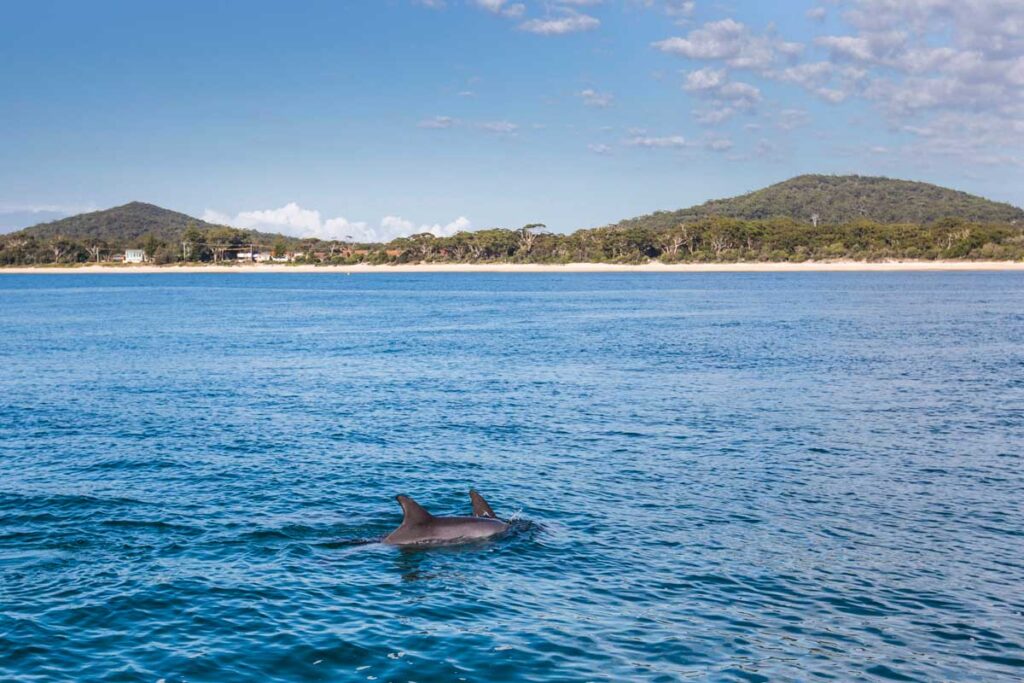
A dolphin discovery cruise from Nelson Bay is the most focused wildlife option, taking in the headlands of Tomaree and Yacaaba alongside the resident pod. Guides provide commentary on dolphin behaviour, and passengers can ride in the boomnet — a sturdy net suspended over the bow — for a water-level view of the dolphins beneath.
Visiting from Sydney? A small-group day trip from Sydney combines the dolphin cruise with sandboarding on the vast Stockton Bight sand dunes — at 32 kilometres, the longest moving sand dune system in the southern hemisphere. Hotel pickup is included and the tour returns to Sydney by early evening.
Jervis Bay
Jervis Bay, a protected marine park on the south coast roughly three hours from Sydney, is famous for two things: the whitest sand in the world (according to a Guinness record, though contested) and a resident dolphin pod that has become one of the most reliably encountered in NSW. The bay’s enclosed, sheltered waters and rich fish stocks make it ideal dolphin habitat.
Pods regularly approach boats throughout the bay, and the clarity of the water makes underwater visibility exceptional. On calm days, dolphins are visible metres below the surface from boat decks and kayaks alike. Booderee National Park, which borders the bay, adds koalas, kangaroos and little penguins to what is already an impressive wildlife offering.
Five great things to do in Jervis Bay
- 🐬 Meet Jervis Bay’s resident bottlenose dolphins – on a dolphin cruise.
- 🐋 On a whale-watching cruise – see the humpback whales on their annual migration.
- 🌊 Admire giant sea cliffs and spot wildlife – on a Jervis Bay Passage cruise.
- 🌌 Take an astronomer-guided stargazing tour – and explore the night sky from the beach.
- 🛶 See wildlife and glide along calm waters – on a half day sea kayaking tour.
A dolphin watch cruise from Huskisson Wharf takes in the bay on a five-deck catamaran, with multiple viewing levels and expert commentary from the crew. Morning and afternoon departures are available. The operator regularly encounters the resident pod, and reviewers frequently report dolphins swimming directly beneath the bow.
Kayakers have perhaps the most intimate encounters of all. A half-day sea kayak tour through Booderee National Park explores the bay’s quieter reaches, with dolphins a regular companion. One reviewer describes paddling among a pod and hearing them breathe. Guides carry strong local knowledge and the tour includes a beach stop with coffee and baked goods.
Sydney visitors who want to combine the south coast with a day out can join a full-day south coast tour from Sydney that takes in the Kiama blowhole, Bald Hill Lookout and Sea Cliff Drive before arriving at Jervis Bay for a 1.5-hour dolphin cruise. Hotel pickup and drop-off from Sydney are included.
Sydney Harbour and the coast
Bottlenose dolphins are present in Sydney Harbour year-round, though less reliably than at the dedicated wildlife sites further along the coast. Sightings most often occur in the outer harbour and around the heads — particularly near North Head and South Head — where dolphins follow bait schools moving in and out of the bay.
The harbour foreshore at Manly and Shelly Beach produces occasional sightings from land, particularly in the early morning. Dolphin-specific tours from Sydney are limited; most wildlife cruises focus on the whale migration season. That said, dolphins appear regularly as a bonus on whale-watching departures, and the views of the Sydney Opera House and Harbour Bridge make any cruise worthwhile regardless of wildlife outcomes.
From May to November, whale-watching cruises departing from Circular Quay head out past the heads toward the migration route, with dolphins a reliable sighting en route. The combination of harbour scenery and open-ocean wildlife is hard to match anywhere on Australia’s east coast.
Five great things to do while you’re in Sydney
- Take a small group tour to the Blue Mountains – with a Parramatta River cruise thrown in.
- See the landmarks and secret beaches – on a Sydney Harbour cruise.
- Discover Sydney’s most historic neighbourhood – on a Rocks walking tour.
- Go on a whale-watching cruise – and admire migrating humpbacks.
- Learn to surf at Bondi Beach – with beginner surfing lessons.
The south coast: Batemans Bay and Merimbula
The far south coast of NSW — Batemans Bay, Narooma and Merimbula — is less visited than the more celebrated sites to the north, but the dolphin watching here is serious. These coastal lakes, river mouths and rocky headlands support both resident bottlenose pods and transient populations of common dolphins that move along the coast.
Montague Island, a nature reserve 9 kilometres offshore from Narooma, is one of the finest wildlife sites in NSW. It holds a large fur seal colony, a little penguin rookery and — in the surrounding waters — some of the most reliable dolphin sightings on the south coast. Snorkelling with seals and dolphins around the island is possible on licensed tours from Narooma.
At Batemans Bay, a glass-bottomed kayak tour through the Batemans Marine Park Sanctuary explores otherwise inaccessible inshore waters, with clear-hulled kayaks giving an unobstructed view of the underwater world below. Dolphins move through the sanctuary regularly, and the tour operates in waters protected from boat traffic — making for calmer, quieter encounters than open-bay cruises.
Practical tips for seeing dolphins in NSW
Year-round or seasonal?
Resident pods at Port Stephens, Jervis Bay and Byron Bay are present every month of the year. Common dolphins and offshore species are more variable. If combining dolphin watching with whale watching, June to November is the window — humpbacks migrate north from June and south from August, and dolphins often accompany them.
Boat versus kayak
Both have merits. Boats cover more water and are more likely to find dolphins quickly. Kayaks offer a quieter, lower approach — dolphins occasionally investigate kayakers at close range, particularly in sheltered bays like Jervis. For families with young children, a covered catamaran with shade and toilet facilities is the practical choice.
What to bring
Polarised sunglasses cut glare and make dolphins much easier to spot below the surface. Sunscreen is essential on any NSW coastal trip. On kayak tours, waterproof bags for cameras and phones are advisable — they’re provided by some operators but worth bringing regardless. Sea conditions in NSW can change quickly; check forecasts before booking open-ocean departures.
More New South Wales travel
Other New South Wales travel guides on Planet Whitley include:
- Why the Eden Killer Whale Museum is worth visiting.
- Planning a visit to the Big Banana in Coffs Harbour.
- Why visit Wategos Beach in Byron Bay?
- Why you should visit the Bombo Headland in Kiama.
- What to expect at the Walkabout Wildlife Sanctuary on the Central Coast.