The easiest way to see the Hagar Qim temples in Malta is on a guided tour, although you can also take the number 74 bus from Valletta.
- For more things to do in Malta, step this way.
Why visit Hagar Qim?
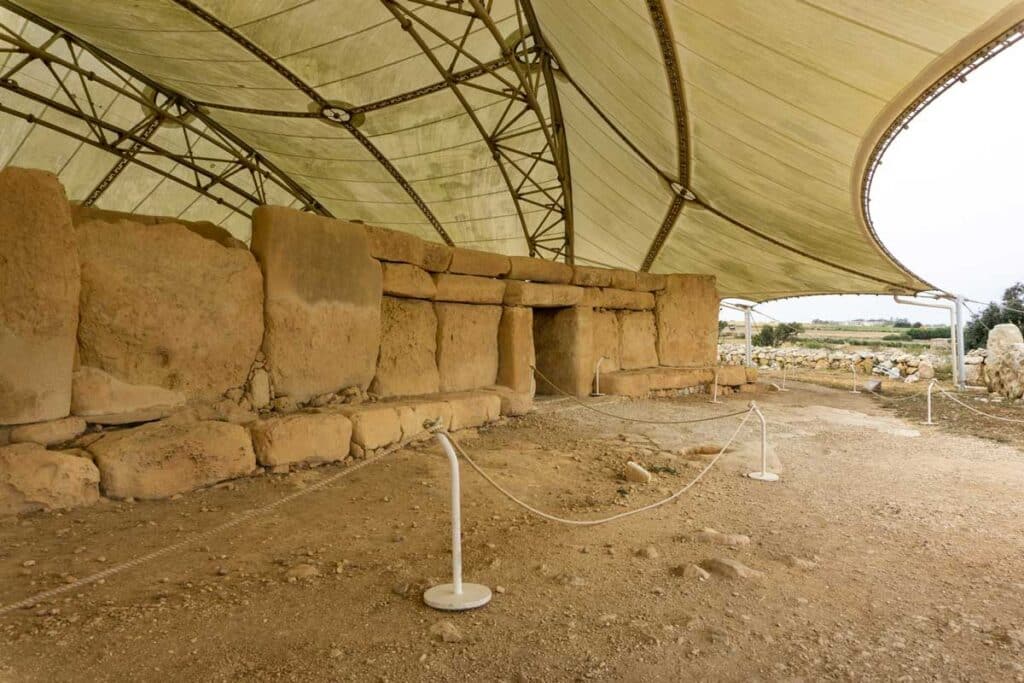
The Hagar Qim complex of megalithic temples includes some of the oldest buildings in the world that are still standing. And it makes Stonehenge look a bit pathetic.
The temples, houses, forecourts and chambers are thought to have been constructed in the 4th millennium BC, and skeletal remains indicate that the temples were regularly used for animal sacrifice.
The buildings have largely been left as they are, barring the reinforcement of a few stones. Given the age, the complex remains remarkably intact.
Where is Hagar Qim?
Hagar Qim is in the south of Malta, not far from the Blue Grotto. If you have your own car, Hagar Qim is a 16km drive from Valletta, which should take around 24 minutes. It’s a similar time and distance from St Julian’s.
Hagar Qim entrance fee
The entrance fee to get into Hagar Qim is €10 for adults, with slightly cheaper tickets available for children and senior citizens.
This price also includes entrance to the nearby Mnajdra complex.
Getting to Hagar Qim via public transport
It is easy enough to get to Hagar Qim by public transport, as there is a bus stop a couple of minutes down the road. If coming from Valletta, the number 74 bus will take you there.
The easiest way to visit Hagar Qim
However, the easiest way to visit Hagar Qim is to do so as part of a tour. There are several tours available that take in Hagar Qim, most of which offer the advantage of hotel pick-up, and combining the visit with several other sites in Malta. On some tours, this is other megalithic temples. On others, it’s the Limestone Heritage Park.
Take a look through the options to see which suits you best. Prices start at €36, and this includes a guide who’ll help you understand what you’re looking at.
All prices are correct as of October 2026, but are subject to change in future.
Things to do near Ħaġar Qim
- Mnajdra Temples – About 500 metres downhill from Ħaġar Qim, this neighbouring prehistoric complex contains three megalithic temples in a coastal setting, with notable alignments to the sun during the equinoxes and solstices.
- Blue Grotto – Near Wied iż-Żurrieq, this network of sea caves is known for its blue water and changing light. Boat trips operate when sea conditions permit.
- Wied iż-Żurrieq – This small coastal inlet has fishing boats, waterfront restaurants and access to boat trips exploring the nearby caves.
- Ħamrija Tower – This 17th-century coastal watchtower stands along the cliffs near the temples and can be seen on a walk through the surrounding archaeological landscape.
- Għar Lapsi – This rocky inlet west of the temples is a popular spot for swimming and snorkelling, with clear water and views across the coast.
Alternative attractions
- National Museum of Archaeology – In Valletta, this museum displays prehistoric artefacts from Malta’s temple sites, including carved figures and objects that help explain the islands’ Neolithic cultures.
- Ġgantija Archaeological Park – On Gozo, this UNESCO-listed complex contains some of the oldest freestanding stone structures in the world. Its ticket also covers the nearby Ta’ Kola Windmill.
- Tarxien Temples – This prehistoric complex in Paola contains several interconnected temple structures, with carved stone reliefs and evidence of sophisticated Neolithic craftsmanship.
- Ħal Saflieni Hypogeum – This underground prehistoric burial complex in Paola has chambers carved into the limestone, some designed to resemble the architecture of above-ground temples. Advance booking is essential.
- St Paul’s Catacombs – In Rabat, this extensive network of underground burial chambers illustrates Malta’s early funerary traditions and the development of Christianity on the island.
Disclosure: There are affiliate links within this article. If you buy a product after clicking through on these links, I will earn a small commission at no extra cost to yourself.