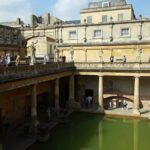
Roman Vindolanda Fort and Museum is one of Europe’s most significant Roman archaeological sites, located at Bardon Mill, Hexham, Northumberland, NE47 7JN, approximately one mile south of Hadrian’s Wall. Managed by the Vindolanda Charitable Trust, the site includes a stone Roman fort, a surrounding civilian settlement, a fully refurbished museum, live summer excavations, and a companion attraction at the Roman Army Museum, seven miles west.
This guide covers opening hours, ticket prices, transport, parking, accessibility, what to see, and practical visitor tips at one of the best Roman sites in Britain.
Updated May 2026. The standard on-the-door adult ticket for Vindolanda is now £16.00, and the online discounted price is £14.40. Many third-party guides list earlier prices of £11.00–£13.00, which are significantly out of date. Additionally, the site now opens at 9:30am, not 10:00am as several older guides still state.
Quick facts
| Opening hours | Daily 09:30–17:30 (summer); closes earlier in winter – check website |
| Last admission | 1 hour before closing |
| Adult ticket (on the door) | £16.00 |
| Adult ticket (online) | £14.40 (save 10%) |
| Child ticket (on the door) | £7.50 (ages 5–18 in full-time education) |
| Child ticket (online) | £6.75 |
| Family (on the door) | £40.00 (2 adults, up to 3 children) |
| Under 5 | Free |
| Address | Chesterholm Museum, Bardon Mill, Hexham, Northumberland, NE47 7JN |
| Sat nav postcode | NE47 7JN (but follow brown road signs once local) |
| Nearest railway station | Bardon Mill (approx. 1.5 miles from site) |
| Parking | Free, on site |
| Typical visit length | 2–3 hours (Vindolanda only); 4–5 hours with Roman Army Museum |
Vindolanda opening hours
Vindolanda is open daily from 09:30, with seasonal closing times that vary across the year. In summer (broadly April to October) the site closes at 17:30, with last admission at 16:30. Winter hours are shorter; the site has historically closed at 16:00 with last admission at 15:00 from November onwards.
The on-site museum closes annually for essential maintenance, typically from early January to the first week of February. The fort site itself remains open during this period. Exact closure dates vary each year; the official website publishes a current schedule. The site does not close on bank holidays. Live excavations run Monday to Friday, weather permitting, between April and September.
Five great things to do in Northumberland
- 🏛️ Discover Roman Britain on a full day tour along Hadrian’s Wall.
- 🎬 Visit the filming locations for Vera on a day tour from Newcastle.
- 🌊 Take a guided Pilgrims Path walk across the sands to Holy Island.
- 🏰 Explore Harry Potter’s Hogwarts at Alnwick Castle.
- 👻 Learn about Hexham’s gruesome, dark side on a storytelling tour.
Vindolanda ticket prices
A standard adult ticket purchased on the door costs £16.00. Booking online through the Vindolanda Trust’s own ticketing system saves 10%, bringing the adult price to £14.40.
| Ticket type | On the door | Online (10% saving) |
|---|---|---|
| Adult (18+) | £16.00 | £14.40 |
| Child (5–18, full-time education) | £7.50 | £6.75 |
| Family (2 adults + up to 3 children) | £40.00 | £36.00 |
| Under 5 | Free | Free |
| Carer | Free | Free |
The SAVER Ticket covers one visit to both Vindolanda Fort and Museum and the Roman Army Museum (the Trust’s sister site, seven miles west). The two visits do not need to be on the same day. SAVER tickets are valid for 12 months from purchase and are non-refundable and non-changeable.
| SAVER Ticket | On the door | Online |
|---|---|---|
| Adult | £22.00 | £19.80 |
| Child (5–18, full-time education) | £12.00 | £10.80 |
| Family (2 adults + up to 3 children) | £55.00 | £49.50 |
Ticket prices were checked on the official Vindolanda Trust booking system and last updated in May 2026.
How to get to Vindolanda
The most practical way to reach Vindolanda is by car, as the site is in a rural location with limited public transport. The nearest main road is the A69, from which Vindolanda is well signposted. Use sat nav postcode NE47 7JN, but switch to the brown road signs once you are within a mile, as the sat nav will direct you to a smaller car park near the museum rather than the main entrance car park at the fort.
- By car from Hexham: Approximately 13 miles west along the A69, then follow brown signs. Around 25 minutes.
- By car from Newcastle: Approximately 35 miles via the A69. Around 45 minutes.
- By car from Carlisle: Approximately 35 miles east via the A69. Around 45 minutes.
- By train: Bardon Mill station is on the Tyne Valley Line (Newcastle–Carlisle). Trains are infrequent; check National Rail. The station is approximately 1.5 miles from Vindolanda by foot or taxi.
- By bus (seasonal): The AD122 Hadrian’s Wall Bus runs seasonally from April and stops approximately 7 minutes’ walk from Vindolanda. Timetables are available at gonortheast.co.uk. Local bus service 685/85 (Newcastle–Carlisle) stops at Haltwhistle or Bardon Mill, from where the AD122 connects.
- By bike: Hadrian’s Cycleway (National Cycle Route 72) passes close to the site. Cycle parking is available at the entrance.
Parking at Vindolanda
Parking at Vindolanda is free and on site. There are two car parks: the main car park at the fort’s West Gate, and a smaller car park directly adjacent to the museum building lower down the hill.
Blue Badge holders have five designated spaces at the West Gate Car Park, approximately 50 metres from the main entrance via a level flagged path. Additional Blue Badge parking is available directly outside the museum entrance (approximately 5 metres away). Visitors with mobility requirements who wish to visit the museum without descending the steep hill from the fort on foot should note that staff will direct them to drive their car down to the museum car park after touring the fort. Advance enquiry is recommended; contact the site on +44 (0)1434 344277.
How long to spend at Vindolanda
Most visitors spend two to three hours at Vindolanda alone. Combining it with the Roman Army Museum (seven miles west, included in the SAVER Ticket) makes for a full day of four to five hours across both sites.
A visit focused solely on the museum and the most accessible sections of the fort can be completed in 90 minutes. Visitors who walk the full extent of the settlement, attend a free guided tour, and spend time with the museum’s artefact collection should allow three hours. Families using the activity centre or attending a special event should allow additional time.
Accessibility at Vindolanda
Vindolanda is approximately 70% accessible to wheelchair users, making it one of the more accessible Roman archaeological sites in Britain, though some limitations apply to the outdoor fort areas.
- The museum is fully accessible with level floors, gentle ramps, wide doorways, accessible toilets (1,500 x 1,500mm floor space), a hearing induction loop, and Blue Badge parking 5 metres from the entrance.
- The fort site has paved pathways around most of the ruins with level tarmac surfaces, though some paths near the excavation areas and sections of original Roman stonework are uneven and may be difficult for manual wheelchair users without assistance.
- A steep slope links the fort area to the museum below. Wheelchair users and visitors with pushchairs should ask staff on arrival about driving to the museum car park separately rather than attempting the slope on foot. Staff are actively helpful with this.
- Mobility scooters and powered wheelchairs can access most of the site. A folding wheelchair is not available to borrow on site.
- Hearing induction loops are installed in the museum. Audio descriptions are available.
- Carers are admitted free of charge.
- Dogs are not permitted at either Vindolanda or the Roman Army Museum, with the exception of assistance dogs.
Inside Vindolanda: what to see
The visit divides into two distinct areas: the outdoor fort and settlement site on the higher ground, and the museum lower down the hill. Both are included in the same ticket.
The Roman fort ruins: The visible stone fort dates primarily to the 3rd century AD. Within the fort walls, visitors can walk around the remains of the headquarters building (principia), the commanding officer’s house, and a series of barracks and granaries. The level of preservation is unusually good for a site of this age, with several wall sections standing to head height. Vindolanda was rebuilt nine times on the same spot; excavation has revealed layers of occupation stretching back before Hadrian’s Wall was constructed. Only an estimated 27% of the total site has been excavated.
The civilian settlement (vicus): Outside the fort walls, a civilian settlement grew up to serve the military garrison. The remains include a recognisable main street, individual houses, the outline of a tavern, shops, and a bathhouse. Interpretation panels explain who lived here and how the community functioned.
Live excavations (April–September): Active archaeological digs take place Monday to Friday during the excavation season, weather permitting. Visitors can observe the work from defined viewing areas. The excavations are staffed by a mix of professional archaeologists and trained volunteers from across the world. Free 45-minute guided tours of the fort site are available; check the current timetable at vindolanda.com.
The museum: The on-site museum contains artefacts found exclusively at Vindolanda, displayed in the context of the site where they were found. Highlights include the Vindolanda Writing Tablets – small wooden postcards, voted Britain’s Top Treasure, that record letters, shopping lists, a birthday invitation, pay records, and soldiers’ requests, dating to around 100 AD. Also on display: an extensive collection of leather shoes (unusually well preserved by the waterlogged soil conditions), military equipment, tools, jewellery, pottery, carved stone altars, and the Vindolanda Gladiator glass, one of the finest Roman glass objects found in Britain. The museum was fully refurbished and is well laid out with clear labelling and interpretation at multiple reading levels.
Roman garden replica and Hadrian’s Wall reconstructions: The site includes a reconstructed section of Hadrian’s Wall at full height, demonstrating its original scale and appearance, and a reconstructed Roman garden.
Practical visitor tips
| Tip | Detail |
|---|---|
| Book online to save 10% | The online price is confirmed at 10% below the on-the-door rate. Booking in advance is always recommended, particularly in peak summer months when guided tours and special events fill quickly. |
| Follow brown road signs, not just sat nav | Sat nav postcode NE47 7JN can direct you to the smaller museum car park rather than the main fort entrance. Once within a mile of the site, follow the brown signs for the correct approach. |
| Wear appropriate footwear and layers | The outdoor site is extensive and partially on uneven ground. The site is exposed moorland terrain and weather can change quickly; waterproofs and sturdy footwear are advisable year-round. |
| Arrive before noon to see the excavation in progress | Live excavations run Monday to Friday in the excavation season. Visiting in the morning gives the best chance of seeing active digging before the team breaks for lunch. |
| No dogs except assistance dogs | This rule applies across the whole site and at the Roman Army Museum. There are no dog-friendly waiting areas adjacent to the entrance. |
Frequently asked questions about Vindolanda
| Question | Answer |
|---|---|
| Is Vindolanda suitable for children? | Yes. Under 5s enter free. The site has an activity centre aimed at younger visitors, wide open spaces, and excavations that children can observe. The museum suits older children better than very young ones. |
| Do you need to book tickets in advance for Vindolanda? | Advance booking is not strictly required but is recommended in summer and at weekends. Booking online saves 10% on the standard price. Buy tickets at vindolanda.com/tickets. |
| Is Vindolanda open in winter? | Yes, daily from 09:30. Winter closing times are earlier (typically 16:00). The museum closes for maintenance in early January to early February; the fort site stays open during this period. |
| Can you visit both Vindolanda and the Roman Army Museum on the same day? | Yes. The SAVER Ticket covers both sites and is valid for 12 months; you do not need to visit on the same day. The two sites are approximately 7 miles apart and linked seasonally by the AD122 bus. |
| Is Vindolanda accessible for wheelchair users? | Partially. The museum is fully accessible and approximately 70% of the outdoor site has paved pathways. The steep slope between the fort and museum is the main challenge; staff can advise on driving to the lower car park instead. Carers are admitted free. |
Things to do near Vindolanda
Roman Army Museum, Greenhead – Approximately 7 miles west of Vindolanda (around 15 minutes by car). The Trust’s sister site features an award-winning immersive 3D film about life on Hadrian’s Wall and interactive galleries. Covered by the SAVER Ticket.
Housesteads Roman Fort (Vercovicium) – Approximately 4 miles north-east, on Hadrian’s Wall itself. Managed by English Heritage and the National Trust, this is one of the best-preserved Roman forts in Britain, with panoramic views along the Wall.
Sycamore Gap – Approximately 5 miles north along Hadrian’s Wall. The site of one of England’s most recognisable trees (the famous sycamore was felled in 2023; the stump and new growth remain a significant visitor point). The walk along the Wall ridge to the Gap is one of the most scenic sections.
The Sill: National Landscape Discovery Centre – Approximately 4 miles north at Once Brewed, NE47 7AN. A National Park visitor centre with exhibitions about the Northumberland landscape, Hadrian’s Wall, and the surrounding environment.
Twice Brewed Inn – Located on the B6318 Military Road, approximately 2 miles north of Vindolanda. A pub and hotel serving food and drink, with walking route information available. A convenient stop before or after visiting the Wall.
What to visit tomorrow: Roman forts and sites near Vindolanda
Chesters Roman Fort (Cilurnum), Chollerford – Approximately 12 miles east (around 25 minutes by car). An English Heritage site on the line of Hadrian’s Wall, with the best-preserved Roman cavalry fort bathhouse in Britain. The on-site museum houses a large collection of Roman inscriptions and sculpture.
Birdoswald Roman Fort (Banna), Cumbria – Approximately 14 miles west (around 25 minutes by car). An English Heritage site where a substantial section of Hadrian’s Wall survives at its full width, along with fort remains and a small museum covering 1,700 years of history on the site.
Corbridge Roman Town (Coria) – Approximately 16 miles east (around 30 minutes by car). An English Heritage site preserving the remains of a Roman garrison town including granaries, a fountain house, temples, and a colonnaded street. The adjacent museum displays Roman sculpture and everyday objects.
Arbeia Roman Fort, South Shields – Approximately 50 miles east (around 1 hour by car). Managed by South Tyneside Council, Arbeia was the supply base for Hadrian’s Wall, at the eastern end of the frontier. Partially reconstructed buildings include a gatehouse, barrack block, and commanding officer’s house. Free admission.
Senhouse Roman Museum, Maryport, Cumbria – Approximately 45 miles west (around 1 hour by car). Houses the largest collection of Roman altar stones found in one place in Britain, excavated from the Roman fort of Alauna at Maryport on the Cumbrian coast, marking the western end of the Hadrian’s Wall frontier system.
More Northumberland travel
Other Northumberland travel guides on Planet Whitley include:
- Lindisfarne Priory visitor tips.
- How to get the best out of a visit to Alnwick Castle.
- A practical guide to Dunstanburgh Castle.
- Kielder Observatory visitor guide.
- First-time visitors’ guides to Warkworth Castle and Belsay Hall, Castle and Gardens near Morpeth.