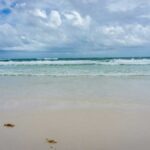
Beluga Point is a scenic overlook and wildlife-viewing pullout on the Seward Highway, about 20 minutes south of Anchorage, Alaska, within Chugach State Park. This guide covers current access, admission, transport and parking, accessibility, and practical tips for a first-time visit.
This guide was updated in August 2026. One point worth flagging: unlike several other Chugach State Park pullouts along Turnagain Arm, such as Bird Point, McHugh Creek and Potter Trailhead, Beluga Point does not charge a parking fee.
Quick facts
| Access | Open year-round, 24 hours (roadside pullout, no gate) |
| Admission | Free; no parking fee |
| Location | Seward Highway, Mile 110, about 20 minutes south of Anchorage |
| Nearest transport | No public transit; a car is needed |
| Typical visit length | 15 to 30 minutes |
Beluga Point opening hours
Beluga Point has no gate or set hours, since it is a roadside pullout within Chugach State Park directly off the Seward Highway. Visitors can stop at any hour, though wildlife viewing is best in daylight.
Beluga Point admission
There is no admission charge or parking fee to visit Beluga Point.
Access details were checked on the official website and last updated in August 2026. This differs from several nearby Chugach State Park sites along the same highway, including Bird Point, McHugh Creek and Potter Trailhead, which each charge a $5 daily parking fee.
How to get to Beluga Point
From downtown Anchorage, drive south on the Seward Highway (AK-1) for about 20 minutes to Mile 110. The pullout is clearly marked on the inlet side of the highway and is roughly 20 minutes from Ted Stevens Anchorage International Airport as well.
There is no public transit service to Beluga Point, so a car, rental vehicle or organised tour is needed to reach it.
Parking at Beluga Point
Free, paved parking is available directly at the pullout, with space for cars and RVs. The lot can fill during peak summer travel times, particularly around predicted bore tide arrivals.
How long to spend at Beluga Point
Most visitors spend 15 to 30 minutes here, reading the interpretive signs, using the spotting scopes and scanning the water for wildlife. Visitors timing a bore tide or beluga sighting may want to allow closer to an hour.
Many visitors combine a stop here with several of the other Turnagain Arm pullouts along the same stretch of highway, turning a short visit into a half-day scenic drive.
Accessibility at Beluga Point
The main overlook area is paved and reasonably level, making it accessible to wheelchairs and strollers. There are no restrooms or picnic facilities at this stop; the nearest restrooms are at the McHugh Creek Picnic Area, a few miles north.
The terrain beyond the main paved area, including the path down toward the old railroad grade, becomes uneven and rocky, and is not considered accessible.

Inside Beluga Point
Beluga whales are most often spotted from mid-July through August, as they follow salmon runs up Turnagain Arm; Dall sheep can sometimes be seen on the nearby cliffs, and orcas occasionally appear while hunting the belugas.
Beluga Point is also a recommended spot to watch the bore tide, a wall of water that can reach 6 feet high as it rushes up the narrow arm, arriving roughly two hours and fifteen minutes after low tide at Anchorage, though timing varies day to day.
The point is a National Register of Historic Places archaeological site, with evidence of human habitation dating back 8,000 to 10,000 years, making it one of the oldest known occupation sites in the Anchorage area.
Interpretive panels, sculpted beluga figures and free spotting scopes at the overlook describe the area’s wildlife and geology.
Beyond the guardrail and railroad tracks, the mudflats are genuinely dangerous: the fine glacial silt can trap a person’s feet like quicksand, and the incoming tide moves in quickly, so visitors should stay on the paved overlook rather than venture out onto the flats.
Practical visitor tips
| Tip | Detail |
|---|---|
| Timing | Visit mid-July through August for the best chance of spotting beluga whales, ideally on an incoming tide. |
| Crowds | Pairing a visit with the published bore tide schedule for Anchorage improves the odds of seeing the tidal wave. |
| Layout | Bring binoculars, since whales and Dall sheep are usually visible only at a distance. |
| Entry process | No permits or fees are required, so visitors can simply pull in and park. |
| On-site logistics | Do not cross the railroad tracks or guardrail onto the mudflats, which are dangerous due to deep glacial silt and fast-moving tides. |
Frequently asked questions about Beluga Point
| Question | Answer |
|---|---|
| Is Beluga Point free to visit? | Yes, there is no admission charge or parking fee. |
| Do you need a permit or reservation for Beluga Point? | No, it is an open roadside pullout with no booking required. |
| When is the best time to see beluga whales at Beluga Point? | Mid-July through August, when salmon runs draw whales up Turnagain Arm. |
| Are there restrooms at Beluga Point? | No, the nearest restrooms are a few miles north at the McHugh Creek Picnic Area. |
| Is it safe to walk onto the mudflats at Beluga Point? | No, the mudflats are dangerous due to deep glacial silt and fast-incoming tides; stay on the paved overlook. |
Things to do near Beluga Point
Windy Corner, a short drive south, is known for Dall sheep visible on the cliffs directly above the highway. Bird Point, a little further south, offers one of the best elevated viewpoints for watching the bore tide.
McHugh Creek Picnic Area and Trailhead, a short drive north, adds a waterfall, hiking trails and restrooms to a Turnagain Arm stop. Potter Marsh, also a short drive north, is a boardwalk-accessible wetland popular for birdwatching.
Potter Section House, the restored former railroad camp that now serves as Chugach State Park headquarters, is a short drive north as well.
What to visit tomorrow
The Alaska Wildlife Conservation Center, in Portage, is about 50 minutes’ drive and lets visitors see rescued moose, bears and other Alaska wildlife up close.
The Begich, Boggs Visitor Center and Portage Glacier, also in Portage Valley, are a similar distance and include exhibits on the area’s retreating glaciers alongside iceberg-dotted Portage Lake.
Whittier, reached through the one-lane Anton Anderson Memorial Tunnel shared with the Alaska Railroad, is about an hour and a half’s drive and serves as the gateway to Prince William Sound.
Eklutna Lake, north of Anchorage in Chugach State Park, is around 45 minutes to an hour’s drive and offers lakeside trails and paddling.
Hatcher Pass and Independence Mine State Historical Park, north of Wasilla, are about an hour and a half to two hours’ drive and combine alpine scenery with a preserved gold-mining site.