
Waverley Abbey guide: England’s first Cistercian monastery in Surrey. Free entry, riverside ruins, 2026 opening times, parking, and historical insights.
Overview: History, what to expect, and unique features of Waverley Abbey
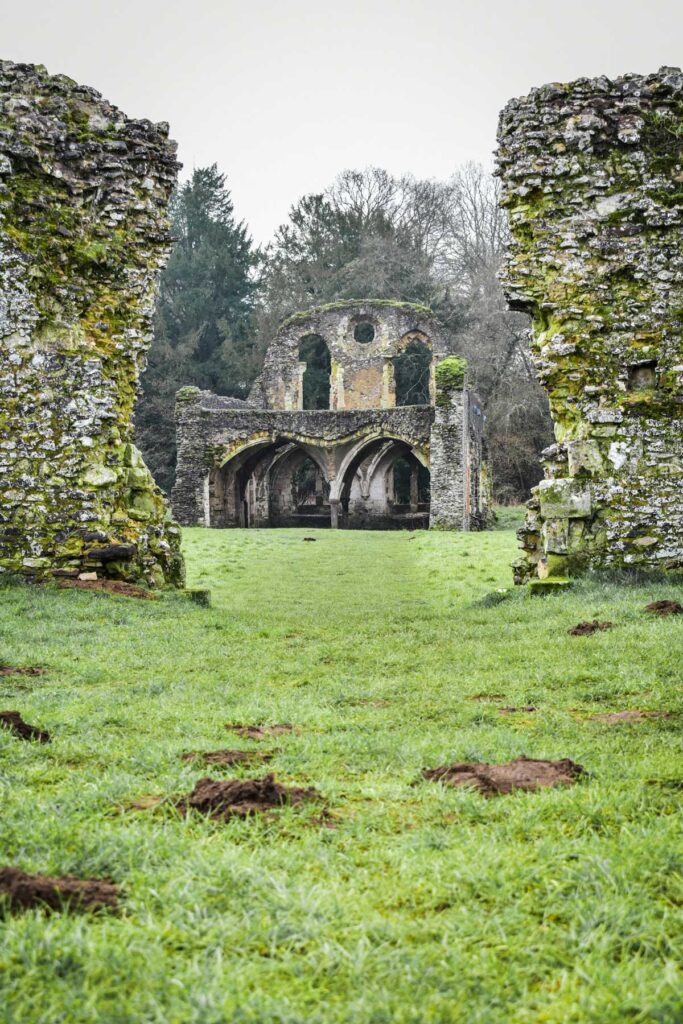
Waverley Abbey is a stunning, picturesque ruin of the first Cistercian abbey established in England. Founded in 1128 by William Giffard, Bishop of Winchester, the abbey became a large and wealthy community, serving as a significant religious and agricultural centre for over 400 years. As with other ruined abbeys in England, King Henry VIII’s Dissolution of the Monasteries forced its closure in 1536. After this, landowners dismantled the stone for use in local houses, leaving the extensive ruins visible today.
Visitors can expect a tranquil, atmospheric experience set beside a meander in the River Wey. The site gives you a profound sense of scale, despite its ruined state, with substantial walls and arches of the former church and claustral buildings still standing. The location, framed by trees and water meadows, makes it one of the most photographed monastic sites in the country. It’s an English Heritage site, and access is free of charge as the ruins are located on private land but accessible via a public footpath.
Planning your visit to Waverley Abbey: opening times and access
Waverley Abbey is an unguarded, open site accessible via a public footpath across private farmland.
- General access: The site is open year-round during daylight hours. Visitors should exit before dusk.
- Closures: There are no official closures, but access may be temporarily restricted by the landowner for essential maintenance or agricultural work.
- Walk to the abbey: Access requires a short walk (about 5–10 minutes) from the small parking area across a field, which can be muddy after rain.
- Recommended time: Allow approximately one hour to walk to the ruins, explore the extensive site, and enjoy the riverside setting.
Waverley Abbey admission and parking fees
The site is one of the few historical attractions in the area that remains entirely free to visit, reflecting its management under a guardianship agreement.
| Fee type | Price (checked February 2026) | Notes |
|---|---|---|
| Abbey Admission | Free | English Heritage manages the site but charges no admission fee. |
| Parking Fee | Free | A small, limited parking area is available off the access road; no fee applies. |
Donation note: While access is free, English Heritage encourages visitors to make a donation online or via a text service to support the maintenance and preservation of the ruins.
Is it worth paying for English Heritage membership?
Entry prices for English Heritage sites, including Dover Castle, Stonehenge and Tintagel Castle, can seem extremely expensive. This is clearly a deliberate ploy to push visitors towards taking out annual English Heritage membership.
Membership gives free access to more than 400 sites across the country, and costs £82. That is, unless you get a special deal – there was a 25%-off Black Friday deal in November 2025, for example.
Whether that £82 is worth it depends on how many sites are near you (there are lots in the south of the country, not so many near me in Yorkshire). And, critically, whether you’re going to visit them with children.
Each member can take up to six children with them free of charge. Given the steep one-time entry fees, an adult member with two children is likely to recoup the cost of their membership by visiting just two or three sites within the year.
For an individual without children, I’d say English Heritage membership is worth it only if you’re planning to blitz a few sites in one year. For an individual with children, membership is a smart investment that will likely pay itself back within one school holiday. To me, it’s a no-brainer.
The real question is whether it’s worth renewing English Heritage membership after a year. That’s debatable, as you’re unlikely to go to many of these sites twice. I eventually renewed after I was offered 20% off the price. I’ll probably recoup the membership price visiting two sites in summer next year, even if I’ve ticked off most of the best ones near me.
If you buy membership through this link, I earn a small commission at no extra cost to you.
Accessibility, safety, and amenities
The abbey’s remote location and historical ruin status create some limitations for visitors.
- Accessibility: The ruins themselves sit on uneven, grassy ground, and the access path from the car park crosses an open field, often proving muddy. The site is not easily navigable for wheelchair users or those with significant mobility issues.
- Facilities: No public toilets, café, or shop facilities exist at the abbey. Visitors must plan accordingly and bring their own refreshments, according to the English Heritage website.
- Safety: Visitors must stay off the ruins and respect the fragile state of the walls. Care must be taken near the riverbanks.
- Dogs: Dogs are welcome but must remain on a lead, particularly when crossing the field, to protect livestock and other visitors.
Nearby English Heritage sites
Waverley Abbey is situated near other historical sites, though most major English Heritage sites such as the Silchester Roman City Walls and the Grange at Northington require a longer drive.
- Farnham Castle: Located a short drive away, this large medieval castle was the main residence of the Bishops of Winchester, who originally founded Waverley Abbey.
- Oakhurst Cottage: A beautifully preserved, Tudor-era yeoman’s cottage that offers a glimpse into local domestic life during the period the abbey was falling into ruin.
- Bignor Roman Villa: Located further south in Sussex, this site features some of the best preserved Roman mosaics in the country.
FAQs (Frequently Asked Questions) about Waverley Abbey
| Question | Answer |
|---|---|
| Is there an entrance fee to the abbey? | No, access to Waverley Abbey is completely free of charge. Visitors only pay for the car journey to the site. |
| Can I walk inside the ruins? | Visitors can walk around the ruins, but they must not climb on the walls or enter areas cordoned off by English Heritage to ensure safety and prevent further damage. |
| When was Waverley Abbey founded? | The abbey was founded in 1128 by William Giffard, making it the first Cistercian abbey in England. |
| Are there toilets or a café at the site? | No, the site is an unguarded ruin and provides no facilities such as toilets, shops, or cafés. Visitors should plan to use facilities in the nearby town of Farnham. |
| Is the site easily accessible for everyone? | No, the access path crosses an uneven, open field that often becomes muddy, making the site challenging for wheelchairs and less mobile visitors. |

