
England’s ruined abbeys are evocative reminders of a lost medieval world. The Dissolution of the Monasteries under King Henry VIII caused their destruction. These sites offer a tangible connection to England’s spiritual and political history. Visitors can expect to explore magnificent Gothic architecture. They stand in picturesque locations across the country. Many ruins include vast churches and surviving domestic ranges.
Whitby Abbey: North Yorkshire’s most famous coastal landmark
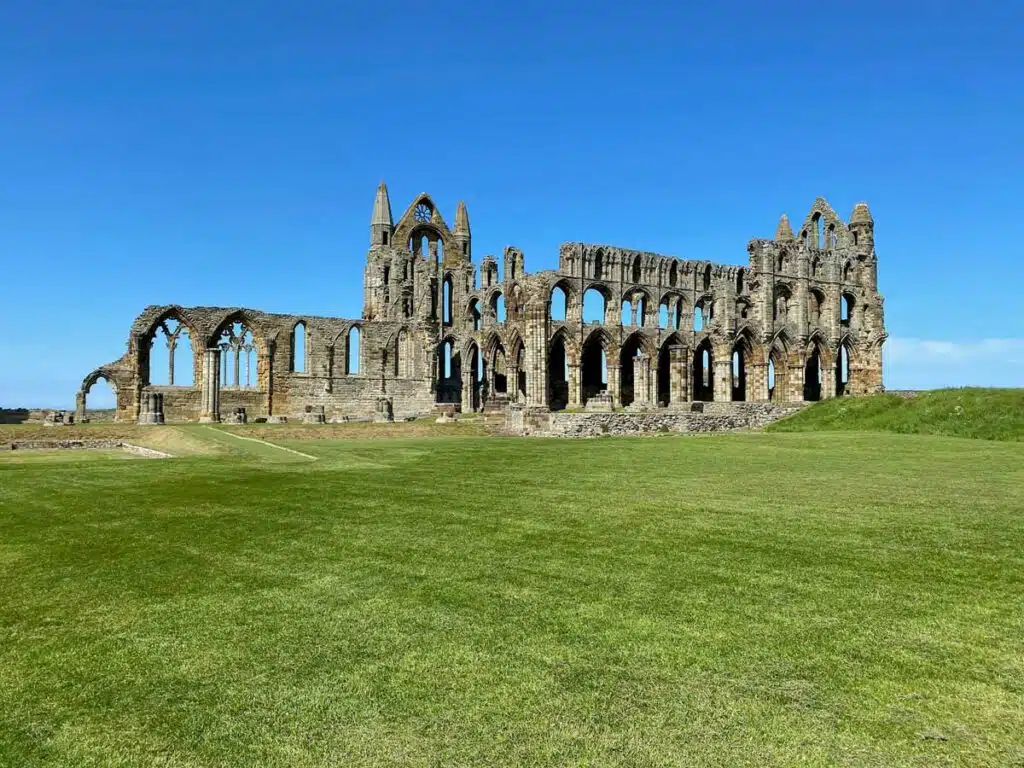
The ruins of Whitby Abbey dominate a high headland in North Yorkshire. A landmark event in English Christianity took place here. The Synod of Whitby in 664 settled the date of Easter. This aligned the English Church with the Roman tradition. The first monastery, founded around 657, became an important religious centre in Yorkshire.
The structure visible today is a Benedictine abbey church. Its shell dates primarily to the 13th century. The site’s dramatic Gothic arches inspired Bram Stoker’s novel Dracula. Today, the abbey offers spectacular views of the harbour and coast. It remains one of the most celebrated sights in the North.
Battle Abbey: Monument to the 1066 Battle of Hastings site
Battle Abbey in Sussex stands on the spot of one of England’s most famous conflicts. William the Conqueror founded the Benedictine abbey in 1067. This act was done as penance for the bloodshed of the Battle of Hastings. The high altar of the abbey church was intentionally placed where King Harold Godwinson fell.
Visitors can walk across the 1066 battlefield. They can also explore the substantial monastic ruins. Key remaining features include the imposing 14th-century Gatehouse, while parts of the monks’ dormitory and the excavated church foundations also survive. The abbey symbolises the Norman conquest and its immediate aftermath. Be warned: Parking at Battle Abbey is perhaps more complicated than it needs to be.
Fountains Abbey: England’s largest Cistercian monastic ruin
This Cistercian monastery near Ripon in North Yorkshire is immense. Fountains Abbey was founded in 1132 by Benedictine monks seeking austerity. It quickly grew into one of the wealthiest abbeys in England. Its wealth was mainly generated through the lucrative wool trade.
The well-preserved ruins showcase a mixture of Romanesque and Gothic styles. They are the largest monastic ruins in the country. Notable structures include the vast Lay Brothers’ Dormitory and the Cellarium. The abbey is now part of the Studley Royal World Heritage Site.
Malmesbury Abbey: The historic abbey with a unique flying monk story
Malmesbury Abbey in Wiltshire has a history spanning 1,400 years. It was founded as a monastery in the 7th century. The abbey is one of the few to maintain a continuous history until the Dissolution. The Norman church that followed was once far grander.
Today, only about one-third of the original structure remains standing. Much of the nave was lost due to structural collapses in 1479 and 1662. It is still in use as the Malmesbury parish church. The site is famous for the tale of Elmer the flying monk.
Rievaulx Abbey: Picturesque ruins in the North York Moors National Park
Set in a secluded wooded dale by the River Rye, Rievaulx Abbey is striking. It was the first Cistercian abbey established in North Yorkshire in 1132. The monastery became one of the most powerful and spiritually renowned centres in Britain. At its peak, the community numbered over 600 people.
The elegant Gothic ruins show the wealth achieved by the Cistercian monks here in and in other northern sites such as Byland Abbey and Jervaulx Abbey. They were successful through industries like sheep farming and iron production. The ruins were a key subject for Romantic artists in the 18th century. Today, they are a celebrated historical landmark.
Glastonbury Abbey: Reputed burial site of King Arthur and Guinevere
Glastonbury Abbey in Somerset is steeped in legend and mythology. It is tied to the earliest days of English monasticism. Myths claim Joseph of Arimathea founded the first Christian church here. The monastery became immensely rich and politically important.
Monks claimed to have discovered the graves of King Arthur and Queen Guinevere in 1191. A fire in 1184 led to extensive rebuilding. The intact Lady Chapel and the Abbot’s Kitchen are major surviving features. The site remains a spiritual and historical magnet for visitors.
Waverley Abbey: Site of England’s first Cistercian foundation
Waverley Abbey in Surrey was the first Cistercian monastery in England. It was founded in 1128 near the River Wey. This location quickly became a launchpad for the Cistercian order in the south. The monks endured poverty and frequent flooding of the site.
The impressive remains date largely from a 13th-century rebuild. Significant standing parts include the vaulted lay brothers’ refectory. The abbey produced the historical Annals of Waverley. Stones from the abbey were reused in nearby Tudor-era houses after the 1536 dissolution.
FAQs: Common questions about England’s abbeys
| Question: What caused the abbeys to become ruins? | Answer: Key historical facts |
|---|---|
| What event led to the destruction of these abbeys? | The Dissolution of the Monasteries caused their destruction. King Henry VIII ordered this process between 1536 and 1541. |
| Which order founded most of these abbeys? | The Cistercian order founded Fountains, Rievaulx, and Waverley. They were known as “White Monks” due to their undyed habits. |
| Are all the abbeys owned by the same organisation? | No, ownership is split. Whitby, Battle and Rievaulx are English Heritage sites. The National Trust owns Fountains Abbey. |
| Is any part of Malmesbury Abbey still in use today? | Yes, a significant portion of the original nave remains. It is still used as the Malmesbury parish church today. |


