
Discover 9 surprisingly old attractions hiding within modern cities. See ancient ruins like Huaca Huallamarca in Lima and the London Wall in London.
Huaca Huallamarca, Lima
In amongst the bank buildings of Lima’s San Isidro district – Peru’s de facto financial centre – stands an adobe pyramid. Huaca Hallamarca has had plenty of remedial work over the years, and goodies found inside – such as dolls, ceramics and even a mummified body – have been moved to a neighbouring museum. But it is thought that the pyramid originally belonged to the pre-Columbian Lima Culture, and could date back as far as 200AD.
La Brea Tar Pits, Los Angeles
Nobody quite knows how old California’s La Brea Tar Pits, surrounded by Hancock Park in LA, are. Uncovered by excavation in the early 20th century, these pits acted as a trap for animals that sauntered over them, and over the years thousands of fossils have been found in there. Given that these include bones belonging to mammoths and sabre-toothed cats – now displayed in the neighbouring Page Museum – it’s fair to say they’ve been down there for a while.
Arènes de Lutèce, Paris
We’ve got the building of a tramway depot in the 19th century to thank for the discovery of Paris’ Roman arena, built a trifling 18 centuries earlier. The Arènes de Lutèce has since been excavated and preserved as well as possible. Archaeologists think the amphitheatre – which had an unusually long 41.2 metre stage – was used for both theatrical productions and gladiatorial combat. It now sticks out like a sore thumb in the Latin Quarter.
The London Wall, London
Paris isn’t the only great European city with Roman remains – some can be found in London too. There are fragments of the original Roman Wall throughout the City of London – with a significant chunk outside the Tower Hill tube station. But the most impressive site is the amphitheatre that was uncovered beneath the Guildhall Art Gallery in the 1980s. No-one knows exactly when it was built, but it’s thought to date to the first century AD.
Aboriginal rock art, Sydney
Unlike elsewhere in New South Wales, heritage sites in Sydney generally relate to the early colonial era. But there are plenty of traces from before the Europeans arrived.
There are rock art sites in Sydney Harbour National Park – they can be seen on the Spit Bridge to Manly Walk – but absolutely loads in Ku-Ring-Gai Chase National Park.
Groot Constantia, Cape Town
Africa isn’t exactly known for its wine regions – and the South African wine industry tends to be thought of as a new world, modern thing.
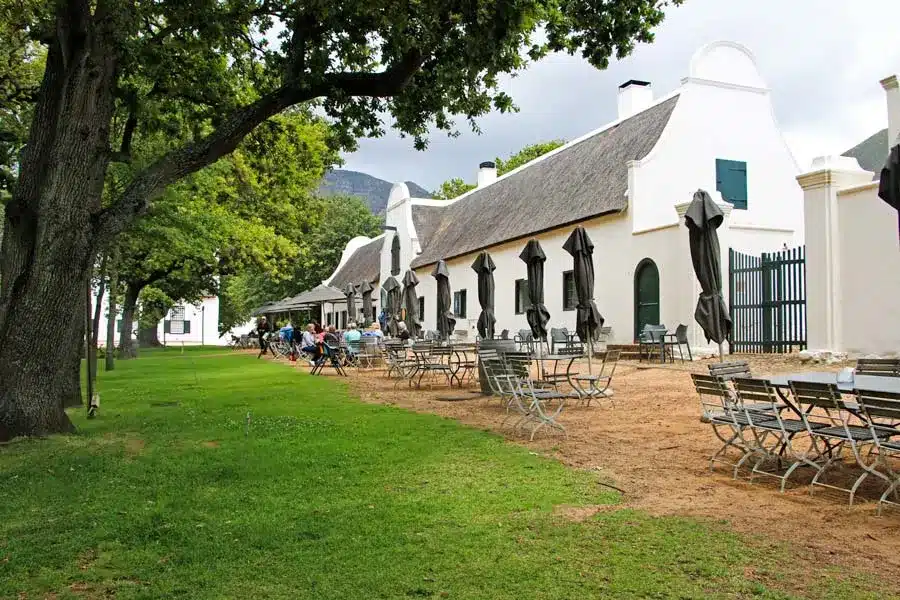
Therefore, it’s something of a surprise to learn that the country’s oldest winery dates back to 1695. Groot Constantia, in the leafy suburbs of Cape Town, offers tours of the old Dutch-style property as well as wine tastings and lavish lunches.
Cooks’ Cottage, Melbourne
Given that Australia wasn’t even settled by Europeans until 1788, it may seem a little odd that a cottage in Melbourne’s Fitzroy Gardens dates back to 1755.
That’s because Cooks’ Cottage was originally built in England – then removed and rebuilt brick by brick.
The somewhat eccentric quest of industrialist Sir Russell Grimwade saw the home of Lt James Cook’s parents moved from the village of Great Ayton in North Yorkshire.
Seoul City Wall, Seoul
The South Korean capital generally presents as shiny and modern, but snaking through it is a reminder of the 1400s.
Most of the Seoul City Wall, originally made of stone and wood and stretching 18.6km around the city, has been torn down to make way for roads, train lines and buildings.
But a few sections remain, some restored and others not altered in 600 years. The south gate, which has been restored, is the single most impressive sight.
Fort Canning, Singapore
Tales of Singapore’s history generally start with the arrival of Stamford Raffles in 1819, but there was once a 14th century kingdom based around what is now Fort Canning. And archaeological excavations have uncovered numerous artefacts related to Singapura.
There’s still a small archaeological site open to visitors – you’ll find it next to the spice garden.

