London’s challenge is not finding things to do — it’s navigating an almost overwhelming abundance of choice without falling into the tourist traps and logistical pitfalls that derail even experienced visitors. Two thousand years of history sit alongside world-class modern institutions: Churchill’s War Rooms hide beneath Whitehall, the Cutty Sark sits in dry dock at Greenwich, and a Rembrandt self-portrait hangs in a free hilltop gallery on Hampstead Heath that most visitors never find.
These guides cut through the promotional noise to focus on what’s actually worth your time and money — honest assessments of whether famous attractions justify their entry fees, specific strategies for the most crowded sites, and detailed coverage of the specialist museums and house collections that reward those willing to go beyond the obvious itinerary.
Royal palaces and historic fortresses
London’s royal landmarks are its biggest draws and its most logistically demanding. Entry prices at the Tower of London and Kensington Palace are substantial, crowds at Hampton Court Palace can be punishing in summer, and Buckingham Palace’s public opening is seasonal and limited. These guides provide honest assessments of what each site delivers and the specific strategies that make the difference between a good visit and a frustrating one.
- Tower of London: is the ticket price worth it? — an honest verdict on one of the world’s most visited historic sites, alongside a separate guide to which section of the Tower to visit first to get ahead of the queues before the crowds build.
- Kensington Palace: a guide for first-time visitors — what to expect from the state rooms and rotating exhibitions at the birthplace of Queen Victoria and the current London home of the Prince and Princess of Wales, including what the ticket covers and what it doesn’t.
- Hampton Court Palace: parking, logistics and visitor guide — practical advice for those driving to Henry VIII’s spectacular riverside palace, including the car parks, the approach routes and how to structure a full day across the palace, kitchens, gardens and maze.
- Buckingham Palace state rooms: practical visitor guide — what’s open to the public, when the summer opening runs, and how to make the most of the state rooms and the wider royal London itinerary.
- Royal Mews, Buckingham Palace: visitor guide — the working royal stables behind Buckingham Palace, open to visitors year-round, with the state coaches, ceremonial carriages and horses that appear in royal processions.
- Apsley House, Hyde Park Corner: visitor guide to Number One London — the Duke of Wellington’s former home at the gateway to Hyde Park, with one of the finest collections of Spanish old masters in Britain and far fewer visitors than any royal site of comparable quality.
- Jewel Tower, Westminster: guide to a 14th-century survivor — one of the few remaining fragments of the medieval Palace of Westminster, a short walk from the Houses of Parliament, managed by English Heritage and visited by almost nobody, making it one of the best-value historic sites in central London.
St Paul’s, the City and Churchill’s London
The square mile of the City of London and its immediate surroundings contain some of the capital’s most historically charged sites — Christopher Wren’s cathedral, the underground rooms where Britain’s wartime strategy was directed, and the bridge whose Victorian engine rooms most visitors never see. These guides cover the practical details alongside the angles that most visitors miss.
- St Paul’s Cathedral: how to get free entry — a perfectly legal guide to seeing the interior of Christopher Wren’s masterpiece without paying the standard tourist admission, including exactly what’s accessible for free and when to go to make the most of it.
- Churchill War Rooms: inside the underground bunker where the war was directed — visitor guide and logistics for the Cabinet War Rooms beneath Whitehall, preserved exactly as they were left in August 1945, with advice on booking, the Churchill Museum and what to look for on the audio tour.
- Tower Bridge: practical visitor guide — what’s actually inside London’s most photographed bridge, how the high-level glass walkways and Victorian engine rooms work as visitor attractions, and why Tower Bridge rewards a closer look beyond the view from the riverbank.
- Tate Britain visitor guide.
Greenwich: maritime history and the meridian line
Greenwich is one of the most rewarding half-days from central London — a UNESCO World Heritage Site reachable by river or DLR, where the world’s fastest 19th-century sailing ship sits in dry dock, Greenwich Mean Time was established, and the world’s largest maritime museum tells the story of Britain’s relationship with the sea. The four sites here are close enough to combine in a full day without rushing.
- Cutty Sark, Greenwich: best times to visit, ticket prices and visitor guide — the fastest ship of its era, now in a permanent dry dock at Greenwich Pier, with an exhibition beneath the copper-sheathed hull and the chance to walk the decks of the vessel that held the record for the London to Sydney wool run.
- Royal Observatory Greenwich: standing on the prime meridian line — a practical guide to the hilltop observatory where Greenwich Mean Time was established, covering the Prime Meridian, the historic telescopes, the Camera Obscura and the planetarium, with advice on what requires a ticket and what is free.
- National Maritime Museum, Greenwich: naval history and the language of the sea — the world’s largest maritime museum, free to enter, with collections spanning Nelson’s Trafalgar coat to modern polar exploration, including a fascinating exhibition on the surprising naval origins of common English expressions.
- Old Royal Naval College, Greenwich: practical visitor guide — the baroque masterpiece designed by Wren on the Thames bank, with the Painted Hall — often called the British Sistine Chapel — and the Chapel of St Peter and St Paul both free to enter, making it one of the most visually spectacular free attractions in London.
- Guide to travelling on the London Cable Car.
The South Bank and the Thames
The South Bank between London Bridge and Tate Modern is one of the most walkable stretches of the city, with a concentration of historic vessels, major galleries, experience-led attractions and social history museums along the riverside. These guides cover the key sites from Bankside to Lambeth, with honest assessments of the more theatrical attractions alongside the serious cultural institutions.
- HMS Belfast: how to make the most of your visit — a guide to navigating the nine decks of the Second World War light cruiser permanently moored between London Bridge and Tower Bridge, with advice on what to prioritise across the gun turrets, operations rooms, engine rooms and mess decks.
- The Golden Hinde, Southwark: visiting Sir Francis Drake’s replica ship — a full-scale reconstruction of the vessel in which Drake circumnavigated the globe between 1577 and 1580, moored in a St Mary Overie dock a short walk from Borough Market, with guided tours and living history events.
- Tate Modern: how to navigate the Bankside Power Station — practical tips for exploring the UK’s national museum of modern and contemporary art without getting lost or overwhelmed by its scale, including what’s in the permanent collection, how the Turbine Hall commissions work and the best times to go.
- London Dungeon: visitor guide to the city’s theatrical dark history — what to expect from the live-actor experience through London’s most notorious historical events, including whether advance booking is necessary, how long it lasts and which age groups it suits best.
- Florence Nightingale Museum, Lambeth: complete visitor guide — the museum dedicated to the founder of modern nursing, in the St Thomas’ Hospital building where Nightingale established her training school, covering her Crimean War service, her statistical innovations and her transformation of British healthcare.
- Museum of London Docklands: exploring the port that built an empire — the story of London’s relationship with the Thames and global trade across two thousand years, in a Georgian warehouse on the West India Quay at Canary Wharf, with strong exhibitions on the transatlantic slave trade and the dockworkers who made the city work.
Bloomsbury, Holborn and literary London
The quiet Georgian squares of Bloomsbury and Holborn contain the British Museum, two of London’s most atmospheric house museums, a working postal railway hidden beneath the streets and a social history museum built around a story that most visitors find unexpectedly moving. This is the part of London that rewards slow, curious exploration over an efficient sightseeing circuit.
- British Museum: why the Ramesses II bust is the standout piece in the Egyptian collection — a guide to finding and understanding one of the most significant pieces of Egyptian sculpture in the world among the millions of artefacts in Bloomsbury, with practical advice on navigating the museum efficiently.
- The Postal Museum and Mail Rail: how to ride London’s secret underground railway — everything you need to know about the miniature mail railway that ran beneath central London for 76 years and is now open to passengers, with full 2026 prices, opening hours and visitor information for the museum above ground.
- Sir John Soane’s Museum: a guide to London’s most eccentric house — the former home of the neo-classical architect, crammed floor to ceiling with antiquities, paintings and architectural fragments and preserved exactly as it was at his death in 1837, one of the most extraordinary and least-crowded free attractions in the city.
- Hunterian Museum, Royal College of Surgeons: what to expect — the world-class collection of anatomical and surgical specimens assembled by 18th-century surgeon John Hunter, recently reopened after a major redevelopment, covering the history of surgery from the Barber-Surgeons’ Company to modern transplantation.
- Charles Dickens Museum, Bloomsbury: inside the author’s only surviving London home — the Doughty Street townhouse where Dickens wrote Oliver Twist and The Pickwick Papers between 1837 and 1839, preserved as a museum of both his life and the wider social conditions of Victorian London.
- Foundling Museum: art and the history of child welfare in London — a first-timer’s guide to the museum built around the story of the UK’s first home for abandoned children, with an 18th-century art collection donated by Hogarth and Handel and a permanent exhibition on the history of fostering and adoption in Britain.
- Visitor guide to the Wellcome Collection.
Hampstead and its house museums
The hilltop suburb of Hampstead, a short Tube ride from central London, contains a remarkable cluster of house museums within walking distance of each other and the Heath. All three reward visitors interested in the inner lives of significant figures — a Romantic poet dead at 25, the founder of psychoanalysis in his final exile, and a late 17th-century aristocrat whose art collection is among the finest in any free-entry building in the country.
- Kenwood House, Hampstead Heath: guide to the Iveagh Bequest collection — the neoclassical villa on the northern edge of Hampstead Heath, free to enter, housing one of the great private art collections ever given to the nation, including Vermeer’s The Guitar Player, a late Rembrandt self-portrait and works by Gainsborough, Reynolds and Turner.
- Keats House, Hampstead: 2026 visitor guide — the Regency villa where John Keats wrote Ode to a Nightingale and fell in love with the girl next door, Fanny Brawne, preserved with period furnishings and an exhibition on the brief, extraordinary arc of his life and work.
- Freud Museum, Hampstead: inside the final home of psychoanalysis — the north London house to which Sigmund Freud fled when the Nazis annexed Austria in 1938, with his study, his famous psychoanalytic couch, his library and his antiquities collection preserved exactly as he left them.
Outer and South London
London’s outer boroughs contain some of the capital’s most surprising and least crowded attractions — a South London museum whose overstuffed Victorian walrus has become an unlikely celebrity, an Art Deco mansion grafted onto a medieval royal great hall, the house where Darwin wrote On the Origin of Species, and a Palladian riverside villa recently restored to its 18th-century interiors. Most work best on a second or third London trip, when the central attractions have already been covered.
- Horniman Museum, Forest Hill: what first-time visitors need to know — a South London gem with a famous overstuffed walrus, an extraordinary musical instruments collection, a natural history gallery and gardens with a working aquarium, free to enter and one of the most family-friendly museums in the city.
- Eltham Palace: from medieval great hall to Art Deco masterpiece — one of London’s most architecturally distinctive sites, where a 1930s Art Deco mansion was built directly onto a surviving medieval royal hall, creating an interior that moves between Tudor stonework and streamlined Modernist glamour in the space of a few steps.
- Down House, Kent: visitor guide to Charles Darwin’s home and garden — the house in the North Downs where Darwin lived for 40 years, developed his theory of natural selection and wrote On the Origin of Species, with the study, the greenhouse and the famous Sand Walk all open to visitors.
- Marble Hill, Twickenham: visitor guide to the Palladian villa on the Thames — the recently restored 18th-century villa built for Henrietta Howard, mistress of George II, on the banks of the Thames at Twickenham, managed by English Heritage with period interiors and riverside grounds.
- Kew Gardens, Richmond: practical visitor guide to the Royal Botanic Gardens — the UNESCO World Heritage site in southwest London, with 326 acres of botanical collections, Victorian glasshouses including the Palm House, a treetop walkway and the world’s most scientifically significant living plant collection, requiring a full day to explore properly.
- Museum of Brands, Notting Hill: practical visitor guide — a journey through British consumer culture from the Victorian era to the present day, told through packaging, advertising and product design across a spiral of display cases that is more thought-provoking and less nostalgic than it initially sounds.
- What to expect at the Chelsea Physic Garden.
Transport history, music and London oddities
A collection of London attractions that resist easy categorisation but reward curious visitors — the museum of the world’s most iconic public transport network, the Georgian townhouse shared across two centuries by Handel and Jimi Hendrix, and an optically disorienting upside-down house in West London.
- London Transport Museum, Covent Garden: opening hours, ticket prices and visitor guide — the history of the Underground, the red bus network and the design culture that produced the Tube map, the roundel and the Johnston typeface, in a Victorian flower market building in the heart of Covent Garden.
- Handel Hendrix House, Mayfair: practical visitor guide — the Georgian townhouse where Handel composed the Messiah in 1741, and where Jimi Hendrix moved into the flat next door in 1968, now a dual museum with period-furnished rooms and listening booths covering one of London’s most unlikely cultural coincidences.
- The Upside Down House, Westfield White City: practical visitor guide — the disorienting experiential attraction at Westfield London, where every room is built inverted, reviewed honestly for who it suits and whether it merits the trip to West London.
Practical planning: tickets, pricing and avoiding the pitfalls
London is one of the world’s most expensive cities to visit, and several of its most popular attractions are sold out weeks in advance. These guides address the practical questions that catch visitors off guard — how to beat the system on sold-out tickets, when London hotels are cheapest, and how to get significantly better value from the attractions that are most aggressive about gate pricing.
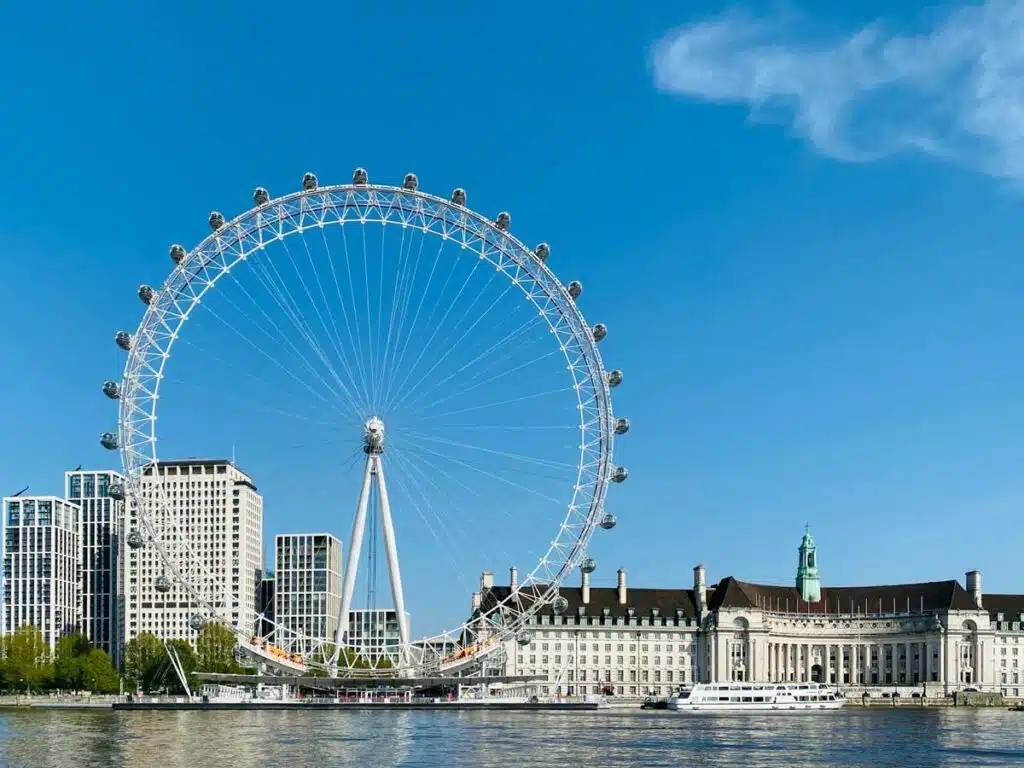
- London Eye: how to get the cheapest tickets without queuing — the standard gate price for London’s riverside observation wheel is steep; this guide covers the booking strategies, off-peak approaches and discount routes that bring the cost down significantly without compromising the experience.
- Harry Potter Studio Tour: how to get tickets when it’s sold out — the Warner Bros. Studio Tour near Watford sells out months ahead, but the calendar is rarely as full as it appears; this guide covers the specific strategies for securing tickets when the standard booking page shows nothing available.
- London hotels: which night of the week is cheapest? — a breakdown of hotel pricing patterns across the capital by day of the week, with practical guidance on how to structure a short break to minimise accommodation costs in one of the world’s most expensive hotel markets.
- Thorpe Park: the best conditions for a visit — what you need to know about timing a trip to London’s largest theme park for shorter queues and more reliable ride availability, including how weather affects the experience and what to plan around if the forecast is uncertain.