Run the iconic Rocky Steps. Get 2026 visitor info, including hours, photo tips, and how to visit the Rocky Statue at the Philadelphia Museum of Art.
The first time I watched someone run up the Rocky Steps in Philadelphia, Pennsylvania, they were wearing business attire – full suit, briefcase in hand – and still felt compelled to throw their arms up at the top. That’s when it struck me: these 72 stone steps leading to the Philadelphia Museum of Art aren’t really about fitness or even Rocky Balboa anymore. They’ve become a secular pilgrimage site where ordinary people enact a ritual of personal triumph. You can visit at dawn and find serious runners timing themselves. Return at midday and there’s a queue of tourists waiting to pose with the bronze statue at the bottom.
Quick overview
Visiting the Rocky Steps is completely free – they’re accessible 24 hours a day, every day of the year. The Rocky statue at the base is also free. If you want to enter the Philadelphia Museum of Art at the top, that costs $30 for adults (first Sunday of each month is pay-what-you-wish). It’s one of the great US art museums.
Opening hours: 24/7 for the steps and statue; Philadelphia Museum of Art hours vary.
At a glance
| Price | Opening hours | Address | Free for | Last entry |
|---|---|---|---|---|
| Free (steps and statue); museum $30 | 24/7 (steps); museum varies | 2600 Benjamin Franklin Parkway, Philadelphia, PA 19130 (Philadelphia Museum of Art) | Everyone (steps and statue always free) | N/A |
How much do the Rocky Steps cost?
Nothing. Climbing the steps and posing with the Rocky statue costs absolutely nothing. They’re public spaces, accessible to anyone at any time.
Museum admission (if entering Philadelphia Museum of Art)
| Ticket type | Price | Who qualifies |
|---|---|---|
| Adults | $30 | Ages 18+ |
| Seniors | $28 | Age 65+ |
| Students | $14 | Valid student ID required |
| Youth (13–18) | Free | No ID required |
| Children (12 and under) | Free | No ticket required |
| First Sunday | Pay what you wish | Everyone |
The Parkway Visitor Center at the base of the steps sells museum tickets with a 20% discount (when purchased there). They also sell Rocky-themed merchandise, Philadelphia souvenirs, and tickets to other attractions.
Are the Rocky Steps free to visit?
Yes, completely and always. The steps are the east entrance to the Philadelphia Museum of Art, which is a public building. You can climb them whether the museum is open or closed, at 3:00 a.m. or 3:00 p.m., without asking permission or paying anything.
The Rocky statue at the bottom right of the steps is equally free. Originally created for Rocky III in 1982, it was placed permanently here in 2006 after public demand. There’s often a queue to pose with it – waits can reach 20 minutes on busy weekends – but the experience costs nothing.
What you’ll pay for:
- Parking (limited metered street parking; Philadelphia Museum of Art garage $39–40)
- Food and drinks (no facilities at the steps themselves)
- Rocky-themed souvenirs from vendors (optional, obviously)
- Museum admission if you go inside (though you can enjoy the steps without entering)

What time are the Rocky Steps open?
24 hours a day, 7 days a week, 365 days a year. The steps are always accessible because they’re the entrance to a public building. Even when the Philadelphia Museum of Art is closed, you can still run up the steps, take photos, and enjoy the view.
Best times to visit:
- Early morning (6:00–8:00 a.m.): Fewest crowds, best for serious runners or photographers wanting unobstructed shots, spectacular at sunrise
- Weekday afternoons (2:00–4:00 p.m.): Moderate crowds, good compromise between empty and chaotic
- Avoid weekends and holidays: Queues for the statue can exceed 20 minutes; dozens of people on the steps simultaneously
The Philadelphia Museum of Art has specific hours if you’re planning to enter. Check their website as hours vary seasonally.
5 great things to do in Philadelphia
- 🥖 Taste the best of Philly on a food tour – including historic Reading Market.
- 🏛️ Get to know Philadelphia’s heritage sites – on a guided walking tour.
- 🍻 Go on a pub crawl – but learn the history between beers.
- 🎨 Let a guide show you Philadelphia’s best murals and street art – including Magic Gardens.
- 🌙 Discover Philly’s dark side – on an adults-only night tour.
History
The steps were built as part of the Philadelphia Museum of Art, which opened in 1928. Designed by the architectural firm Horace Trumbauer (with significant work by Julian Abele, one of America’s first prominent African-American architects), the grand Beaux-Arts building was deliberately positioned at the western terminus of the Benjamin Franklin Parkway as a cultural anchor.
For nearly 50 years, the 72 steps were simply the museum’s east entrance – impressive architecturally, but unremarkable in purpose. That changed in 1976 when Sylvester Stallone scripted a training montage for his underdog boxing film Rocky. The scene shows Rocky Balboa running through Philadelphia at dawn, culminating in a triumphant sprint up the museum steps, arms raised at the top as “Gonna Fly Now” swells on the soundtrack.
The scene lasted barely two minutes, but it resonated. Rocky won Best Picture at the 1977 Academy Awards, and the steps became synonymous with determination, perseverance, and the underdog spirit. Tourists began showing up to recreate the moment.
When Stallone returned to film Rocky III in 1982, he commissioned sculptor A. Thomas Schomberg to create a bronze statue of Rocky in the victory pose. After filming, Stallone donated the statue to Philadelphia. The museum initially displayed it at the top of the steps, but curators questioned whether a fictional character belonged at a fine arts institution. After contentious debate, the statue was moved to the Spectrum sports arena.
Public outcry followed. People wanted the statue back. In 2006, the city reached a compromise: the statue would return to the museum grounds but be placed at the bottom right of the steps rather than at the top. It’s been there ever since, drawing queues of visitors waiting their turn to pose with Rocky.
The phenomenon has only grown. An estimated 4 million people climb the steps annually, making them Philadelphia’s most-visited attraction – exceeding Independence Hall and the Liberty Bell combined.
The Rocky Steps experience
The Statue: Most visitors start at the bronze Rocky statue at the bottom right of the steps (when facing the museum). The 10-foot sculpture shows Rocky with arms raised in victory. There’s almost always a queue, especially midday and weekends. Waits of 10–20 minutes aren’t unusual. Street vendors sell Rocky merchandise nearby – t-shirts, boxing gloves, hoodies – if you want souvenirs.
The Climb: The 72 steps are wide, stone, and moderately steep. Healthy adults can walk up in 2–3 minutes; runners sprint it in under a minute. It’s not genuinely difficult unless you have mobility issues, though you’ll be slightly winded at the top if you run.
The Pose: At the summit, bronze footprints embedded in the ground mark where Stallone stood. A plaque reads “ROCKY.” Most people throw their arms up here for photos. It feels silly until you do it, then it feels oddly satisfying.
The View: Looking back down the Benjamin Franklin Parkway from the top is genuinely spectacular. You see the tree-lined boulevard stretching toward City Hall in the distance, flanked by international flags, museums, and historic buildings. It’s one of Philadelphia’s finest views, and completely free.
The George Washington Statue: At the top of the steps stands a massive equestrian statue of George Washington. Most people ignore it in favour of their Rocky selfies, which seems somehow appropriate.
The Museum: If you’re actually interested in art, the Philadelphia Museum of Art is worth entering. It’s one of America’s largest art museums with over 240,000 objects spanning 2,000 years. The Gehry-designed galleries opened in 2021. Van Gogh’s Sunflowers, a complete Japanese teahouse, and the largest Duchamp collection worldwide are highlights.
Street performers and vendors: You’ll often find people dressed as Rocky (for tips), photographers offering to take your photo (for money), and vendors selling merchandise. They’re part of the experience, though you can politely decline.
What’s included with your visit?
Always free:
- Climbing the 72 steps (as many times as you want)
- Posing with the Rocky statue
- Taking photos anywhere on the steps
- Views from the top overlooking the Benjamin Franklin Parkway
- Access to the George Washington statue
- Anne d’Harnoncourt Sculpture Garden (outside the museum, always accessible)
Costs extra:
- Philadelphia Museum of Art admission ($30; first Sunday pay-what-you-wish)
- Parking ($39–40 at museum garage; limited metered street parking)
- Rocky merchandise (from vendors)
- Food and drinks (no on-site café at the steps; museum café inside)
Things to do near the Rocky Steps
Rodin Museum (600 metres, 8-minute walk down the Parkway) – The largest collection of Rodin sculptures outside Paris. The garden features The Thinker, The Gates of Hell, and The Burghers of Calais.
Barnes Foundation (750 metres, 10-minute walk down the Parkway) – One of the world’s finest Impressionist collections: 181 Renoirs, 69 Cézannes, 59 Matisses, plus significant Van Gogh and Picasso works. The eccentric display arrangements follow collector Albert Barnes’s vision.
Franklin Institute (1.5 km, 20-minute walk or 5-minute drive) – Hands-on science museum featuring the Giant Heart you can walk through, planetarium, space exhibits, and live demonstrations. Very family-friendly.
Fairmount Water Works (directly below the museum on the Schuylkill River, 5-minute walk) – A National Historic Landmark from 1815 with stunning Greek Revival architecture. Now houses an environmental education centre. The exterior and grounds are free to explore. View Boathouse Row across the river – particularly beautiful at night when the boathouses are lit.
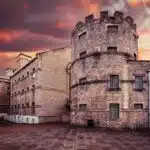
Eastern State Penitentiary (2.5 km, 30-minute walk or 10-minute drive) – A former prison operating from 1829–1971, now a museum offering tours through crumbling cell blocks. Al Capone was imprisoned here. The deliberate state of decay creates an eerie, thought-provoking experience. For me, it’s one of the top reasons to visit Philadelphia.
Elsewhere in Philadelphia, many of the city’s key attractions cluster in the Historic District. Key historic attractions in this part of Philly include Independence Hall, the Liberty Bell Center and the Thaddeus Kosciuszko National Memorial. The Benjamin Franklin Museum and Museum of the American Revolution are also here.
Practical tips
- Location: East entrance of the Philadelphia Museum of Art, western end of the Benjamin Franklin Parkway
- Getting there: SEPTA bus routes serve the area. PHLASH downtown loop bus stops at the museum (seasonal, April–December). Limited metered parking on the Parkway and side streets. Museum parking garage expensive ($39–40)
- Time needed: 15–30 minutes for the statue and steps; add 2–3 hours if entering the museum
- Photography: Encouraged everywhere. Bring someone to take your photo or use the timer function
- Crowds: Early mornings are least crowded. Weekends and holidays can mean 20-minute waits for the statue
- Fitness level: Moderately steep but not difficult for most people. There’s no shame in walking – plenty of people do
- Weather: Steps are exposed and can be icy in winter. Philadelphia summers are hot and humid – climb early or late to avoid midday heat
- Accessibility: No ramps or lifts to the top. People with mobility limitations can enjoy the statue at the bottom and the view from street level
- Combine with: Walk down the Benjamin Franklin Parkway to see multiple museums and the LOVE sculpture. The entire Parkway is worth exploring
FAQs
Can I really visit any time, even at night?
Yes. The steps are accessible 24/7. Many serious runners prefer dawn when it’s quiet. Late night is possible but less recommended for safety reasons.
How long does it take to climb the steps?
Walking: 2–3 minutes. Running: 30–60 seconds. Depends on your pace and fitness. It’s not a marathon – most people manage fine.
Will I look ridiculous doing the Rocky pose?
Probably, but everyone does it anyway. Embrace the silliness. Nobody’s judging.
How long is the queue for the statue?
Varies wildly. Weekday mornings: 5 minutes or less. Weekend afternoons: 15–30 minutes. Early morning or late evening: no queue.
Is the statue at the top or bottom?
Bottom right (when facing the museum). It was briefly at the top during filming but was permanently placed at the base in 2006.
Do I need to enter the museum?
No. The steps and statue are completely separate from museum admission. Many visitors never go inside.
Is parking terrible?
Yes, as with most Philadelphia attractions. The museum garage charges $39–40. Limited metered street parking exists. Consider public transport or walking from Centre City if staying nearby.
Are there toilets?
Inside the museum during opening hours. Otherwise, no public facilities at the steps themselves.
Can I run down the steps?
Technically yes, though it’s less safe and nobody filmed that scene. Most people walk down after running up.
What if it’s raining?
The steps get slippery when wet. Proceed cautiously. The statue and steps are uncovered – you’ll get wet.
More Pennsylvania travel
Other Pennsylvania travel articles on Planet Whitley include:
- Understanding Abraham Lincoln in Gettysburg.
- Drake Well: The birthplace of the oil industry.
- What to expect at the Flight 93 National Memorial.
- 4 great reasons to visit Pittsburgh.
- Review of the very weird Mutter Museum in Philadelphia.