The Chinatown Heritage Centre, Haw Par Villa and Thian Hock Keng Temple reveal the struggles and successes of Chinese migrants in Singapore.
Singapore’s Chinatown Heritage Centre
It’s the words of Loh Ah Kwai that stick in the head for weeks later. “When we first came here, we thought about making some money,” the quote on the wall from the otherwise faceless migrant reads. “Then, after some time here, we wanted to work a little longer and a little longer after that. We forgot about going home altogether.”
The Singapore Chinatown Heritage Centre tells the story of the waves of Chinese migrants that transformed a British trading post in South East Asia into something rather different. But the themes of people fleeing war, persecution and poverty to make a better life in a strange land are surprisingly universal.
Why book the Chinatown Heritage Centre Admission Ticket?
- 🏛 Admission ticket to the Chinatown Heritage Centre—explore restored shophouses and immersive exhibits about early Chinese settlers in Singapore
- 🕒 Spend around 1-2 hours discovering rich cultural stories at your own pace
- 📍 Located at 48 Pagoda Street, Chinatown—easy to access via MRT and surrounded by local culture, temples, and street food
- 🎒 Includes entrance to all permanent exhibits with recreations of homes and personal anecdotes from settlers
- 📧 E-ticket provided—no need to print, redeemable via email upon booking
- ⭐ Highly rated by visitors, with excellent reviews for storytelling, exhibits, and historical depth
The photos of new arrivals stepping off a crowded junk, those who died on the way having been thrown overboard, evoke memories of Ellis Island in New York City or Melbourne’s Immigration Museum. There’s that familiar mix of hope, wild-eyed naivety and tenacious willing to tackle all manner of unexpected obstacles in pursuit of prosperity.
- Buy Chinatown Heritage Centre tickets in advance to skip the queues.
Life inside Pagoda Street cubicles
On the second level, the rooms that former inhabitants of 50 Pagoda Street lived in have been atmospherically recreated. Rooms is probably an exaggeration, though – they’re little more than cubicles. One is piled high with bags of clogs, with barely any space for a human being to squeeze into. The tenant was a shoe-seller; every day she would lug all the shoes downstairs, then try to sell them on the street. Every evening she’d bring them back upstairs, and try to create an existence amongst the overwhelming clutter.
The men a few doors down, who found themselves working torturous hours in rubber plantations, gave up on the real world. The need for escape turned their cubicle became an opium den.
Struggles and darker realities
It’s such tales that make the Chinatown Heritage Centre utterly absorbing. It could have merrily strolled down the sanitised path, but it’s a proper warts and all look at the reality behind the dream.
There are dark tales of demoralised men, desperate to return home, racking up massive gambling debts. Most came to Singapore without their wives, thinking it would be a short, lucrative stint, and ended up unable to afford an escape. The overwhelming gender imbalance, coupled to loneliness, meant prostitution was big business. Syphilis and gonorrhoea pandemics swept through the Chinese community when registration of brothels stopped in 1894.
It also delves into the secret societies, which started as support networks for migrants from similar regions of China or with certain family roots, but ended with many becoming mafia-like protection rackets.
Five great things to do while you’re in Singapore
- Explore Singapore’s landmarks and back streets on a bike tour.
- See Singapore from above from the Sky Deck at Marina Bay Sands.
- Discover the city at night in a private group adventure – including a river cruise.
- Smell the flowers at the National Orchid Garden.
- Take a highly-rated food and culture tour through Chinatown, Little India and Kampong Glam.
Success stories and Tiger Balm
Not all dreams were shattered, however. For every tale of despair is one of transformed fortunes. Among the many success stories were Aw Boon Haw and Aw Boon Par, the Burma-born but ethnically Chinese brothers who turned Tiger Balm from a herbalist’s experiment into an international heat rub business.
In 1930, they set up Tiger Balm Gardens as a promotional tool. It’s now Haw Par Villa, and it’s hands down the most perplexingly odd exploration of Chinese culture you’ll find in Singapore.
Haw Par Villa and the Ten Courts of Hell
The gardens are gorgeous, decorated with elegant pagodas and tortoise-filled artificial lakes. But it’s the thousands of statues and dioramas depicting scenes from Chinese mythology that grab the attention.
The deliciously gory Ten Courts Of Hell section – – often known as Hell’s Museum – is bizarre stand-out. Figurines are shown being tortured in the afterlife for their crimes – a money lender with extortionate rates is thrown onto a hill of knives while someone who cheated in an exam has his intestines pulled out. But it’s not about ghoulish voyeuristic horror – it’s a morality tale. The scenes are all based on what Chinese parents would tell their children in order to coerce good behaviour.
Why book Hell’s Museum Singapore Admission?
- 🏛 Gain admission to Hell’s Museum—an immersive museum exploring belief systems, death, and afterlife concepts
- ⏱ Recommended visit duration: approximately 2-4 hours, depending on your interest level
- 🔍 Tour engaging exhibits like the “10 Courts of Hell” and interactive displays covering global perspectives on the afterlife
- 📏 Spanning about 3,800 sqm of gallery space in Haw Par Villa, offering rich, informative visuals and storytelling
- 👦 Child ticket applies for ages 7-12; under 7s can enter free (some exhibits may be intense for younger children)
- ⭐ High rating: average 4.8 out of 5 stars from 8 reviews for its educational value and immersive design
Temples in Singapore’s Chinatown
Religion still plays a part. Singapore – and the Chinatown area in particular – is liberally studded with temples. Of these, the Buddha Tooth Relic Temple is the most impressively modern. But the Thian Hock Keng Temple on Telok Ayer Street adds most to the immigrant story. Before land was reclaimed, the street ran along the shoreline. It was the favoured landing point for Chinese sailors.

This magnificent spectacle of golden rooftop dragons and fussily decorated doors was built on the shrine of Ma-Zhu-Po, the goddess of the sea. It’s equal parts celebration and gratitude.
Why book the Chinatown Historic Walking Tour with Lunch?
- ⏱ Duration: about 3.5 hours of walking and exploration through historic sites
- 🚶♂️ Guided walk through historic Chinatown—visit temples, restored shophouses, and local markets
- 🍽 Lunch at Chiew Kee Noodle House, famous for its soy sauce chicken
- 🛍 Shop for tea, pastries, and traditional Chinese medicines at long-standing local shops
- 📚 Learn about Chinese heritage through temple architecture, folk history, and community stories
- ⭐ Highly rated—average 4.9 out of 5 stars from 113 reviews
Chinatown today
Singapore’s Chinese influence isn’t all about myth and historic migration, however. Around 74% of the country’s population is ethnically Chinese, and the Chinatown area is rich in both visitor-friendly sites and real life.
South Bridge Street is lined with jewellery shops – a throwback to the days where the immigrants didn’t trust banks, so invested in precious metals and stones instead.
But pedestrianized Pagoda Street forms the heart. Here, the brightly-painted old shophouses are preserved and the street markets maintain the long-standing spirit of enterprise. The Chinese Heritage Centre is in the middle, but that’s merely where the ever-evolving story begins.
More Singapore travel
Other Singapore travel articles on Planet Whitley include:
- Braving the Singapore Flyer with food poisoning.
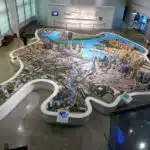
- Urban planning games at the Singapore City Gallery.
- Personal recommendations for a short break in Singapore.
- Why Singapore is a perfect introduction to Asia.
- A practical guide to visiting the Changi Museum and Chapel.
For more Singapore tours, activities and experiences, head this way.