
The Changi Chapel and Museum tells the story of civilian and military life during the Japanese Occupation of Singapore. This guide, updated in September 2026, explains how to get there by public transport, opening hours, ticket costs, and how to plan a meaningful visit.
A short history of the Changi Chapel and Museum
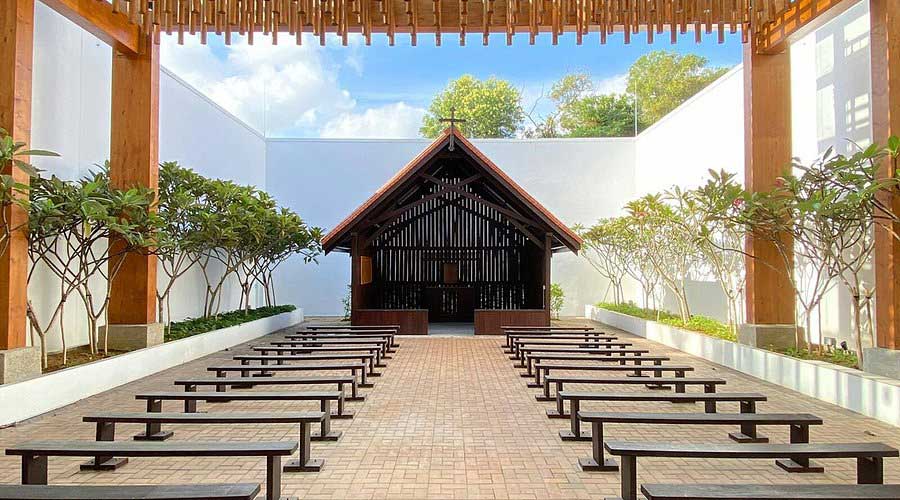
The Changi Chapel and Museum preserves the history of Singapore during the Japanese Occupation (1942–1945). Originally a small chapel built by prisoners-of-war in Changi Prison, it symbolised hope and resilience amid harsh conditions. The museum now includes exhibitions detailing life in Changi Prison, stories of internment, and personal accounts from survivors.
Visitors encounter artefacts, photographs, and recreations of the original chapel, providing context to the human stories behind one of Singapore’s darkest periods. It is both an educational and reflective destination, and one that has a powerful impact on those interested in history, war, and heritage.
Getting to Changi Chapel and Museum by Public Transport
The Changi Chapel and Museum is accessible via the following public transport options:
- By MRT and Bus: Alight at Upper Changi MRT Station (DT34) on the Downtown Line. From there, transfer to bus number 2 at the Upper Changi Station/Opposite SUTD bus stop (Stop ID: 96041). Ride for 7 stops and alight at Opposite Changi Chapel Museum (Stop ID: 97201). Cross the road to reach the museum entrance. This journey typically takes around 30–40 minutes.
- By Bus Directly: You can also take bus numbers 2 or 29 directly to the Changi Chapel Museum bus stop (Stop ID: 97209) or the Opposite Changi Chapel Museum bus stop (Stop ID: 97201). Both stops are within a 5-minute walk to the museum entrance.
Public taxis and ride-hailing services are convenient alternatives if you prefer a direct route. There is limited car parking on-site if you are driving.
Five great things to do while you’re in Singapore
- Explore Singapore’s landmarks and back streets on a bike tour.
- See Singapore from above from the Sky Deck at Marina Bay Sands.
- Discover the city at night in a private group adventure – including a river cruise.
- Smell the flowers at the National Orchid Garden.
- Take a highly-rated food and culture tour through Chinatown, Little India and Kampong Glam.
Opening hours and ticket information
The Changi Chapel and Museum is open from Tuesday to Sunday between 9.30am and 5.30pm. It is closed on Mondays. The last entry is at 5pm.
Tickets are priced at SGD 9 for adults, SGD 7 for seniors and students, and free for children under 6.
Entry is free for Singaporean citizens and permanent residents.
Free guided tours are available at scheduled times and provide greater insight into the exhibitions. They must, however, be booked in advance via the HeritageSG website.
Best times to visit Changi Chapel and Museum
Mornings tend to be quieter, especially on weekdays, making it easier to explore the exhibitions without crowding. The museum is largely indoors, so heat and rain have minimal impact, though Singapore’s humidity can make walking to the site from nearby bus stops slightly uncomfortable during midday.
Weekends attract more families and local visitors, so early arrival is recommended if you prefer a calmer experience. Allow 1.5–2 hours to explore the museum fully, and an extra 15–20 minutes if you wish to spend time at the memorial garden outside.
FAQ: visiting Changi Chapel and Museum
Is the museum wheelchair accessible?
Yes, the main exhibition areas and memorial garden are wheelchair friendly, though some external pathways may be slightly uneven.
How long should I allow for a visit?
Approximately 1.5–2 hours for the museum and memorial, longer if you wish to spend extra time at the garden or nearby Changi Village.
Are food and drinks allowed?
No outside food or beverages are permitted inside the museum. Changi Village has several cafés and restaurants within walking distance.
Is photography allowed?
Non-flash photography is permitted in most areas, but some sensitive exhibits may have restrictions.
Things to do near Changi Chapel and Museum
- Changi Boardwalk – A 2.2km coastal walk through the Changi area, with sections beside the water, heritage trees and views across the Straits of Johor.
- Changi Beach Park – A coastal park beside Changi Village with a long sandy shoreline, walking paths, picnic areas and views towards offshore islands.
- Changi Village – A relaxed coastal neighbourhood with hawker food, cafés and access to Changi Point Ferry Terminal for boats to Pulau Ubin.
- Changi Prison – The prison complex opposite the museum was the site where many prisoners of war and civilian internees were held during the Japanese Occupation, although it is not generally open to visitors.
- Singapore Aviation Museum – The Republic of Singapore Air Force’s museum near Paya Lebar displays aircraft and exhibits covering the development of Singapore’s military aviation.
Alternative attractions
- The Battlebox – A former underground command centre beneath Fort Canning Hill where British military leaders made the decision to surrender Singapore to Japan in 1942.
- Former Ford Factory – The former Ford Motor Factory houses an exhibition about the Japanese Occupation and the British surrender of Singapore in 1942.
- Fort Siloso – A preserved coastal fort on Sentosa with gun emplacements, tunnels and exhibitions covering Singapore’s military history.
- Kranji War Memorial – A cemetery and memorial in northern Singapore commemorating Allied servicemen who died during the Second World War in Malaya and Singapore.
- National Museum of Singapore – Singapore’s oldest museum explores the country’s history, including exhibitions covering the Japanese Occupation and the development of modern Singapore.
More Singapore travel
Other Singapore travel articles on Planet Whitley include:
- Braving the Singapore Flyer with food poisoning.
- Why Singapore Zoo is the best zoo in the world.
- Urban planning games at the Singapore City Gallery.
- How to visit Singapore’s gory Haw Par Villa.
- The attractions that explore Singapore’s Chinese heritage.
For more Singapore tours, activities and experiences, head this way.
