Germany’s capital is a city defined by its layers. Berlin is where Cold War history meets cutting-edge contemporary culture, where remnants of the Berlin Wall stand alongside world-class galleries on Museum Island, and where a divided past has produced one of the most creatively restless cities in Europe. From the immersive DDR Museum to the layered identities of neighbourhoods like Kreuzberg and Charlottenburg, Berlin balances historical substance with an irreverent, modern spirit unmatched by any other German city. These guides provide the practical logistics — ticket prices, opening hours and honest, experience-based advice — needed to navigate one of Europe’s most complex and rewarding capitals.
Cold War history and the Berlin Wall
No European city carries the physical and psychological legacy of the Cold War as visibly as Berlin. The division of the city, and its eventual reunification, shaped everything from its street art to its nightlife — these guides cover the history directly and the unexpected ways it still defines the city today.
- DDR Museum, Berlin: how to beat the crowds — strategic advice on the best time to visit this highly interactive museum of everyday life in East Germany, to ensure you can actually get hands-on with the Trabant car and the recreated East German apartment rather than queuing behind a tour group.
- Canoeing the Berlin Wall: a unique perspective on the border — how to paddle along the Spree and Landwehr Canal to see where the Wall once divided the city, offering a vantage point on Berlin’s Cold War geography that almost no other visitor experience can match.
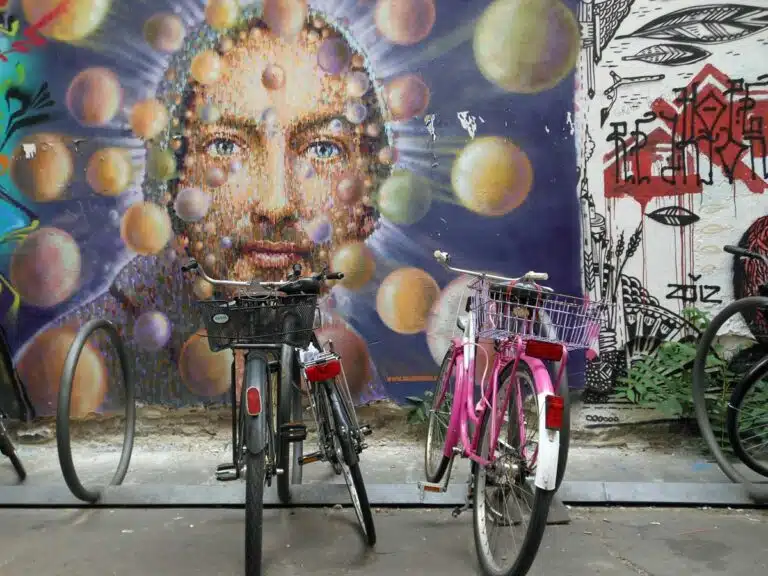
- How the Berlin Wall sparked a boom of creativity — an exploration of how the city’s divided past, and the cheap, abandoned spaces left behind after reunification, fuelled a global street art movement and decades of creative energy that still defines Berlin today.
- The Ampelmann: how an East German icon conquered the city — the story behind the beloved pedestrian signal man, saved from extinction after reunification and now a symbol of “Ostalgie” and Berlin’s unified identity.
Museum Island and historic landmarks
Museum Island, a UNESCO World Heritage Site at the heart of the city, anchors Berlin’s most significant cluster of galleries and landmarks. Nearby, the TV Tower offers the highest viewpoint in Germany.
- Berlin Cathedral (Berliner Dom): ticket prices, opening hours and visitor guide — practical information for visiting the city’s most iconic church, including climbing the dome for sweeping views over Museum Island and the surrounding Spree riverbank.
- Alte Nationalgalerie, Berlin: a guide to Museum Island’s art treasure — what to expect at this neoclassical temple of art, with masterpieces from the Romantic and Impressionist eras displayed across a grand 19th-century building.
- Berlin TV Tower (Fernsehturm): planning your visit — logistics for reaching the highest viewpoint in Germany, with ticket prices, accessibility information and advice on booking the revolving restaurant in advance.
- Panoramapunkt observation deck, Berlin: practical guide for first-time visitors — an alternative viewpoint at Potsdamer Platz, reached via Europe’s fastest lift, offering a different angle on the city skyline than the TV Tower.
Neighbourhood guides: West Berlin and Kreuzberg
Berlin’s character shifts sharply between districts — the elegant, post-war identity of the West contrasts with the gritty creativity and serious museum offer of Kreuzberg. These guides cover both, along with the city’s most famous Sunday afternoon ritual.
- West Berlin for beginners: beyond the Ku’damm — a first-timer’s guide to the historic western half of the city, exploring its unique post-war identity and the elegance of Charlottenburg.
- Charlottenburg Palace, Berlin: practical guide for first-time visitors — the largest palace in Berlin, a Baroque royal residence with opulent state rooms, extensive formal gardens and a notable porcelain collection.
- Jewish Museum Berlin: a visitor guide to Libeskind’s masterpiece — how to navigate the architectural symbolism and moving exhibits of the largest Jewish museum in Europe, housed in Daniel Libeskind’s deliberately fractured zinc-clad building in Kreuzberg.
- Deutsches Technikmuseum, Berlin: planes, trains and maritime history — a comprehensive guide to this massive technology museum in Kreuzberg, famous for the “Raisin Bomber” — a Berlin Airlift transport plane — suspended over its facade.
- Berlin Story Bunker, Kreuzberg: practical guide for first-time visitors — a Second World War air raid bunker housing an exhibition on Berlin’s history under the Third Reich, with original concrete walls and a sobering, atmospheric presentation.
- Body Worlds, Berlin: practical guide for first-time visitors — Gunther von Hagens’ controversial exhibition of plastinated human bodies, displayed in dynamic poses to illustrate the workings of human anatomy.
- German Spy Museum, Berlin: practical guide for first-time visitors — an interactive museum covering the history of espionage from ancient times through the Cold War, with hands-on challenges reflecting Berlin’s unique role in international intelligence.
- Natural History Museum, Berlin: practical guide for first-time visitors — home to the world’s tallest mounted dinosaur skeleton, a Brachiosaurus, alongside extensive mineral, fossil and zoological collections.
- Bearpit Karaoke at Mauerpark: a Sunday afternoon essential — what it’s like to perform at the legendary outdoor amphitheatre, plus tips for enjoying Berlin’s most famous flea market experience alongside it.
I’ve also written a guide to the Nikolaikirche, Berlin’s oldest church building.
Zoos, parks and green spaces
Berlin has two major zoos with very different histories — one a historic West Berlin institution, the other a vast landscape park developed in former East Berlin — alongside the city’s largest inner-city green space.
- Berlin Zoo: visiting Germany’s oldest zoological garden — practical information for visiting this historic West Berlin institution, world-renowned for its biodiversity and its location next to the Tiergarten.
- Tiergarten, Berlin: ticket prices, hours and visitor guide 2026 — Berlin’s largest inner-city park, a former royal hunting ground now criss-crossed by walking paths, with the Victory Column at its heart.
- Tierpark Berlin: Europe’s largest landscape zoo — the vast animal park of former East Berlin, set within the grounds of Friedrichsfelde Palace and significantly less crowded than its western counterpart.
Train travel and city break logistics
Berlin’s rail connections make day trips and onward journeys genuinely practical, and comparing Deutsche Bahn against budget alternatives can produce significant savings.
- Eight ways to improve your Berlin city break — pro tips on everything from transport passes to avoiding common tourist traps, for a smoother overall Berlin experience.
- Berlin to Munich by train: ticket prices and timetables — everything you need to know about the high-speed ICE connection between the capital and Bavaria.
- Hamburg to Berlin trains: finding the best ticket bargains — a breakdown of times and prices, including how to save money using FlixTrain as an alternative to Deutsche Bahn.
- Berlin to Prague: is a day trip by train realistic? — a realistic assessment of the rail journey for those looking to see the Czech capital in a single day from Berlin.

Planning your Berlin visit
Berlin is large and spread out, but the U-Bahn and S-Bahn networks make it easy to navigate without a car — a multi-day transport pass is worth buying if visiting several outlying attractions like Tierpark or Charlottenburg Palace. The city’s Cold War sites are spread right across the centre rather than clustered together, so allow more travel time between them than the map distances suggest. Spring and autumn offer the most comfortable weather for walking the neighbourhoods; the city’s nightlife and creative scene run year-round regardless of season. For a wider range of guided tours and experiences in the city, browse Berlin tours and experiences on Viator.
How many days do you need in Berlin?
Four to five days covers Berlin’s main sights comfortably. A first day suits Museum Island and the TV Tower. A second day works well for the city’s Cold War history — the DDR Museum, remnants of the Wall and a canoe trip along the Spree. A third day suits Kreuzberg’s museums, including the Jewish Museum and the Deutsches Technikmuseum. A fourth day allows time for West Berlin and Charlottenburg Palace, plus Bearpit Karaoke if it falls on a Sunday. A fifth day leaves room for the zoos or a day trip to Prague.
What is Berlin best known for?
Berlin is best known internationally for the Berlin Wall and the city’s Cold War division, alongside its reputation as one of Europe’s most significant nightlife and creative capitals. Among history-focused visitors it is known for Museum Island and its Jewish heritage sites; among architecture and design fans, for the contrast between its grand 19th-century buildings and its raw, post-Wall creative spaces. Its street art, in particular, has become one of the most photographed aspects of the city for visitors.