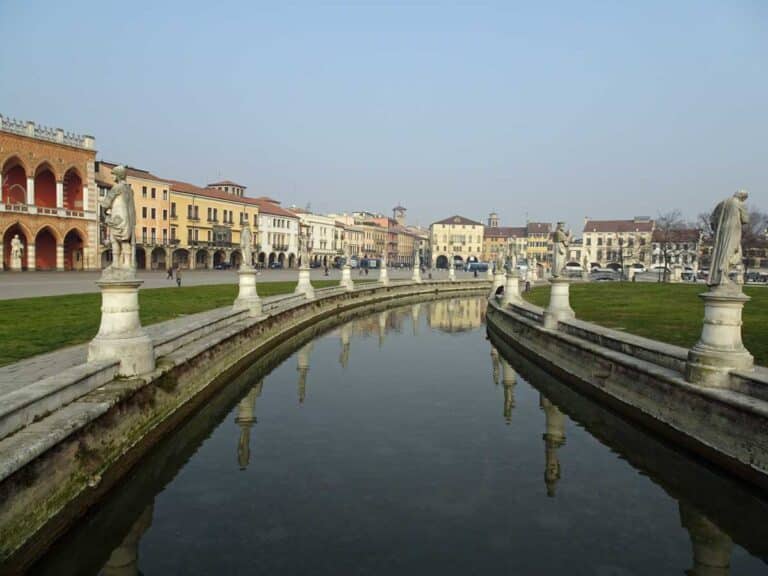
The Veneto region of northern Italy offers far more than Venice — though the lagoon city understandably dominates most itineraries and remains the obvious anchor for any visit to the region. Beyond the canals, the Veneto holds a Roman amphitheatre larger than most visitors realise, the fresco cycle that changed the course of Western art, the world’s oldest botanic garden, and an entire city shaped by the work of Andrea Palladio — the most influential architect in Western history. Verona, Padua, Vicenza and Treviso are all connected to Venice and to each other by fast and frequent regional trains, making the Veneto one of the most rewarding regions in Italy for visitors willing to venture beyond a single city. These guides cover the practical logistics — ticket prices, opening hours, train times and experience-based advice — needed to explore the region properly.
Verona and Valpolicella wine country
Verona is far more than the setting for Romeo and Juliet — a city of genuine Roman heritage and a beautifully preserved medieval core, and a practical base for exploring the Valpolicella wine region that produces some of Italy’s most prestigious reds.
- Verona travel guide: beyond Romeo and Juliet — a comprehensive introduction to the city’s Roman amphitheatre, medieval core and the genuine historical substance that exists well beyond the Shakespearean tourism most visitors come looking for.
- Torre dei Lamberti, Verona: ticket prices, hours and visitor guide 2026 — the 84-metre medieval tower overlooking Piazza delle Erbe, with a lift and stairs to a viewing platform offering the best panoramic views over Verona’s terracotta rooftops and the surrounding hills.
- Valpolicella wine tours from Verona: why the city is the perfect base — why staying in Verona makes practical sense for exploring the nearby vineyards, with guidance on reaching the Valpolicella wine country and what to expect from tastings of the region’s famous Amarone.
- Navigating Verona’s buses: a cautionary tale — essential advice on why you shouldn’t rely solely on a phone for local transport in Verona, and how to avoid getting stranded on the city’s bus network.
- Practical guide to visiting Verona Cathedral.
Padua’s artistic and academic heritage
Padua is one of Italy’s oldest cities, with a university dating to 1222 and an artistic heritage anchored by the fresco cycle that Giotto painted at the dawn of the Renaissance. It is consistently overlooked by visitors rushing between Venice and Verona — a mistake, given what it actually contains.
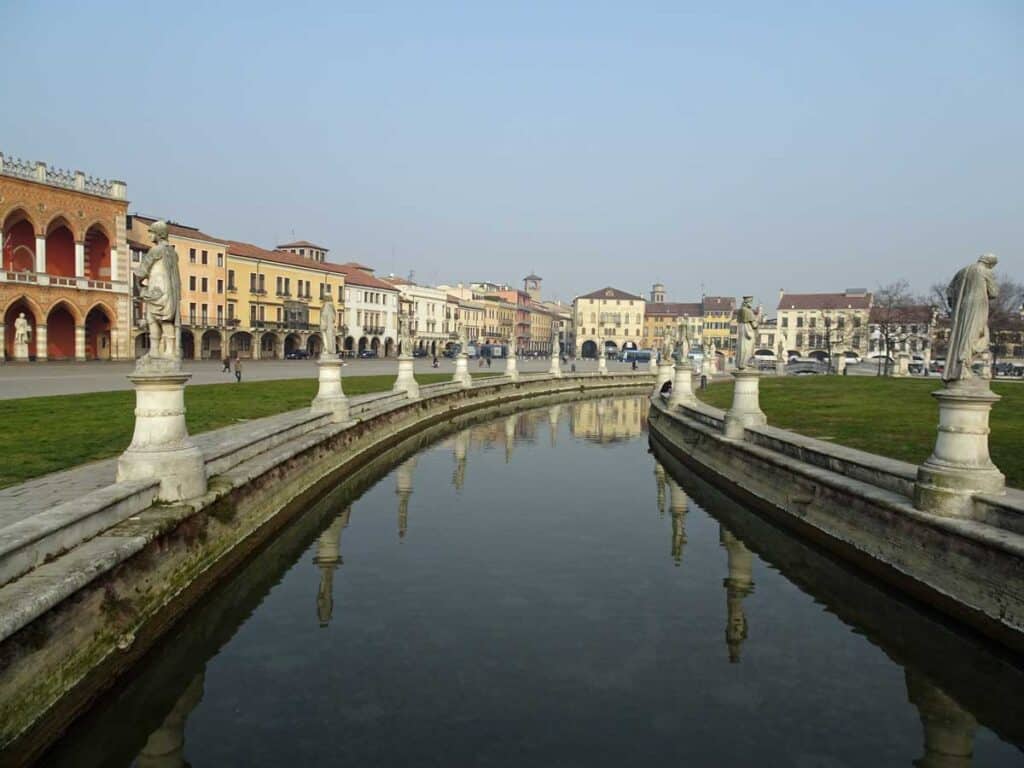
- Padua travel guide: frescoes, markets and ancient universities — an introduction to one of Italy’s oldest cities, from the vast Prato della Valle and its vibrant market piazzas to the deep academic history centred on the University of Padua.
- Scrovegni Chapel, Padua: ticket prices, parking and essential visitor information — the fresco cycle by Giotto that is widely considered the moment Western art turned toward realism and human emotion, with critical booking logistics — visits are timed and must be reserved well in advance — covered in full.
- Palazzo Bo, Padua: ticket prices, hours and visitor guide 2026 — the historic seat of the University of Padua, with the world’s first permanent anatomical theatre, built in 1594, and the lectern from which Galileo Galilei taught during his time at the university.
- Orto Botanico, Padua: exploring the world’s oldest botanic garden — a UNESCO World Heritage Site and the world’s oldest academic botanic garden, still located on its original 1545 plot, with a 400-year-old dwarf palm reputedly studied by Goethe still growing in its dedicated greenhouse.
Vicenza and Palladian architecture
Vicenza is the city of Andrea Palladio — the 16th-century architect whose work here defined neoclassical architecture for the following four centuries, from country houses across England to the White House in Washington DC. The historic centre is a near-complete catalogue of his buildings.
- Vicenza travel guide: the city of Andrea Palladio — why this elegant city is an essential stop for anyone interested in architecture, and how to spend a day exploring a historic centre built almost entirely to Palladio’s vision.
- Palladian architecture in Vicenza: a self-guided trail — a detailed walking route through the works of the world’s most influential architect, tracing the development of his style across the buildings that made his reputation before it spread across Europe and the New World.
- Basilica Palladiana, Vicenza: ticket prices, hours and visitor guide 2026 — Palladio’s reworking of the medieval town hall on the central piazza, with a distinctive double-loggia facade and a roof terrace offering views across Vicenza’s rooftops to the surrounding hills.
- Teatro Olimpico, Vicenza: guide to ticket prices, parking and essential visitor information — the oldest surviving covered theatre in the world, completed in 1585, with an extraordinary trompe l’oeil stage set depicting a permanent classical street scene in forced perspective.
Treviso: little Venice without the crowds
Treviso has crystal-clear canals, frescoed medieval houses and a genuine Venetian atmosphere — at a fraction of the crowds. It is also the most useful regional rail hub for onward journeys east into Friuli-Venezia Giulia.
- Treviso travel guide: little Venice without the crowds — an introduction to the frescoed houses, crystal-clear canals and largely undiscovered charm of a city that offers much of Venice’s atmosphere without the tourist density.
- Church of San Nicolò, Treviso: opening hours, key features and how to get there — a vast Gothic brick church with significant 14th-century fresco portraits in the adjoining seminary, including 40 likenesses of Dominican friars regarded as among the earliest naturalistic portraits in Italian art.
Venice attraction guides
Venice itself has its own dedicated full travel guide hub, but the attraction guides below are worth highlighting here as well — particularly for visitors planning to combine Venice with the wider Veneto region.
- Doge’s Palace, Venice: practical guide for first-time visitors — the seat of Venetian government for over 700 years, with the vast Sala del Maggior Consiglio, the Bridge of Sighs and a route through the former prisons that gives the palace its darker dimension.
- Murano Glass Museum, Venice: practical guide for first-time visitors — the history of Murano’s glassmaking tradition, on the island where Venetian glass production has been concentrated since 1291, with masterpieces spanning seven centuries of the craft.
- Leonardo da Vinci Interactive Museum, Venice: practical guide for first-time visitors — a hands-on museum reconstructing Leonardo’s inventions as working models, allowing visitors to interact with machines that otherwise exist only as sketches in his notebooks.
- Natural History Museum of Venice: practical guide for first-time visitors — housed in a 13th-century former trading palace on the Grand Canal, with a notable dinosaur collection and exhibits on the natural history of the Venetian lagoon itself.
Getting around the Veneto by train
The Veneto’s regional rail network is one of its greatest assets — Venice, Verona, Padua, Vicenza and Treviso are all connected by frequent trains that make multi-city itineraries genuinely practical without a car. These guides cover times, prices and the realistic logistics of the most useful regional connections, including routes onward to neighbouring regions.
- Venice to Verona by train: times, prices and is it viable as a day trip? — the most popular regional rail connection in the Veneto, with an honest assessment of whether Verona works as a day trip from the lagoon or deserves an overnight stay of its own.
- Milan to Verona trains: high-speed and regional options — a breakdown of travel times and ticket prices for visitors arriving from Lombardy, comparing the high-speed Frecce services against slower regional alternatives.
- Bologna to Verona train guide: times, ticket prices and day trip options — how to navigate the rail links between the capitals of the Veneto and Emilia-Romagna regions, with practical advice for combining the two on a single itinerary.
- Treviso to Trieste trains: times, prices and the fastest option — practical advice for heading east from the Veneto into the Friuli-Venezia Giulia region, with a comparison of the available train options and journey times.
Planning your Veneto visit
The Veneto’s regional trains make a multi-city itinerary genuinely practical — Venice to Padua takes under 30 minutes, Venice to Vicenza around 50 minutes, and Venice to Verona just over an hour on the fastest services. This makes day trips from Venice realistic for Padua and Vicenza, while Verona rewards at least one overnight stay given its size and the appeal of the surrounding Valpolicella wine country. Booking train tickets for the Scrovegni Chapel in Padua requires particular advance planning, as visits are timed and capacity-limited. Spring and early autumn offer the most comfortable weather across the region; July and August bring heat and the heaviest crowds, particularly in Verona during its summer opera season at the Roman arena.
How many days do you need in the Veneto?
A week allows a satisfying combination of Venice and the wider region: two or three days in Venice itself, a day trip to Padua for the Scrovegni Chapel, a day in Vicenza for the Palladian architecture, and two days in Verona with time for a Valpolicella wine afternoon. Those with less time should prioritise Venice and Verona, with Padua as a half-day add-on if the Scrovegni Chapel can be booked.
Can you visit the Veneto without a car?
Yes, comfortably. The regional and high-speed rail network connects all four cities covered here, and within each city the historic centres are walkable. A car becomes useful only for reaching specific Valpolicella wineries that sit outside Verona’s public transport network, though several tour operators offer transport as part of organised tastings.