The Kyoto Railway Museum is a vast railway museum in Shimogyo Ward, Kyoto, run by JR West on the site of the former Umekoji Steam Locomotive Museum.
This guide was updated in June 2026. General admission is now 1,500 yen, up from the 1,200 yen that many older guides still quote. The museum also closes at 5pm now, not 5.30pm as before. Last admission has moved earlier too, to 4.30pm. You can book through GetYourGuide to skip the ticket queue on busy days.
Quick facts
| Detail | Information |
|---|---|
| Address | Kankijicho, Shimogyo-ku, Kyoto 600-8835 |
| Hours | 10:00–17:00 (last admission 16:30) |
| General admission (18 and over) | ¥1,500 |
| University and high school students | ¥1,300 |
| Junior high and elementary school students | ¥500 |
| Children (3 and over) | ¥200 |
| Closed | Every Wednesday; 30 December–1 January |
| Nearest station | Umekoji-Kyotonishi Station, 2-minute walk |
| Typical visit | 2–3 hours |
Why book Kyoto Railway Museum tickets?
- 🏛️ 54 real trains under one roof: from the original 1964 Shinkansen to the giant Class C62 steam locomotive.
- 🎟️ Drive a train yourself: the simulator uses the same equipment JR West uses to train real drivers.
- 🌿 Ride a working steam locomotive: a genuine SL pulls passenger carriages around the museum grounds.
- 📜 Step inside a protected heritage site: the 1914 roundhouse is Japan’s only working steam locomotive shed.
- 💰 Toddlers go free: children under three aren’t charged, and school-age tickets start at just ¥500.
Opening hours
The Kyoto Railway Museum opening hours run from 10am to 5pm, with last admission at 4.30pm. It’s closed every Wednesday, unless that Wednesday falls on a national holiday. The museum also closes from 30 December to 1 January for the New Year break. Hours stay the same on weekdays and weekends. The museum opens as usual during spring and summer school holidays, even on its normal closing day. Check the official yearly calendar before travelling, since some dates shift around national holidays.
Ticket prices
| Ticket | Price |
|---|---|
| General admission (18 and over) | ¥1,500 |
| University and high school students | ¥1,300 |
| Junior high and elementary school students | ¥500 |
| Children (3 and over) | ¥200 |
| Children under 3 | Free |
These are gate prices in Japanese yen. The official site doesn’t break out tax separately, so the figures above are the total amount due. There’s no online discount on general admission, though booking in advance through GetYourGuide lets you secure entry before you travel.
Two rides cost extra: the driving simulator is ¥100 per roughly ten-minute session, booked online or via a Seven-Eleven kiosk in advance, and the SL Steam Train is ¥300 for general visitors or ¥100 for children aged three to junior high, sold on the day at the platform. Third-party retailers also sell a combined ticket covering the museum and the neighbouring Kyoto Aquarium, worth considering if you’re visiting both in one day.
How to get there
By train: Take the JR Sagano Line to Umekoji-Kyotonishi Station, then walk about two minutes west to the entrance.
By bus: From Kyoto Station’s B3 stop, take city bus 205 or 208, or one of the rapid services (86, 88, 104, or 110), and get off at the Umekoji Koen stop. The ride takes around ten minutes.
On foot: It’s a flat, level walk of about 20 minutes from Kyoto Station’s central exit, heading west through Umekoji Park.
By car: Driving isn’t recommended, since the museum has no dedicated car park.
Parking
The Kyoto Railway Museum has no car park of its own. Visitors are strongly encouraged to come by train or bus instead. If you do drive, nearby pay-and-display car parks around Umekoji Park fill up quickly at weekends and on holidays. Arrive early, or expect to circle for a space.
How long to spend
Most visitors spend two to three hours at the museum, enough time to see the main exhibition hall, watch the diorama show, and explore the roundhouse. Add another hour if you also plan to ride the steam train, try the driving simulator, or eat at the restaurant.
Accessibility
The main building is modern, step-free, and fitted with lifts between floors. A limited number of wheelchairs are available to borrow, and a multipurpose accessible restroom is on site. The steam locomotive roundhouse and SL boarding area sit outdoors on a paved courtyard, which is generally easy to navigate. Strollers can’t be taken onto the SL Steam Train, so use the dedicated stroller parking near the platform instead.
What to see inside the museum
Main Exhibition Hall: Fifty-four real trains fill the ground floor, spanning steam, diesel, electric, and bullet train technology. Highlights include the original 1964 0 Series Shinkansen and the 500 Series, which once held the world speed record at 300 km/h. The hulking Class C62 steam locomotive, the largest ever run by Japanese National Railways, dominates one end of the hall.
Railway Diorama: Staff operate a 1/80-scale model railway around 30 metres wide, recreating a full working rail yard. Shows run six times a day and last about 15 minutes, with timings posted near the entrance since they can shift during busy periods.
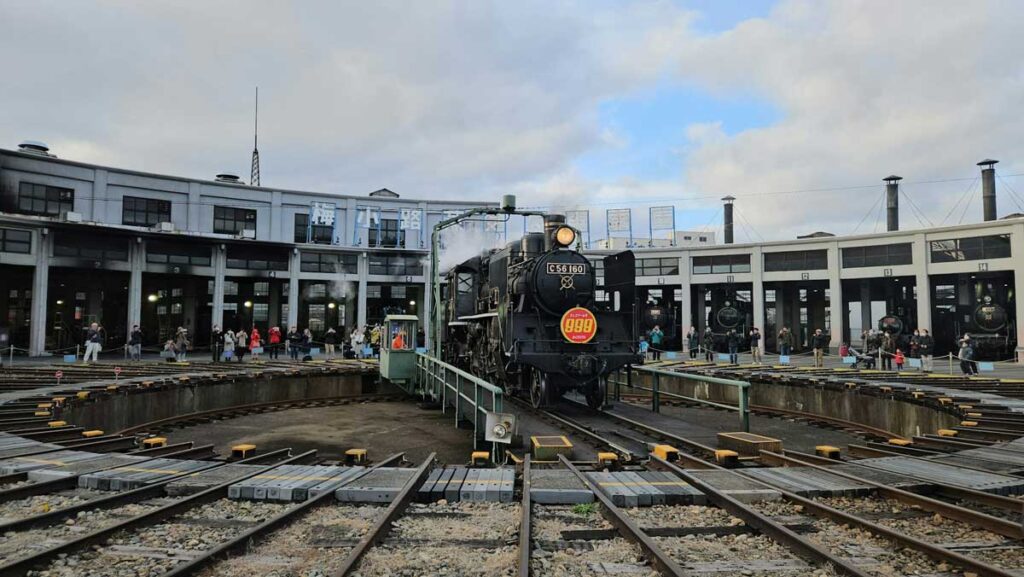
Steam Locomotive Roundhouse: This 1914 fan-shaped shed is Japan‘s only working steam locomotive service shed, housing several preserved engines under one curved roof. A real steam train departs from the platform here, pulling passenger carriages on a short loop through the museum grounds.
Driving Simulator: On the second floor, visitors can try the same simulator used to train real JR West drivers, choosing between a conventional line or Shinkansen version. Sessions must be booked in advance by card, since on-site cash sales aren’t available.
Sky Terrace: This open-air deck on the third floor overlooks the JR Kyoto Line and Tokaido Shinkansen tracks below. On a clear day, you can also see Kyoto Tower, Toji Temple, and the Higashiyama mountains in the distance.
Former Nijo Station Building: Built in 1904, this is one of Japan’s oldest surviving wooden station buildings, moved to the museum site in 1997. It now serves as the museum’s exit and shop, and is recognised as a Kyoto City tangible cultural asset.
Practical visitor tips
| Tip | Detail |
|---|---|
| Book general admission ahead of peak dates | Advance booking is recommended during cherry blossom and summer holiday weeks; book tickets in advance through GetYourGuide. |
| Reserve the driving simulator before you arrive | Tickets aren’t sold inside the museum, and online purchases need a credit card. |
| Check diorama showtimes at the entrance | Shows run six times daily, but timings can shift during busy periods. |
| Skip the car | There’s no museum car park, and nearby paid spaces fill up fast at weekends. |
| Visit on a weekend for the track bicycle | This rail-bike experience only runs on Saturdays, Sundays, and public holidays. |
FAQ
| Question | Answer |
|---|---|
| Is the museum closed on Mondays? | No. It’s closed every Wednesday instead, not Monday as visitors sometimes expect. |
| How much does admission cost? | ¥1,500 for adults, with lower tiers for students and children, and free entry under three. |
| Do I need to book tickets in advance? | General admission doesn’t require advance booking, though booking in advance through GetYourGuide avoids the ticket machine queue. |
| Is the museum wheelchair accessible? | Mostly, yes. The main building is step-free, and a limited number of wheelchairs can be borrowed. |
| How does it compare with Tokyo’s railway museum? | Kyoto has the larger vehicle collection, while Saitama’s Railway Museum has a bigger diorama and sits closer to central Tokyo. |
Things to do nearby
Kyoto Aquarium: Just a seven-minute walk through Umekoji Park, this aquarium is known for its giant salamander tank and dolphin shows.
Umekoji Park: The museum sits inside this large public park, which has wide lawns and paths ideal for a break between sights.
Toji Temple: A short bus or taxi ride away, this UNESCO World Heritage site has Japan’s tallest surviving wooden pagoda.
Nishi Hongan-ji: This vast temple complex is around a 15-minute walk east of the museum, with free entry to its main halls.
Kyoto Station Building: About 20 minutes on foot, the station complex offers shopping, restaurants, and views near Kyoto Tower.
What to visit tomorrow
Genuine railway museums within easy reach of Kyoto are limited, but a few make a worthwhile day trip.
SCMAGLEV and Railway Park: In Nagoya, about 45 minutes away by Shinkansen, this JR Central museum has Japan’s fastest maglev train and a large diorama.
Nagoya City Tram & Subway Museum: Also in Nagoya, this smaller museum near Akaike Station displays vintage trams and subway carriages, with simulators to try.
Hiroshima City Transport Museum: Around 90 minutes away by Shinkansen, this museum mixes trains with cars, planes, and ships in one collection.
Tsuyama Railroad Educational Museum: In Okayama Prefecture, roughly two hours away by Shinkansen and local train, this former roundhouse houses 13 preserved locomotives.
The Railway Museum, Saitama: JR East’s flagship museum near Tokyo sits well beyond a two-hour journey, but it may be worth the extra distance for enthusiasts continuing towards Tokyo.
More Japan travel
Other Japan travel stories on Planet Whitley include:
- What you need to know before visiting the Hiroshima Orizuru Tower.
- A practical guide to the Umeda Sky Building in Osaka.
- Discover a snack food legend at the Yokohama Cup Noodles Museum.
- Discover the joys of Katsurahama Beach in Kochi, Japan.
- Enjoy the Edo-period fortress at Kochi Castle.