This guide to Olympic Sculpture Park contains the key details visitors need: hours and admission, how to get there, parking costs and options, accessibility, and the best times to visit. This guide was updated in September 2026.
Overview of Olympic Sculpture Park
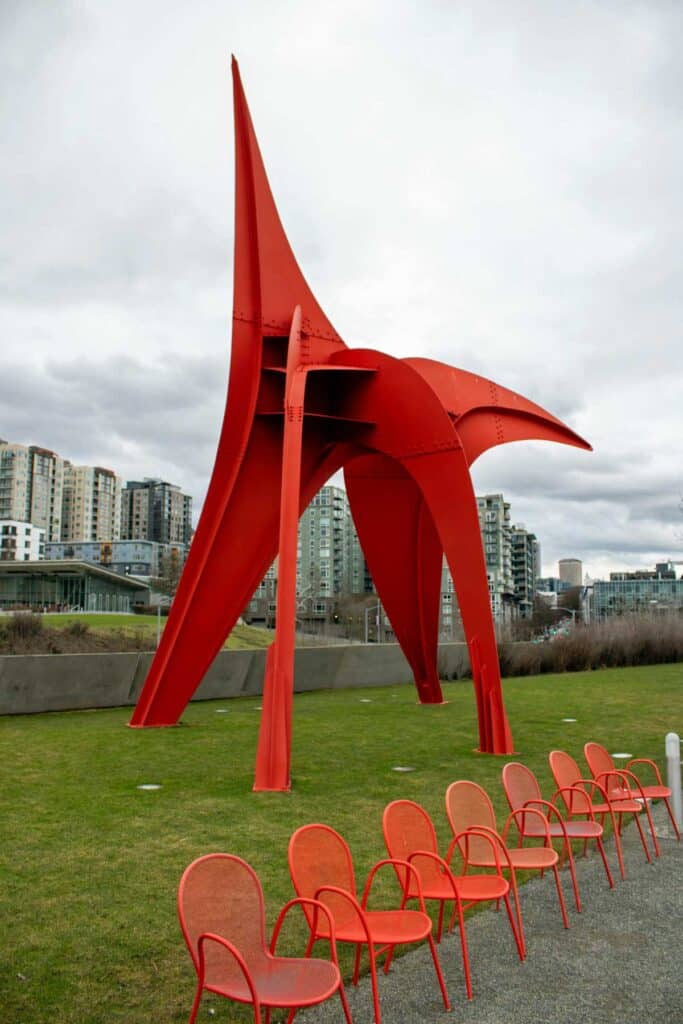
Olympic Sculpture Park is an outdoor sculpture museum of about nine acres managed by the Seattle Art Museum. It opened in January 2007 on a formerly industrial and underused stretch of waterfront in downtown Seattle. Designed to combine art, landscape restoration, and public open space, it offers both monumental contemporary sculptures and views across Puget Sound and the Olympic Mountains.
The park includes varied landscaping representing Pacific Northwest ecosystems: there are forested “valley” and “grove” zones, wildflower meadows, restored shorelines, a beach, and a planted terrace. In addition to sculptures by artists like Alexander Calder, the park features the PACCAR Pavilion, a restored indoor/outdoor pavilion for displays and shelter, and the Neukom Vivarium which offers a walking habitat exhibit of a nurse log for part of the year.
Admission to this collection of public art is free and the park is open every day. The layout invites both casual walks and art-focused visits; because it is outdoors, weather, daylight, tides, and seasons affect the experience.
Olympic Sculpture Park hours and admission
Hours: Olympic Sculpture Park is open 365 days a year. It opens 30 minutes before sunrise and closes 30 minutes after sunset.
Admission: Free. There is no general admission fee to enter the park.
Five of the best things to do in Seattle
- 🍴 Take a chef-guided food tour of Pike Place Market.
- 🕳️ Discover the hidden streets beneath Pioneer Square on an underground tour.
- ✈️ Go on the Boeing Factory tour and see how planes are made.
- 🚢 See the city from the water on a harbour cruise.
- 🏔️ Take in mountains and waterfalls on a Mt Rainier National Park day trip.
How to get there
- Address: 2901 Western Avenue, Seattle, WA 98121.
- By public transit: Many King County Metro bus routes stop close by, including routes 1, 2, 13, 15, 18, 22, 36, 56, 57, and 99.
- Walking: From downtown areas such as Belltown and the Waterfront, the park is within easy walking distance.
- By car / taxi / rideshare: The PACCAR Pavilion garage offers paid parking; the entrance is at Broad Street and Western Avenue.
Olympic Sculpture Park parking costs
On-site parking: Paid parking is available in the PACCAR Pavilion garage. Entrance to the garage is on the southeast corner of the park at Broad Street & Western Avenue. The garage is open from 6:00 am to 11:00 pm daily, but there’s no overnight parking.
Garage rates & other parking options:
| Parking location | Approximate rate |
|---|---|
| PACCAR Pavilion garage | $6 for 0-2 hours; up to $22 for all-day, depending on time & demand. |
| Street parking on Western Avenue & nearby streets | Metered; rates vary by block and time of day; often limited. |
Facilities and accessibility
- Walkways: Paths are paved and largely wheelchair- and stroller-friendly. The park is designed for outdoor access.
- Restrooms: Available in the PACCAR Pavilion during its open hours.
- PACCAR Pavilion: Indoor space for shelter, exhibitions and shade. Exhibits and the pavilion exhibit hall have seating and sheltered areas.
- Marked beach and shoreline: The park includes a redeveloped shoreline with a small beach area and restored tide-zone habitat. Note: lookout and shore access points may be slippery or wet.
- Pets allowed on leash: Leashed dogs permitted. No bicycles, skateboards, scooters unless walked; no climbing on sculptures.
Why book a Seattle CityPASS?
- 🗼 Space Needle included: Enjoy timed entry to Seattle’s most recognisable landmark, with panoramic views over Elliott Bay and Mount Rainier on clear days.
- 🐠 Seattle Aquarium admission: Get up close to local marine life, including sea otters, harbour seals and colourful tide-pool species.
- 🎨 Choose three more attractions: Pick from favourites such as Chihuly Garden and Glass, Museum of Pop Culture, Argosy Cruises harbour tour, Woodland Park Zoo or Pacific Science Center.
- 📱 Mobile pass with flexible sightseeing: Your CityPASS is delivered digitally and stays valid for nine consecutive days once activated.
- 💰 Save on entry fees: Bundled pricing offers significant savings compared with buying tickets separately, making it ideal for first-time visitors.
Best times to visit and how long to allow
Best times of day: Early morning (shortly after sunrise) or late afternoon before closing tend to be quieter. Light and views may be best in early morning or golden hour. Weekends are especially busy around midday.
Best seasons: Summer offers longer daylight, more activity, and nearby events; spring and autumn are less crowded and often more pleasant weather-wise. Rain can affect comfort but many sculptures and the landscape shine in misty Pacific Northwest light.
How long to allow: For a full walk around with stops to read sculpture descriptions, enjoy viewpoints, visit the beach, and rest in PACCAR Pavilion, plan for around 1 to 1.5 hours. Allow more if wanting sunrise/sunset photos or pairing with other nearby attractions.
Olympic Sculpture Park FAQ: practical visitor questions
| Question | Answer |
|---|---|
| Is there an admission fee? | No. Admission to Olympic Sculpture Park is free. |
| When is the park open? | Open daily, 30 minutes before sunrise until 30 minutes after sunset. |
| Is there parking? | Yes. The PACCAR Pavilion garage offers paid parking; entrance at Broad St & Western Ave. Street and private garages nearby; all day and short-stay rates apply. |
| Are there restrooms and shelter? | Yes. Restrooms are available in the PACCAR Pavilion during its hours; the Pavilion provides both indoor shelter and places to sit. |
| Is it wheelchair-friendly? | Yes. Walkways and paths are largely accessible; the park is designed for wheelchair users and strollers. |
| Can I visit at sunrise or sunset? | Yes. Because hours open 30 minutes before sunrise and close 30 minutes after sunset, sunrise and sunset are possible times for visit; light is often especially beautiful then. |
| Are dogs allowed? | Yes. Leashed dogs are permitted. |
Things to do near Olympic Sculpture Park
- Seattle Art Museum – The main Seattle Art Museum is about a mile south of Olympic Sculpture Park and provides a more conventional indoor art-museum experience. The sculpture park itself is managed by the museum, making the two particularly natural companions for an art-focused visit.
- Pike Place Market – Seattle’s famous market is within walking distance of the sculpture park, with food stalls, shops, restaurants and the waterfront nearby. It can easily be combined with the park as part of a walk through central Seattle.
- Seattle Aquarium – The waterfront aquarium is a short distance south of Olympic Sculpture Park and focuses on marine life from Puget Sound and the wider Pacific Northwest. It is one of the Seattle attractions already covered in the Washington hub.
- Chihuly Garden and Glass – At Seattle Center, this museum is focused on the glasswork of Dale Chihuly. Its indoor galleries and outdoor installations provide a useful contrast with the large-scale contemporary sculptures and open-air setting of Olympic Sculpture Park.
- Space Needle – The Space Needle is also at Seattle Center, close to Chihuly Garden and Glass and the other attractions around the park. Its observation decks provide views over Seattle, Elliott Bay and, on clear days, the Olympic Mountains.
Alternative attractions
- Klondike Gold Rush National Historical Park – In Pioneer Square, this free museum tells the story of the Klondike Gold Rush and Seattle’s role in the rush to the Yukon. It is another of the Seattle attractions featured prominently on your Washington hub.
- Hiram M. Chittenden Locks – The Ballard Locks connect Lake Washington and Lake Union with Puget Sound and provide opportunities to watch boats passing through the locks and salmon using the fish ladder. It is a good alternative for visitors particularly interested in Seattle’s relationship with the water.
- Kerry Park – This small hilltop park is known for its view across central Seattle towards the Space Needle, Elliott Bay and the mountains. It offers a very different way of experiencing the city from the waterfront setting of Olympic Sculpture Park.
- Fremont Troll – This large concrete sculpture beneath the Aurora Bridge is one of Seattle’s best-known pieces of public art. It provides an obvious alternative for visitors whose main interest in Olympic Sculpture Park is outdoor sculpture rather than traditional museums.
- Museum of Flight – At Boeing Field south of central Seattle, this large aviation museum contains more than 175 aircraft and spacecraft. It provides another substantial museum option from the Washington hub, although it is focused on aviation rather than visual art.
More Seattle travel
Other Seattle travel articles on Planet Whitley include:
- Klondike Gold Rush National Historic Park: Seattle’s best free attraction.
- Booking tips for Chihuly Garden and Glass.
- A practical guide to visiting the Seattle Aquarium.
- How the Seattle weather plays a major part in your experience.
- Watch the salmon run at the Hiram M. Chittenden Locks.