Washington DC offers far more than monuments and government buildings — though the memorials on the National Mall remain genuinely moving experiences that justify a visit on their own terms. The city’s Smithsonian museums are free, world-class and spread across the Mall and beyond; the International Spy Museum and United States Holocaust Memorial Museum are among the finest specialist museums in the country; and the quieter corners of DC — Rock Creek Park, the US Botanic Garden, the eccentric National Capital Columns and the Georgetown gardens of Dumbarton Oaks — reward those who venture beyond the standard sightseeing circuit. Lincoln’s Cottage, where Abraham Lincoln spent much of the Civil War and developed the Emancipation Proclamation, is one of the most significant and least-visited presidential sites in America. These guides cover DC’s key attractions with practical information on ticket prices, opening hours and what to expect on arrival, alongside road trip guides for the most popular routes to and from the capital.
The National Mall: memorials and monuments
The National Mall is the symbolic centre of American democracy — a two-mile expanse of parkland connecting the Capitol to the Lincoln Memorial, lined with reflecting pools and ringed by some of the most significant memorials in the country. The individual monuments each have their own character and deserve more time than a single rushed pass allows.
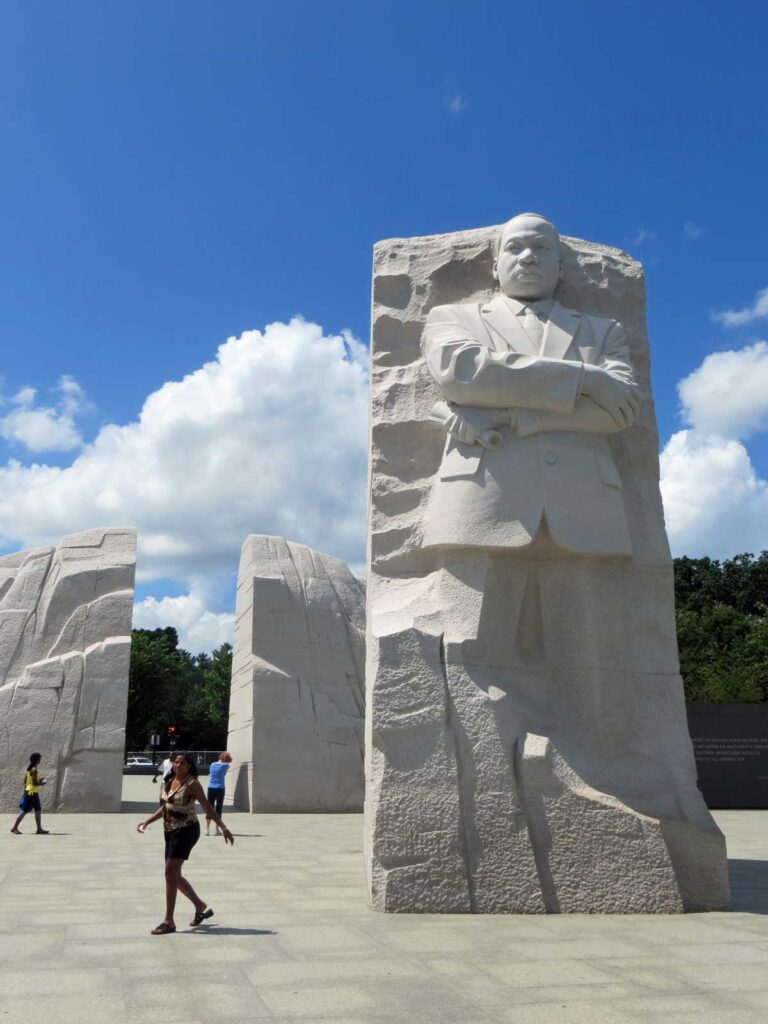
- Dr Martin Luther King Jr Memorial, Washington DC: ticket prices, hours and visitor guide 2026 — a nine-metre stone figure of King emerging from the Mountain of Despair on the Tidal Basin, inscribed with fourteen of his most powerful quotations and one of the most quietly affecting memorials on the Mall.
- Vietnam Veterans Memorial, Washington DC: ticket prices, hours and visitor guide — Maya Lin’s stark black granite wall inscribed with the names of 58,318 Americans who died in the Vietnam War, a profoundly simple design that has become one of the most visited and emotionally charged memorials in the United States.
- Thomas Jefferson Memorial, Washington DC: ticket prices, hours and visitor tips — a Pantheon-inspired domed rotunda on the Tidal Basin, surrounded by the cherry trees that make this corner of the Mall spectacular in late March and early April, with bronze panels quoting the Declaration of Independence.
- Franklin D Roosevelt Memorial, Washington DC: ticket prices, hours and visitor tips — an expansive outdoor memorial along the Tidal Basin, divided into four outdoor rooms representing each of FDR’s terms in office, with waterfalls, bronze sculptures and quotations covering the Depression era and the Second World War.
- National Mall bus tour vs bike tour: which is the better way to see DC’s memorials? — an honest comparison of the two most popular organised ways to cover the monuments and memorials of the National Mall, covering pace, flexibility, commentary quality and which suits different kinds of visitor.
Smithsonian museums and the Holocaust Memorial Museum
The Smithsonian Institution operates 19 museums in Washington DC, all free to enter. These guides cover several of the most significant, alongside the United States Holocaust Memorial Museum — technically a separate institution but in practice one of the most important and carefully designed museums in the city.
- National Museum of the American Indian, Washington DC: hours, dining and visitor guide — a Smithsonian museum on the National Mall presenting the histories, cultures and living traditions of the indigenous peoples of the Americas, with an architecture of curves and natural materials that sets it apart from every other building on the Mall and a restaurant serving Native American cuisine.
- Smithsonian National Museum of Natural History, Washington DC: ticket prices, hours and visitor tips — one of the most visited museums in the world, with a 45-carat Hope Diamond, dinosaur fossil halls, a live butterfly pavilion and the world’s largest collections of biological and geological specimens across 24 million square metres.
- National Postal Museum, Washington DC: visitor guide with prices, hours and tips — the Smithsonian’s postal history museum in a beautifully restored Beaux-Arts post office building beside Union Station, with a history of American mail delivery from the Pony Express to the present day that is considerably more engaging than it sounds.
- National Building Museum, Washington DC: visitor guide with ticket prices, hours and must-know tips — housed in one of the most spectacular Victorian interiors in Washington, with a Great Hall featuring columns 75 feet tall, covering architecture, engineering and urban design through permanent and temporary exhibitions.
- United States Holocaust Memorial Museum, Washington DC: complete visitor guide — one of the most carefully designed and emotionally powerful museums in the United States, with a permanent exhibition covering the Nazi persecution and murder of six million Jews and millions of others, requiring advance timed-entry passes and significant emotional preparation.
- What to expect at the National Portrait Gallery.
Specialist and paid attractions
Beyond the free Smithsonian institutions, Washington DC has a strong collection of paid specialist museums — the International Spy Museum is one of the most entertaining paid attractions in the city; the Lincoln’s Cottage site offers the most intimate access to the 16th President outside Springfield; and the Museum of the Bible is a significant collection regardless of visitors’ religious backgrounds.
- International Spy Museum, Washington DC: visitor guide — the best interactive museum experience in the city, covering the history of real espionage from ancient times through the Cold War to modern cyber-intelligence, with hands-on exhibits, a cover identity mission and a depth of genuine historical content beneath the James Bond surface.
- Lincoln’s Cottage, Washington DC: visiting Abraham Lincoln’s wartime home — the Gothic Revival cottage at the Soldiers’ Home where Lincoln spent a quarter of his presidency, retreating from the White House heat and developing the Emancipation Proclamation, one of the most significant and most overlooked presidential sites in the country.
- Museum of the Bible, Washington DC: practical guide for first-time visitors — a large and technically impressive museum near the National Mall housing one of the world’s most significant collections of biblical manuscripts and rare texts, with floors covering the history, narrative and impact of the Bible that are worth visiting regardless of the visitor’s personal faith.
- Pennsylvania Avenue walking tour: Washington DC’s corridor of power — a self-guided walk along the avenue that connects the Capitol to the White House, passing the FBI Building, the National Archives, the Department of Justice and the sites that tell the story of how American political power is organised and displayed.
Parks, gardens and outdoor Washington DC
Washington DC’s green spaces and outdoor attractions reward those who look beyond the Mall. Rock Creek Park is one of the largest urban parks in the United States. Dumbarton Oaks is one of the finest formal gardens on the East Coast. The US Botanic Garden is free and significantly undervisited. And the National Capital Columns are among the most unexpected and photogenic sights in the entire city.
- Rock Creek Park, Washington DC: ticket prices, hours and visitor tips — one of the largest urban parks in the United States, a 1,754-acre National Park Service site running through the northwest of the city with wooded trails, a planetarium, a Civil War fort and a nature centre, surprisingly unknown among first-time DC visitors.
- Dumbarton Oaks, Washington DC: ticket prices, hours and visitor tips — a historic estate in Georgetown with some of the finest formal gardens in the American northeast, a Byzantine and Pre-Columbian art collection of international significance and the setting for the 1944 Dumbarton Oaks Conference that laid the groundwork for the United Nations.
- US Botanic Garden, Washington DC: practical guide for first-time visitors — a free botanical garden at the foot of the Capitol steps, with a Victorian conservatory housing tropical, desert and medicinal plant collections, and a renovated outdoor garden complex that makes it one of the most pleasant free stops on the Mall.
- National Capital Columns, Washington DC: ticket prices, hours and visitor tips — 22 Corinthian columns from the original US Capitol building, reassembled in a wooded meadow at the National Arboretum as a surreal, beautiful and almost entirely unknown piece of American architectural history — one of DC’s most genuinely surprising sights.
Beyond DC: Virginia day trips
Two of the most rewarding excursions from Washington DC lie just across the Potomac River in Virginia — George Washington’s estate at Mount Vernon, which addresses his slave-owning legacy with unflinching honesty, and the Udvar-Hazy Centre at Dulles, which houses the most spectacular collection of aircraft and spacecraft in the United States.
- Mount Vernon and slavery: confronting the uncomfortable legacy of George Washington’s estate — an honest exploration of Washington’s plantation on the Potomac, where enslaved people outnumbered free residents by more than three to one, and how the site now addresses that history alongside its more traditional celebration of the First President.
- Steven F. Udvar-Hazy Centre, Chantilly, Virginia: ticket prices, hours and visitor guide 2026 — the Smithsonian’s aviation and space museum annex near Dulles Airport, housing the Space Shuttle Discovery, a Concorde, a B-29 Superfortress and hundreds of other aircraft and spacecraft that could not fit in the Mall museum, with a free observation deck overlooking active Dulles flight operations.
Road trips to and from Washington DC
Washington DC sits midway along the Eastern Seaboard, within comfortable driving distance of several major cities. Baltimore is 45 minutes north, Philadelphia is two hours northeast and Pittsburgh is four hours west across the Appalachians. Chicago is a long but scenic drive via the Shenandoah Valley. These guides cover the best stops, distances and realistic drive times for four of the most popular routes.
- Washington DC to Baltimore drive: best stops, distance and drive time — the short drive north along the Baltimore-Washington Parkway, with stops that can include the NASA Goddard Space Flight Centre and College Park Aviation Museum before arriving at Baltimore’s Inner Harbor.
- Philadelphia to Washington DC drive: best stops, distance and drive time — the drive south through Delaware and Maryland, with options to detour through Wilmington, the Chesapeake and Delaware Canal or Annapolis before arriving in the capital.
- Washington DC to Pittsburgh drive: best stops, distance and drive time — the drive northwest through Maryland and into western Pennsylvania, with options to detour through Antietam Battlefield, the National Road corridor and the Laurel Highlands.
- Chicago to Washington DC drive: best stops, distance and drive time — the long drive east through Indiana, Ohio and Pennsylvania or through the Shenandoah Valley, connecting the Midwest’s great lakeside city to the national capital.
- Washington DC to Richmond road trip guide: Distance, driving time and the best stops.
Planning your Washington DC visit
Washington DC is one of the most walkable capitals in the world — the National Mall is navigable on foot, and the Metro connects outlying attractions efficiently. The vast majority of the city’s best museums are free to enter, which makes DC exceptional value by the standards of any major capital. The main paid exceptions — the International Spy Museum, Museum of the Bible and Lincoln’s Cottage — all require advance planning. The Holocaust Memorial Museum requires free timed-entry passes that should be reserved online well in advance during spring and summer. The most comfortable visiting seasons are spring (for the famous cherry blossom around the Tidal Basin in late March to mid-April) and autumn; July and August are hot, humid and crowded.
How many days do you need in Washington DC?
Three to four days covers Washington DC’s main attractions comfortably. A first day suits the National Mall memorials — the Vietnam Veterans Memorial, the MLK Memorial, the Jefferson and FDR Memorials around the Tidal Basin. A second day works well for the Smithsonian museums — the Natural History Museum and National Museum of the American Indian can both be covered in a single day. A third day suits the paid attractions — the International Spy Museum and Holocaust Memorial Museum, with a walk along Pennsylvania Avenue. A fourth day allows Lincoln’s Cottage, the National Capital Columns at the Arboretum and a day trip to Mount Vernon or the Udvar-Hazy Centre.
What is Washington DC best known for?
Washington DC is best known for the White House, the Capitol, the National Mall memorials and the Smithsonian museums. Among historically focused visitors it is known for the Lincoln Memorial, the Vietnam Veterans Memorial and the sites connected to Abraham Lincoln — including Ford’s Theatre and Lincoln’s Cottage. The cherry blossom season around the Tidal Basin is one of the most photographed natural events in the United States, and the city’s status as the seat of American democracy gives even familiar monuments a weight that surprises most first-time visitors.