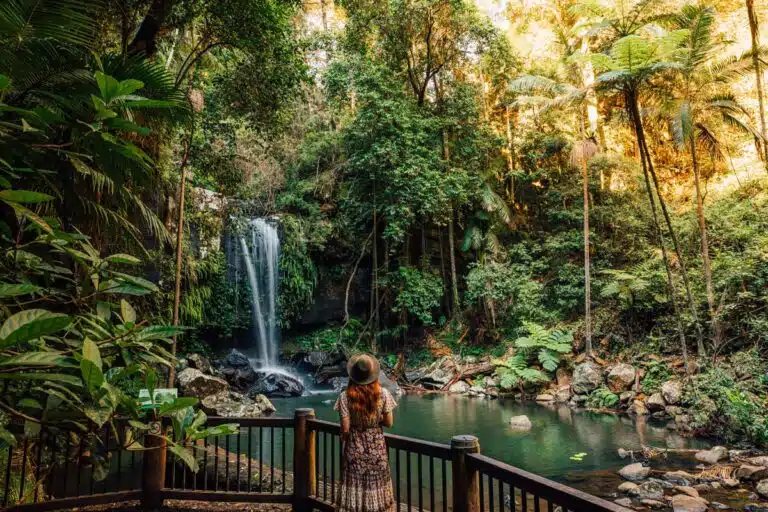
Australia has some of the most dramatic and varied waterfalls in the world — from the tropical swimming holes of Litchfield National Park and the rainforest cascades of Queensland’s Atherton Tablelands to the gorge waterfalls of Karijini in the Pilbara and the temperate forest falls of Victoria’s Great Ocean Road hinterland. These guides cover waterfalls across the country with practical information on swimming safety, trail access, parking, park fees and the best time of year to visit each one. They are organised by state to help visitors plan, whether they’re looking for a waterfall near a specific destination or building a waterfall circuit into a broader itinerary.
Queensland: Sunshine Coast hinterland
The Blackall Range above the Sunshine Coast feeds a series of waterfalls ranging from gentle swimming holes accessible to families to the dramatic 90-metre drop of Kondalilla Falls in national park rainforest. Swimming conditions, access tracks and facilities vary significantly between them.
- Kondalilla Falls, Sunshine Coast: entry, trails, parking and visitor tips — the most dramatic waterfall in the hinterland, dropping 90 metres into a rainforest gorge in Kondalilla National Park near Montville, reached via a walking track through subtropical rainforest.
- Mapleton Falls, Queensland: parking, walking tracks and visitor guide — a 120-metre drop into the Obi Obi Valley viewed from a lookout platform in Mapleton Falls National Park, with additional walking tracks through open eucalypt forest above the escarpment.
- Gardners Falls, Sunshine Coast: swimming, access and visitor tips — a popular swimming waterhole on Obi Obi Creek near Maleny, with a natural rock pool at the base of the falls that makes it one of the most accessible and family-friendly waterfall swimming spots in the hinterland.
- Buderim Falls, Sunshine Coast: entry, parking, trails and visitor tips — a compact waterfall in the Buderim Forest Park, close to the coast and reached via a short rainforest walk, making it the most convenient hinterland waterfall for visitors based on the coastal strip.
- Wappa Falls, Sunshine Coast: can you swim safely? 2026 visitor guide — a less-visited waterfall on Yandina Creek downstream from Lake Wappa, with an honest assessment of whether swimming here is safe and what conditions affect access.
- Curtis Falls, Tamborine National Park: what first-time visitors should know — a Gold Coast Hinterland waterfall in the rainforest of Cedar Creek section of Tamborine National Park, reached by a short rainforest circuit trail popular with day visitors from the Gold Coast and Brisbane.
Queensland: Atherton Tablelands and the wet tropics
The Atherton Tablelands southwest of Cairns is Queensland’s richest waterfall country — a high volcanic plateau where world heritage rainforest spills over the escarpment in a series of swimmable cascades. Further down the range toward the coast, the Wooroonooran National Park waterfalls are more remote and more demanding but reward the effort with near-solitude.
- Millaa Millaa Falls, Queensland: swimming, safety and visitor guide — the most photographed waterfall in Queensland, a circular curtain of water dropping into a deep swimming hole rimmed by rainforest on the Millaa Millaa Falls circuit, best visited early morning before the tour buses arrive.
- Ellinjaa Falls, Queensland: swimming, platypus spotting and how to get there — a tiered waterfall on the Millaa Millaa Falls circuit, with a swimming hole and one of the most reliable spots in the Tablelands to see wild platypus at dawn and dusk.
- Josephine Falls, Queensland: walks, swimming, safety and visitor guide — a natural granite waterslide feeding into a deep swimming hole in the Wooroonooran National Park, one of the most thrilling natural swimming experiences in Queensland and at its best in the wet season.
- Nandroya Falls, Queensland: walks, swimming and camping at Wooroonooran National Park — a double cascade reached by a more demanding rainforest walk in Wooroonooran National Park, with camping nearby and the kind of seclusion that Josephine Falls can no longer offer on peak season weekends.
Northern Territory
Litchfield National Park, 100 kilometres southwest of Darwin, has the finest concentration of swimmable waterfalls in Australia — crystalline plunge pools fed by the Tabletop Range escarpment, at their most spectacular and swimmable in the dry season from May to October.
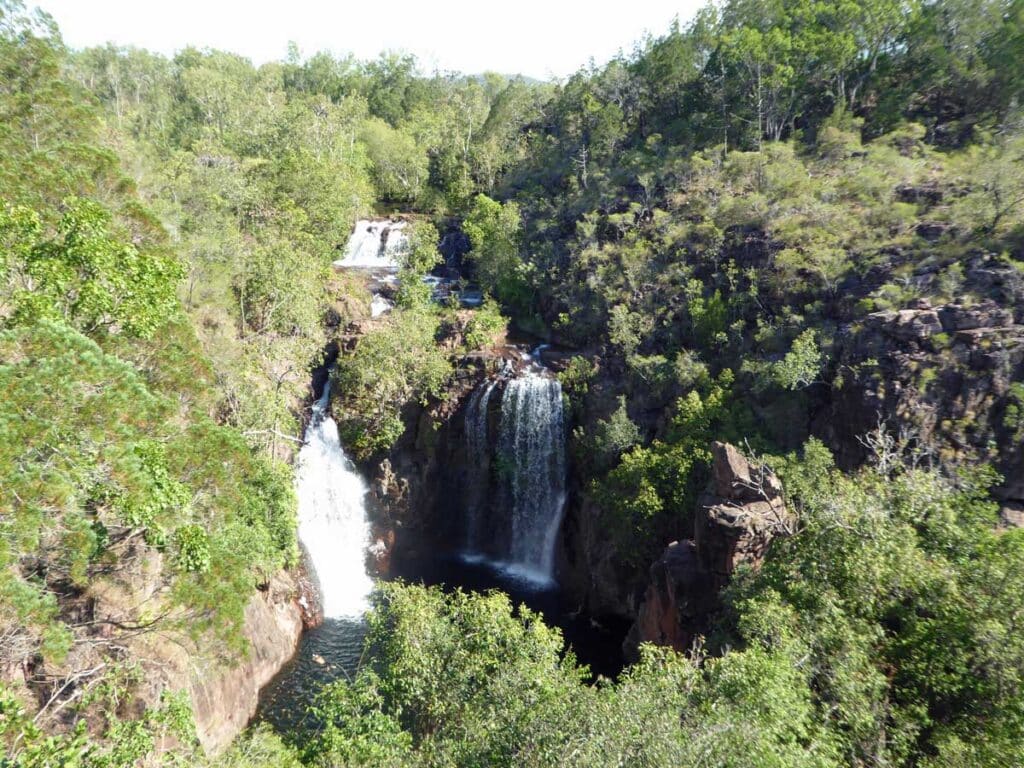
- Florence Falls, Litchfield National Park: swimming, walks, tours and location guide — a twin-drop waterfall plunging into one of the finest natural swimming pools in the Northern Territory, reached by a staircase descent of around 150 steps or a longer rainforest boardwalk, consistently rated among the best swimming holes in Australia.
- Wangi Falls, Litchfield National Park: 2026 visitor guide with park fees, swimming safety and access — the largest and most accessible waterfall in Litchfield, with a wide plunge pool and extensive facilities, popular with Darwin day-trippers and subject to seasonal swimming closures during the wet season when crocodiles may enter the pool — this guide covers the safety situation honestly.
New South Wales
- Fitzroy Falls, Southern Highlands: opening hours, park fees, walks and visitor tips — a 81-metre drop from the Illawarra Escarpment in the Morton National Park, reached via an easy boardwalk from the visitor centre, with a west rim walk offering the finest elevated views and the remote east rim walk rewarding those willing to commit to a full half-day.
Victoria
- Sheoak Falls, Great Ocean Road: car park, walk and picnic area guide — a gentle tiered waterfall through ferny forest near Lorne, reached by a short walk from a roadside car park on the Great Ocean Road, one of the easiest waterfall walks in Victoria and a natural add-on to a Great Ocean Road drive.
- Agnes Falls, Gippsland: visitor guide to Victoria’s tallest single-drop waterfall — a 59-metre single drop in the Agnes Falls Scenic Reserve in South Gippsland, Victoria’s tallest single-drop waterfall, accessible via a short steep walk and best visited after significant rainfall when the flow is at its most impressive.
Western Australia
Western Australia’s waterfalls range from the gorge falls of the remote Pilbara to accessible day trip destinations near Perth and Margaret River. The remote falls reward significantly more planning but offer experiences unavailable anywhere else in Australia.
- Fortescue Falls, Karijini National Park: walks, swimming and how to get there — a permanent waterfall into a deep gorge pool in Karijini National Park in the Pilbara, one of the most spectacular swimming experiences in Australia, requiring a four-wheel drive for access to the national park and several hours of driving from the nearest town.
- Yalgardup Falls, Margaret River: kangaroo spotting and how to get there — a small but photogenic waterfall in the Margaret River wine region, notable as much for the western grey kangaroos that congregate near the falls in the early morning as for the waterfall itself, with practical directions to a site that few visitors to the region find.
- Hovea Falls, John Forrest National Park: the best time to visit — a seasonal waterfall in the Darling Range east of Perth, flowing most reliably between June and September after winter rainfall, reached by an easy trail in Western Australia’s oldest national park and the most accessible waterfall within day trip distance of the city.
Planning an Australian waterfall visit
Timing is the most important planning consideration for Australian waterfall visits — more so than almost anywhere else in the world, given the country’s extreme seasonal variation in rainfall. Tropical waterfalls in Queensland and the Northern Territory are at their most spectacular in or just after the wet season (November to April), but swimming is often unsafe during this period due to crocodiles, flash flooding and debris. The dry season (May to October) makes them swimmable but reduces flow significantly. Southern and temperate waterfalls in Victoria, NSW and Western Australia are at their best in winter and spring (June to November) after rainfall. Always check current conditions, swimming advisories and park closure notifications on the relevant state or territory parks website before visiting, as conditions can change rapidly.