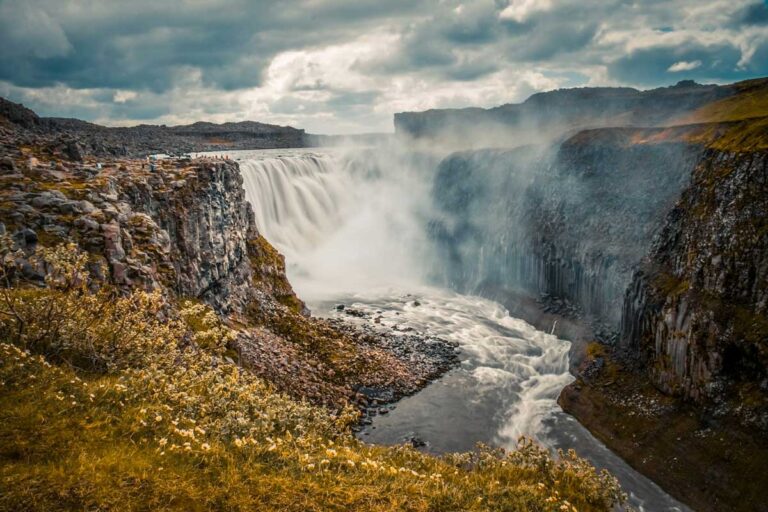
Iceland has more waterfalls per square kilometre than almost anywhere else on earth — a consequence of its glaciers, its volcanic geology and the relentless rainfall that feeds rivers across the island. The most famous are strung along the south coast road between Reykjavik and the glacier lagoon at Jökulsárlón, making them natural stops on any ring road itinerary. But the most powerful waterfall in Europe by volume thunders in the north, a long drive from the south coast crowds, and the most architecturally influential — the basalt-columned Svartifoss — is hidden in a national park valley that rewards the hike to reach it. These guides cover Iceland’s most significant waterfalls with practical information on access routes, parking, trail conditions and what to expect on arrival.
South coast and southeast Iceland waterfalls
Iceland’s south coast road between Reykjavik and Vatnajökull National Park passes three of the country’s most visited waterfalls within a stretch of around 150 kilometres. They are distinct enough in character — a walk-behind curtain fall, a broad staircase plunge, a remote basalt-framed cascade — to reward visiting all three rather than choosing between them.
- Seljalandsfoss waterfall, Iceland: parking and visitor guide 2026 — the waterfall you can walk behind, fed by Eyjafjallajökull glacier meltwater, with practical information on the parking situation, the path conditions around the back of the falls, and the smaller Gljúfrabúi waterfall hidden in a slot in the cliff just ten minutes’ walk away.
- Skógafoss waterfall, Iceland: opening hours, parking and visitor guide — a 60-metre curtain of water at the foot of a former sea cliff, with a metal staircase ascending 370 steps to the top for views along the coast and the start of the Fimmvörðuháls trail toward Þórsmörk.
- Svartifoss waterfall, Vatnajökull National Park: complete visitor guide — the waterfall framed by dramatic hanging columns of dark basalt in the Skaftafell area, reached by a moderate 90-minute return hike, and the architectural inspiration for both Hallgrímskirkja in Reykjavik and Iceland’s National Theatre.
North Iceland waterfalls
Northern Iceland’s two great waterfalls are as different from each other as they are from the south coast falls. Goðafoss is historically charged and visually approachable; Dettifoss is overwhelming in scale and demands a more deliberate effort to reach. Both sit on the Diamond Circle route and can be combined with Húsavík whale watching and Ásbyrgi Canyon on a dedicated northern Iceland itinerary.
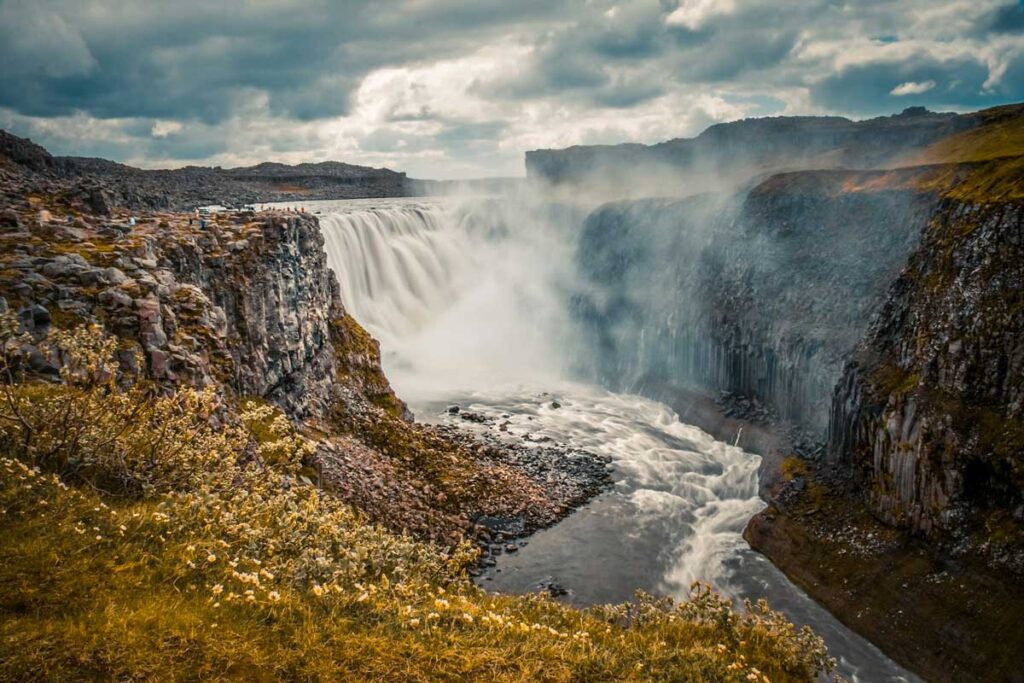
- Goðafoss waterfall, north Iceland: what to see, how to get there and practical tips — the Waterfall of the Gods, where Iceland’s lawspeaker threw his Norse idols into the current in the year 1000 to mark the country’s conversion to Christianity, combining genuine historical weight with a broad, accessible cascade that is among the most photogenic in the country.
- Dettifoss, north Iceland: access, parking and visitor guide — the most powerful waterfall in Europe by volume, dropping 44 metres on the glacially fed Jökulsá á Fjöllum river within Vatnajökull National Park, with two different viewing banks accessible by separate roads and a scale and noise that makes it unlike any other waterfall in Iceland.
Planning an Iceland waterfall itinerary
The three south coast waterfalls — Seljalandsfoss, Skógafoss and Svartifoss — can be covered in a single long day from Reykjavik if you start early, though two days allows a more relaxed pace and time to explore the Skaftafell area properly. The north Iceland waterfalls are a full day’s drive from the south coast; most visitors reach them via Akureyri, either by driving the full ring road or by taking a domestic flight to Akureyri and hiring a car. Dettifoss is accessible from both east and west banks — the west bank road (Route 862) is paved and the shorter option from Goðafoss; the east bank (Route 864) is gravel and longer but offers a different and arguably better view of the falls.
What is the most famous waterfall in Iceland?
Skógafoss and Seljalandsfoss are the most visited, both sitting directly on the south coast road and accessible without a significant hike. Seljalandsfoss is arguably more famous internationally thanks to the unique walk-behind experience; Skógafoss is broader and more powerful. Goðafoss is the most historically significant. Dettifoss is the most awe-inspiring in raw scale. Svartifoss is the most architecturally distinctive and the least crowded of the five.
Which Iceland waterfall is worth the most effort to reach?
Dettifoss. The drive to northern Iceland is long and requires planning, but nothing else in the country matches the sheer overwhelming force of Europe’s most powerful waterfall. Svartifoss is the runner-up — the hike is moderate rather than difficult, but visitors who make the effort find a waterfall that most day-trippers skip entirely, in a setting that explains why it has influenced Icelandic architecture for decades.