Iceland is one of the world’s most geologically dramatic destinations — a North Atlantic island where glaciers calve icebergs into lagoons, geysers erupt on schedule, lava tubes run for kilometres beneath the surface and black sand beaches meet crashing Atlantic surf.
The classic Golden Circle route from Reykjavik covers the highlights of the south and west in a single day, but Iceland rewards those who go further. The south coast’s waterfalls and volcanic landscapes justify two or three days of dedicated exploration. The Diamond Circle of northern Iceland offers whale watching, canyons and a waterfall that changed the course of the country’s history. Meanwhile, the geothermal spa culture — from the famous Blue Lagoon alternatives to the rooftop pools of Akureyri — is unlike anything else in Europe.
These guides cover Iceland’s major attractions and experiences across the full length of the country, with practical information on booking requirements, ticket prices, opening hours and what to expect on arrival.
Planning your Iceland trip
Iceland requires more planning than most European destinations — popular experiences sell out weeks in advance, the logistics of moving between regions are significant, and several practical questions (from alcohol import rules to the real value of long day trips) are worth resolving before you arrive. These articles address the decisions that matter most at the planning stage.
- How to spend 24 hours in Reykjavik: a practical itinerary — the best way to use a single day in the capital, covering what to prioritise, what to skip and how to fit the most into a short stay.
- Is Jökulsárlón glacier lagoon worth a day trip from Reykjavik? — an honest assessment of whether the five-hour drive each way justifies the experience, and what the alternatives are for those with limited time.
- The best places to see puffins in Iceland: a complete guide for birdwatchers — where to find puffins across Iceland, when they’re present, and which locations are accessible from Reykjavik without needing a dedicated expedition.
- How many bottles of wine can you bring into Iceland duty-free? — the specific alcohol import allowances for Iceland and why it matters more here than in most other countries, given the price of alcohol in shops and restaurants.
- Icelandic waterfalls: travel guides. Practical guides to visiting the most impressive waterfalls in a country with a lot of impressive waterfalls.
Reykjavik: attractions, museums and what to book in advance
Reykjavik is a small capital that punches considerably above its weight for museums, cultural experiences and architectural landmarks. Several of its most popular attractions require — or strongly benefit from — advance booking, particularly in summer. These guides cover the headline sights with honest advice on what’s worth the ticket price and when to buy.
- Hallgrímskirkja, Reykjavik: ticket prices, opening hours and visitor guide — the 74-metre Lutheran church that dominates Reykjavik’s skyline, with a tower lift offering the best elevated view over the capital and the mountains and sea beyond.
- Perlan, Reykjavik: should you book tickets in advance? — an honest guide to Iceland’s premier indoor attraction, housed in a geodesic dome on Öskjuhlíð hill, with a walk-through ice cave, planetarium and 360-degree viewing deck.
- Reykjavik Lava Show: is it worth buying tickets in advance? — a live demonstration of real molten lava poured in front of an audience, one of the more genuinely unusual visitor experiences in the capital, reviewed for whether the ticket price is justified.
- National Museum of Iceland, Reykjavik: opening hours, ticket prices and visitor tips — the country’s main historical collection, covering Iceland’s settlement by Norse and Celtic peoples through to the 20th century, with strong Viking Age artefacts and a well-designed permanent exhibition.
- Discover the secrets of Iceland’s energy at the Geothermal Exhibition.
The Golden Circle, glaciers and ice experiences
The Golden Circle route — Þingvellir, the Geysir geothermal area and Gullfoss — is Iceland’s most visited day trip, but the landscapes and experiences in and around it extend well beyond the standard circuit. These guides cover the standout moments on and off the Golden Circle, plus two of Iceland’s most extraordinary glacier and ice experiences within reach of Reykjavik.
- Strokkur geyser: why it’s the real highlight of Iceland’s Golden Circle — the geyser that erupts every five to ten minutes at the Geysir geothermal area, reliably spectacular in a way the dormant Great Geysir is not, with practical advice on positioning yourself for the best view.
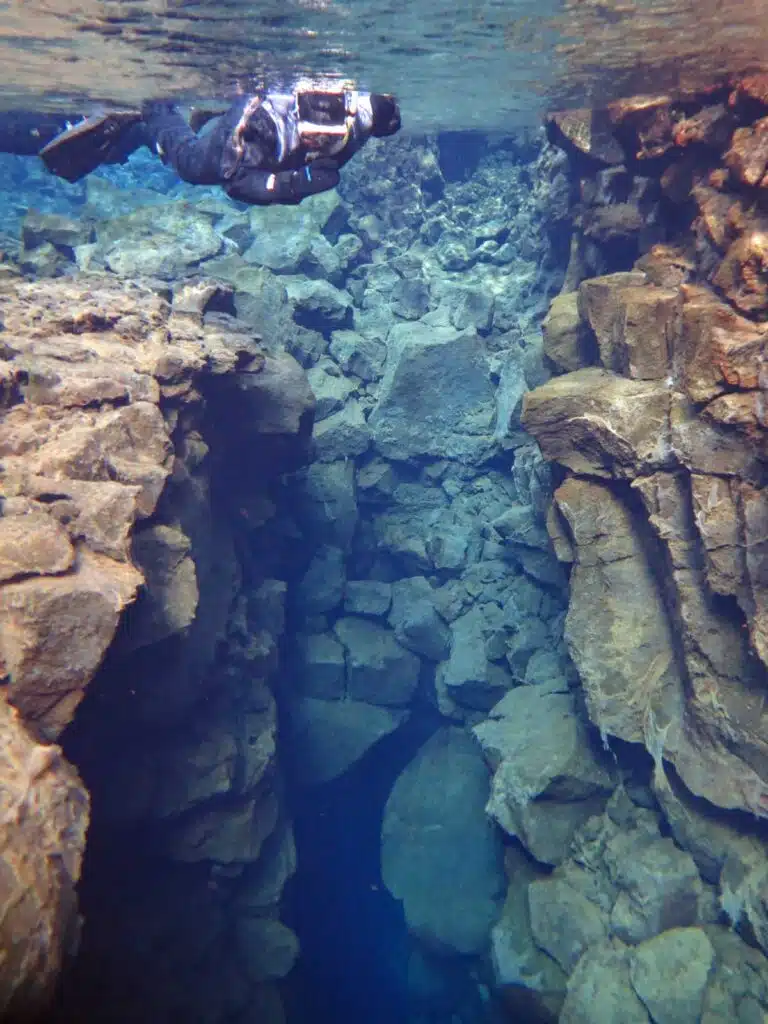
- Snorkelling the Silfra fissure at Þingvellir: what it’s like between two continents — the crack between the North American and Eurasian tectonic plates, filled with glacial meltwater of extraordinary clarity, and one of the most unusual snorkelling experiences on earth.
- Viðgelmir lava cave, Iceland: what to expect inside the giant lava tube — Iceland’s largest lava cave, on the Snæfellsnes peninsula, with a guided walk through a kilometre of volcanic formations that include lava falls, ice crystals and remarkable colour gradients in the rock.
- Inside the Langjökull glacier: a detailed tour review — a man-made tunnel system bored into Iceland’s second largest glacier, reached by monster truck across the ice cap, reviewed honestly for what the experience delivers and whether it justifies the cost.
- Jökulsárlón RIB boat tour: getting up close to the icebergs — a rigid inflatable boat tour among the icebergs calved from the Breiðamerkurjökull glacier, the most immersive way to experience the lagoon and its extraordinary floating ice architecture.
Iceland’s south coast: waterfalls, black sand beaches and horse riding
The drive east from Reykjavik along Iceland’s south coast passes through some of the country’s most dramatic and accessible landscapes — a succession of powerful waterfalls, a dangerous but irresistible black sand beach, and a columnar basalt waterfall hidden in a national park glacier valley. These guides cover the south coast’s headline natural attractions with practical advice on safety, parking and how to make the most of each stop.

- Seljalandsfoss waterfall, Iceland: parking and visitor guide 2026 — the waterfall you can walk behind, fed by Eyjafjallajökull glacier meltwater, with practical information on the parking situation, the access path conditions and the smaller Gljúfrabúi waterfall hidden in the cliff nearby.
- Skógafoss waterfall, Iceland: opening hours, parking and visitor guide — a 60-metre curtain of water at the foot of a former sea cliff, with a staircase to the top offering views along the coast and the first section of the Fimmvörðuháls hiking trail.
- Reynisfjara black sand beach, Iceland: is it safe to visit? 2026 visitor guide — Iceland’s most famous black sand beach, with basalt sea stacks and columns that are visually extraordinary, but with sneaker waves that have killed visitors — this guide covers the real safety situation and how to visit responsibly.
- Svartifoss waterfall, Vatnajökull National Park: complete visitor guide — the waterfall framed by dramatic hanging columns of dark basalt, reached by a moderate hike from Skaftafell, and the architectural inspiration for Reykjavik’s Hallgrímskirkja and the National Theatre.
- Horse riding on black sand beaches near Vík: where to go and what to expect — the small south coast village of Vík is the best base for Icelandic horse riding experiences on volcanic black sand, with guidance on the operators and what makes riding here different from anywhere else.
Northern Iceland: Akureyri, Húsavík and the Diamond Circle
Northern Iceland rewards those who make the effort to get there — either by a scenic drive over the highlands or by a domestic flight to Akureyri. The Diamond Circle route around the northeast takes in a waterfall of genuine historical significance, a horseshoe canyon of extraordinary scale, and the whale-watching capital of Europe. These guides cover the region’s key attractions with practical visitor information.
- Goðafoss waterfall, north Iceland: what to see, how to get there and practical tips — the Waterfall of the Gods, where Iceland’s lawspeaker threw his Norse idols into the water in the year 1000 to mark the country’s conversion to Christianity, and one of the most accessible and visually powerful waterfalls in the country.
- Ásbyrgi Canyon, north Iceland: hiking trails, opening hours and practical tips — a vast horseshoe-shaped canyon formed by a catastrophic glacial flood, according to Norse legend the hoofprint of Odin’s eight-legged horse Sleipnir, with forested walking trails through an enclosed valley unlike anything else in Iceland.
- Húsavík Whale Museum: ticket prices, hours and visitor tips — the museum in Iceland’s whale-watching capital that provides the context and natural history needed to make the most of a whale-watching boat trip, with impressive skeletons and well-designed displays on cetacean biology and conservation.
- Practical visitor guide to Dettifoss in northern Iceland. Often described as the most powerful waterfall in Europe by volume, Dettifoss drops 44 metres on the river Jökulsá á Fjöllum within Vatnajökull National Park.
Geothermal spas, thermal pools and unusual museums
Soaking in geothermally heated water is one of Iceland’s defining pleasures, and the options extend well beyond the Blue Lagoon — from Reykjavik’s neighbourhood swimming pools to clifftop sea baths in Húsavík and a forest-surrounded lagoon above Akureyri. Also in this section: one of Iceland’s most distinctive small museums, in the remote Westfjords town of Hólmavík.
- Sky Lagoon, Reykjavik: ticket prices, opening hours and visitor guide — a geothermal spa on the Reykjavik coastline, with an infinity edge overlooking the North Atlantic and a seven-step ritual experience, reviewed as the most atmospheric of the capital’s spa options.
- Secret Lagoon, Iceland: 2026 visitor guide with prices and hours — the oldest swimming pool in Iceland, in the Golden Circle village of Flúðir, offering a quieter and more authentic alternative to the Blue Lagoon at a fraction of the price.
- Laugardalslaug, Reykjavik: ticket prices, opening hours and visitor tips — Reykjavik’s largest geothermal swimming pool complex, used primarily by locals, with outdoor pools, hot pots of varying temperatures and a water slide, offering a genuinely local alternative to the tourist-focused spas.
- Hvammsvik Hot Springs, Hvalfjörður – A small cluster of oceanfront geothermal pools set into the shoreline of Hvalfjörður (Whale Fjord), approximately 1 hour north of Reykjavík. Open-air pools with fjord views; lower visitor numbers than the main Reykjavík-area spas.
- GeoSea geothermal sea baths, Húsavík: ticket prices, hours and visitor guide — infinity pools of geothermally heated seawater on the cliffs above Húsavík harbour, with views across Skjálfandi Bay toward the mountains of the Diamond Circle.
- Forest Lagoon, Akureyri: ticket prices, opening hours and practical visitor guide — a geothermal lagoon set in birch forest above Iceland’s second city, with fjord views from the pools and a design that integrates the surrounding landscape more naturally than most Icelandic spa developments.
- Museum of Icelandic Sorcery and Witchcraft, Hólmavík: ticket prices, hours and visitor guide — a genuinely strange and compelling small museum in a remote Westfjords fishing village, covering the 17th-century witchcraft trials that sent 21 Icelanders to the pyre and the folk magic traditions that preceded them.
Planning your Iceland visit
Iceland is expensive, logistically demanding and entirely worth it. A hire car is essential for exploring beyond Reykjavik — public transport between regions is limited, and many of the most rewarding stops on the south coast and the Diamond Circle are unreachable without one. The most popular experiences — the Silfra snorkelling, the Langjökull glacier tunnel, the Sky Lagoon at peak times — should be booked weeks in advance in summer. The midnight sun (June to early August) and the northern lights (October to March) are not both available on the same trip; the shoulder seasons of May and September offer a compromise of reasonable light and lower crowds.
How many days do you need in Iceland?
Seven to ten days is the practical minimum for covering Iceland beyond the Golden Circle and Reykjavik. A week allows you to drive the south coast to Jökulsárlón and back, with time for the key waterfall and beach stops along the way. Ten days opens up either a complete ring road circuit of the island or a more leisurely south coast and northern Iceland combination. Shorter trips of four or five days work well if you focus on Reykjavik, the Golden Circle and the south coast as far as Vík, without attempting to reach the glacier lagoon.
What is the best time of year to visit Iceland?
It depends entirely on what you want. June and July offer the midnight sun, the best driving conditions and the warmest weather, but also the highest prices and the largest crowds at popular sites. October to February offers the best northern lights chances, dramatic winter landscapes and lower prices, but shorter daylight hours limit driving range. May and September are the sweet spots — better prices than summer, reasonable light, and the waterfalls at or near peak flow from snowmelt. Puffins are present from May to August; whale watching is best from June to August.