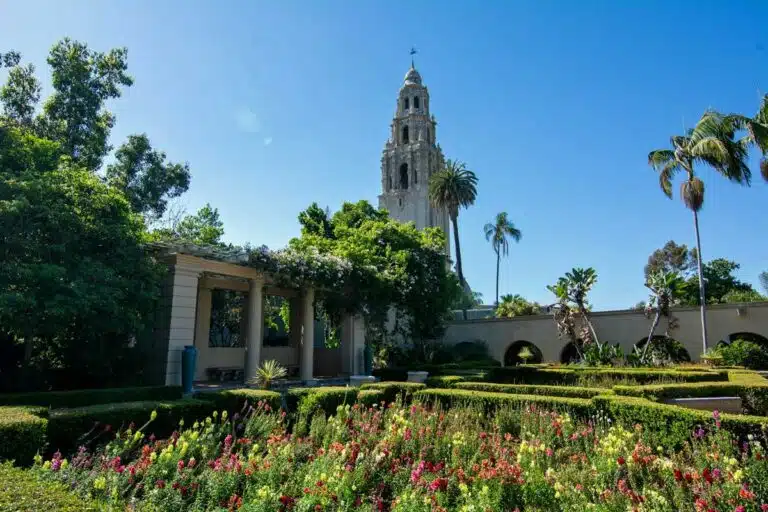
San Diego is one of the most naturally blessed cities on the American Pacific coast — a Mediterranean climate, a deep-water bay, the US Navy’s largest Pacific base and a cultural district in Balboa Park that packs more museums into a single walkable park than most American cities have across their entire metropolitan area. The city’s military heritage is tangible and serious: the USS Midway is one of the most impressive warship museum experiences in the world, and the Maritime Museum of San Diego holds the finest collection of historic sailing vessels on the West Coast. Beyond the museums, Cabrillo National Monument marks the point where Europeans first set foot on the Pacific coast of North America, and the waters off San Diego are one of the most reliable places in California to encounter wild sea lions in their natural habitat. These guides cover San Diego’s key attractions with practical information on ticket prices, opening hours, parking and what to expect on arrival.
Balboa Park: museums, art and science
Balboa Park is one of the largest urban cultural parks in the United States — a 1,200-acre expanse of Spanish Colonial Revival buildings, formal gardens and museum institutions in the heart of the city. The five attractions below are all within the park, close enough to combine two or three in a single day, and the Balboa Park Explorer Pass offers good value for those visiting multiple institutions.

- California Tower, Balboa Park: ticket prices, opening hours and visitor tips — the 200-foot Spanish Colonial Revival tower at the heart of Balboa Park, built for the 1915 Panama-California Exposition and now open for guided climbs offering the finest panoramic views over the park, the city and San Diego Bay, with access through the Museum of Us (formerly the Museum of Man).
- San Diego Air and Space Museum: ticket prices, hours and visitor tips — a significant aviation and space museum in Balboa Park’s Ford Building, with historic aircraft spanning from early biplanes to a Apollo 9 command module, and strong exhibits on the role San Diego’s aerospace industry played in the development of American aviation.
- San Diego Museum of Art: ticket prices, hours and visitor tips — the largest art museum in San Diego, in a Spanish Baroque Revival building on the Plaza de Panama, with a permanent collection covering European old masters, American art and an outstanding collection of South Asian art that is among the finest in any American regional museum.
- San Diego Natural History Museum: ticket prices, hours and visitor tips — one of the oldest scientific institutions in the American West, with dinosaur skeletons, a strong California and Baja California biodiversity focus and an IMAX theatre, housed in a building that anchors the eastern end of Balboa Park’s El Prado promenade.
- Fleet Science Center, San Diego: ticket prices, hours and visitor tips — a hands-on science museum in Balboa Park with interactive exhibits across two floors, a Giant Dome IMAX Theatre and programming that makes it one of the most family-focused of the park’s institutions, well suited to combining with the Natural History Museum next door.
Naval and maritime heritage
San Diego’s identity has been shaped by the US Navy more profoundly than almost any other American city, and two of its most rewarding paid attractions sit on the waterfront at Navy Pier and the Embarcadero — within easy walking distance of each other and strong enough to fill a full day between them.
- USS Midway Museum, San Diego: opening hours, tickets and visitor guide — a decommissioned aircraft carrier moored at Navy Pier, the longest-serving American carrier of the 20th century, with a self-guided audio tour through the flight deck, hangar bay, bridge and engine rooms, over 30 restored aircraft on the flight deck and the most comprehensive warship museum experience on the US West Coast.
- Maritime Museum of San Diego: parking, prices, hours and visitor tips — the finest collection of historic vessels on the Pacific Coast, moored along the Embarcadero, with the Star of India — the world’s oldest active sailing ship, built in 1863 — as the centrepiece, alongside a Cold War submarine, a steam ferry and several other historic craft available for boarding.
Outdoor San Diego: headlands, sea lions and coastal wildlife
San Diego’s outdoor appeal extends beyond its beaches. The Point Loma peninsula holds one of the most historically significant sites on the Pacific Coast; the waters of the bay and the nearshore kelp forests make the city one of the best places in California to encounter marine wildlife without a boat trip or a wetsuit.
- Cabrillo National Monument, San Diego: ticket prices, hours and visitor tips — a National Park Service monument on the tip of the Point Loma peninsula, marking the site where Juan Rodríguez Cabrillo became the first European to set foot on the Pacific coast of what is now the United States in 1542, with a restored lighthouse, tidepools accessible at low tide, gray whale watching in season and the finest panoramic views over San Diego Bay available from any accessible point.
- The best places to see sea lions in California: a complete guide — a guide to the most reliable locations across California for close encounters with wild California sea lions, covering the accessible San Diego spots alongside other major haul-out sites up the coast, with practical information on timing, access and responsible watching distances.
Planning your San Diego visit
San Diego’s climate is genuinely exceptional — warm, dry and reliably sunny almost year-round, with the marine layer bringing overcast mornings to coastal areas in May and June (locally known as “May Grey” and “June Gloom”) but clearing by afternoon. A car is useful for reaching Cabrillo National Monument on Point Loma, but Balboa Park, the Embarcadero and the Gaslamp Quarter are all connected and walkable. The Balboa Park Explorer Pass gives access to multiple museums for a single fee and is worth buying if visiting three or more park institutions. The USS Midway requires between two and four hours; the Maritime Museum is best combined with it on the same day given their proximity on the waterfront.
How many days do you need in San Diego?
Three days covers San Diego’s main attractions comfortably. A first day suits Balboa Park — two or three museums, the California Tower climb and a walk through the park’s gardens and Spanish Colonial architecture. A second day works well for the waterfront — the USS Midway in the morning and the Maritime Museum in the afternoon. A third day suits Cabrillo National Monument and the Point Loma tidepools, with time for the La Jolla sea lion colony and the Old Town San Diego State Historic Park.
What is San Diego best known for?
San Diego is best known for its beaches, its zoo (considered one of the finest in the world), its US Navy presence and its reliably warm climate. Among cultural visitors it is known for Balboa Park — one of the most concentrated museum districts in the American West — and the USS Midway. The La Jolla Cove sea lion colony, the Gaslamp Quarter and Old Town San Diego are also major draws. The city’s position on the Mexican border, with Tijuana accessible in under 30 minutes by trolley, gives it a cross-border dimension that distinguishes it from other California cities.