Naxos is the largest island in the Cyclades — bigger than Mykonos and Santorini combined. Most visitors spend their time on its western beaches and never venture inland. That’s a genuine loss. The island’s interior holds ancient temples, marble-paved mountain villages and an unfinished kouros statue abandoned in a quarry 2,500 years ago and never moved. This full-day bus tour covers the lot in eight hours, with hotel pick-up included.
Check dates and book the Naxos highlights bus tour →
Why inland Naxos is worth a day of your time
Naxos has been shaped by two industries: marble quarrying and emery mining. Both go back millennia. The island’s marble was used across the ancient Greek world. Its emery — the hardest natural abrasive known before synthetic alternatives — was exported well into the 20th century. The evidence is everywhere inland: in quarry scars on hillsides, in marble-flagged village streets and in the kouroi statues left unfinished in their quarry beds when they cracked.
The island is also genuinely fertile — unusual among the Cyclades. It produces its own potatoes, cheese, citrus fruit and a unique citron liqueur called kitron, made from a citrus variety found only on Naxos. The inland villages feel like a different world from the beach towns.
Book the Naxos bus tour on Viator →
What the tour covers: stop by stop
Temple of Demeter, Sangri
The first stop is the Temple of Demeter at Gyroulas, near the village of Sangri. Built around 530 BC in Naxian marble, it is one of the island’s most significant ancient monuments. An on-site archaeological museum holds finds from the sanctuary. Entrance costs €5 per person, payable in cash on the day.
Note: the tour guide is not licensed to lead inside the temple. You receive a full briefing at the gate before entering independently. On Tuesdays the site is closed — the tour extends time at other stops instead.
Damalas: pottery and olive oil
The village of Damalas sits in the Tragea valley — the green, olive-covered heartland of the island. The stop includes a demonstration at one of the last traditional pottery workshops still operating on Naxos. You also visit a restored traditional olive press.
Halki: the old capital
Halki (also written Chalki) was the island’s capital for much of its history. It retains neoclassical facades, Venetian towers and the Vallindras Citron Distillery — operating since 1896. A tasting of kitron liqueur costs €3. The village is compact and unhurried, with good cafes in the main square.
Apeiranthos: the marble village
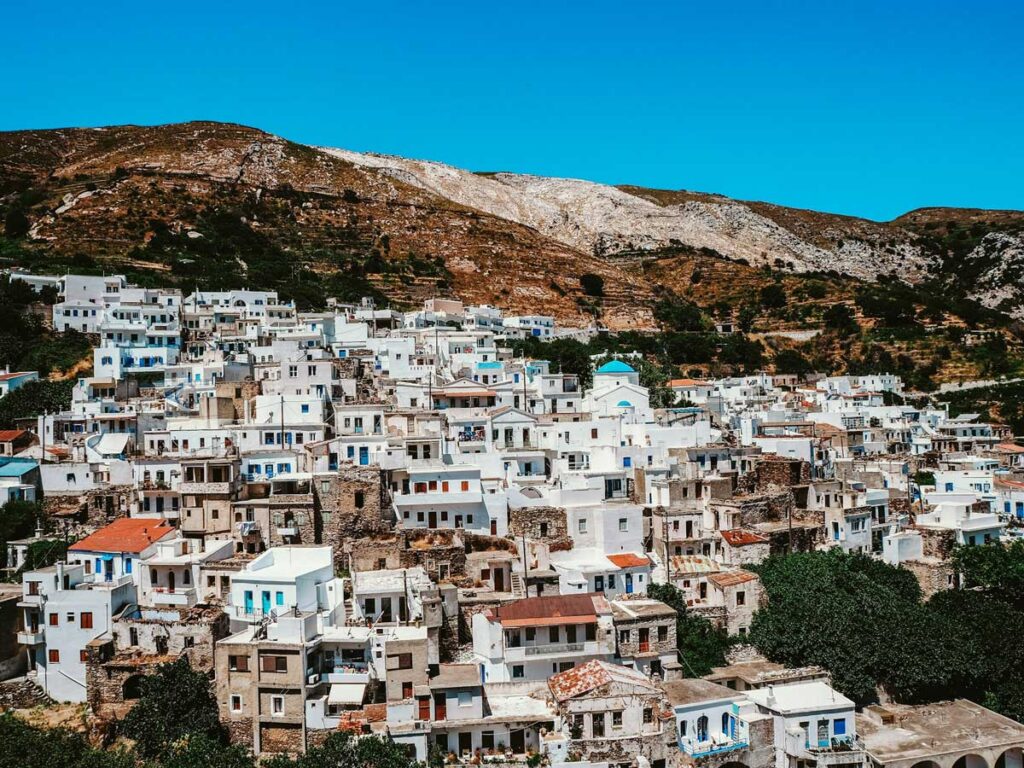
Apeiranthos is widely considered the most striking village on Naxos. Its streets, pavements and building facades are all marble. It has four small museums — archaeological, natural history, fine arts and geological. The tour stops here for 90 minutes, which is long enough to wander properly, browse local shops and have lunch.
The local dishes to try are rosto (slow-cooked meat) and kalogiros (stuffed aubergines). Both appear on taverna menus throughout the village.
Apollonas: beach stop
Apollonas is a small fishing village on the island’s northern coast. The tour stops here for around 45 minutes — enough time for a swim, a coffee by the harbour or a quick lunch if you skipped it at Apeiranthos. The drive north passes through Koronos village and the old emery mine workings, which are visible from the road.
The Kouros of Apollonas
The final site is the Apollonas Kouros — an unfinished marble statue measuring 10.5 metres, lying in the same position it was abandoned over 2,500 years ago. Archaeologists debate whether it depicts Apollo or Dionysus. It cracked during carving and was left where it fell. It is one of three kouroi on the island; this is the largest and most dramatic.
The return route follows the island’s west coast road — one of the most scenic drives on Naxos, with continuous views over the Aegean.
Practical details
| Duration | 8 hours (full day) |
| Rating | 4.8/5 from 1,254 reviews (Viator and TripAdvisor combined) |
| Group size | Up to 49 people |
| Pick-up | Naxos Town, Stelida, Agia Anna, Agios Prokopios and Plaka Beach |
| What’s included | Bus transport, English-speaking escort, hotel pick-up and drop-off |
| Not included | Entrance fees (Temple of Demeter €5, kitron tasting €3), lunch |
| Note | Mountain roads — carry travel sickness medication if needed |
| Cancellation | Full refund if cancelled 24 hours before departure |
What visitors say
The tour consistently draws praise for its pacing and the quality of the scenery on the mountain roads. Travellers repeatedly note they saw far more of the island than they would have managed independently — both in terms of distance covered and sites discovered. The 90-minute stop at Apeiranthos is frequently highlighted as the standout of the day.
One practical note from recent visitors: get off the bus promptly at each stop and explore immediately. Time passes quickly at each location.
Book the tour
The Naxos highlights bus tour is bookable through Viator with free cancellation up to 24 hours before departure. It runs daily except Tuesdays (when the Temple of Demeter is closed). During peak season — July and August — spots fill quickly.
See availability and book the Naxos bus tour →
Frequently asked questions
What is the Temple of Demeter on Naxos?
The Temple of Demeter at Gyroulas near Sangri dates to around 530 BC. It was built in white Naxian marble as a sanctuary to the goddess of grain and agriculture. The site was largely dismantled in the Byzantine era for building materials but has since been substantially restored. An on-site museum holds sculpture fragments and other finds from the excavation.
What is a kouros statue?
A kouros (plural: kouroi) is a large-scale ancient Greek statue of a standing male figure, typically nude. They date mostly from the 7th to 5th centuries BC and were used as grave markers or votive offerings at sanctuaries. The Apollonas Kouros on Naxos measures 10.5 metres and was abandoned in its quarry when it cracked during carving — and has never been moved.
What is kitron liqueur?
Kitron is a liqueur made from the leaves of the citron tree, a citrus variety grown almost exclusively on Naxos. It has been produced on the island since antiquity. The Vallindras Distillery in Halki has been making it since 1896. It is available in three strengths and several degrees of sweetness.
Is Naxos worth visiting beyond the beaches?
Naxos has more to offer inland than almost any other Cycladic island. It is the most fertile island in the group, with a distinct agricultural interior, a network of well-preserved mountain villages and more ancient sites than most visitors realise. The beaches on the west coast are genuinely excellent — but spending a full day on the island without seeing the interior is a missed opportunity.
Does the tour run on Tuesdays?
Yes — but on Tuesdays the Temple of Demeter is closed. The tour runs as normal but spends additional time at Halki and Apeiranthos instead. This is worth knowing if the temple is a priority for you.
More Cyclades travel guides
- Is there any accommodation on Delos?
- Do you need a guided tour for Delos?
- The cisterns of Delos.
- Mykonos beach guides: What to expect when visiting Kalafati Beach.
- Practical guide to visiting the Yria Archaeological Site on Naxos.