The Ephesus Museum (Turkish: Efes Müzesi) is a state-run archaeological museum located in the town centre of Selçuk, in İzmir Province, western Turkey. This guide covers opening hours, ticket prices, transport, parking, accessibility, and practical visitor tips.
Last updated: May 2026. The museum’s summer closing time is 20:00 (ticket office 19:30), which is later than the 19:00 closing shown in a number of older online guides. Always verify current hours at the official website, muze.gov.tr, before visiting.
Quick facts
| Detail | Information |
|---|---|
| Opening hours (summer) | 08:30–20:00 daily (approx. April–September; ticket office closes 19:30) |
| Opening hours (winter) | 08:30–17:30 daily (approx. October–March) |
| Standard ticket | €10 per person |
| Address | Atatürk Mahallesi, Uğur Mumcu Sevgi Yolu, No: 26, Selçuk, İzmir |
| Nearest public transport | Selçuk train station (İZBAN line from İzmir); ~5–10 minute walk |
| Parking | Available on-site and in the surrounding town centre |
| Typical visit duration | 45 minutes to 1 hour |
Ephesus Museum opening hours
The museum is open every day of the year. In summer (approximately April–September), it opens at 08:30 and closes at 20:00; the ticket office closes at 19:30 and the last entry is 20 minutes before closing. In winter (approximately October–March), closing time reduces to 17:30.
On the first day of major religious holidays (Eid al-Fitr and Eid al-Adha), the museum does not open until 13:00 under standard Turkish Ministry of Culture policy. All other public and national holidays it remains open as normal. Exact seasonal changeover dates vary by year; confirm at muze.gov.tr before visiting.
Why book the Best of Ephesus Tour from Kusadasi Port?
- 🏛️ The Library of Celsus & Grand Theatre: Walk through one of the best-preserved Greco-Roman cities in the world, marveling at the two-story facade of the iconic library and the massive 25,000-seat theatre where St. Paul once preached.
- 🙏 House of the Virgin Mary: Visit this peaceful pilgrimage site nestled on Nightingale Mountain, believed by many to be the final residence of Mary, and explore the sacred spring and wishing wall.
- 🏺 Temple of Artemis: Stand on the site of one of the Seven Wonders of the Ancient World; though only ruins remain, the historical significance of this once-colossal temple to the goddess Diana is a must-see for history buffs.
- ⚓ Hassle-Free Shore Excursion: Specifically designed for cruise passengers, this tour offers flexible pick-up directly from the Kusadasi Port with a “back-to-ship” guarantee, ensuring you make the most of your limited time ashore.
- 🎓 Private Professional Guidance: Enjoy a personalized experience with a certified local guide who brings the ruins to life with stories of ancient Roman daily life, gladiatorial combat, and the city’s role in early Christianity.
Ephesus Museum ticket prices
The standard admission fee is €10 per person. Tickets can be purchased at the entrance kiosk on arrival; no advance booking is required or available. The Museum Pass Türkiye (€165, valid for 15 days at over 270 state sites across Turkey) covers admission and is a practical option for visitors planning multiple sites. The Museum Pass The Aegean (€95, valid for 7 days, covering major Aegean sites) also includes the Ephesus Museum. Both passes can be purchased at the entrance.
The MüzeKart (displayed on the official website) is valid for Turkish citizens and residents only. Children under 8 enter free on presentation of a passport or identity document. The museum ticket is separate from the ticket for the Ephesus Archaeological Site (ruins), which costs €40 and is sold at the Ephesus site gates, approximately 3 km away.
The Ephesus Museum is not included in any international city pass scheme such as Go City. The Museum Pass Türkiye and Museum Pass The Aegean are the relevant multi-site passes for international visitors.
Opening hours and ticket prices were checked on the official website and last updated in May 2026.
How to get to the Ephesus Museum
The museum is in Selçuk town centre, directly opposite the bus station. It is approximately 70 km from İzmir and 20 km from Kuşadası.
The most practical public transport option from İzmir is the İZBAN suburban train, which runs from İzmir Adnan Menderes Airport and İzmir city centre directly to Selçuk station. The journey takes approximately 1 to 1.5 hours depending on the starting point. Selçuk station is a 5–10 minute walk from the museum. Long-distance coaches from İzmir Otogar (main bus terminal) also serve Selçuk regularly.
From Kuşadası, dolmuş (shared minibuses) run to Selçuk and take approximately 20–25 minutes. Taxis from Kuşadası cost approximately 200–350 TRY.
Parking at the Ephesus Museum
Parking is available in the museum grounds and in the surrounding streets of Selçuk town centre. The town is compact and parking is generally straightforward outside the peak summer months. In July and August, Selçuk becomes busy; arriving before 09:00 avoids most congestion.
How long to spend at the Ephesus Museum
Plan for 45 minutes to 1 hour to walk through all the galleries at a comfortable pace. The museum is compact and fully air-conditioned, making it a practical break from the midday heat if you are also visiting the outdoor Ephesus site. Visitors with a strong interest in the collection may prefer to allow up to 90 minutes.
Accessibility at the Ephesus Museum
The museum is a modern indoor building, fully renovated in 2014, with level or ramped access between sections. It is air-conditioned throughout. Visitors with specific mobility requirements are advised to contact the museum directly before visiting: efesmuzesi@kultur.gov.tr or +90 232 892 6010.
Inside the Ephesus Museum: what to see
The museum organises its collection by theme and find location across a series of interconnected galleries, with labels in Turkish and English throughout.
Hall of Artemis Temple Findings and Artemis Gallery: The centrepiece of the museum. Two large statues of the Ephesian Artemis dominate the space. The Great Artemis (1st century AD) and the Beautiful Artemis (2nd century AD) are the most photographed exhibits in the building. Both depict Artemis with a high temple-shaped headdress and rows of globules on the chest, long interpreted as symbols of fertility.
Hall of Fountain Findings: Sculptures recovered from the Pollio Fountain at Ephesus. The Resting Warrior — a marble figure in a semi-reclining pose — is among the most technically accomplished pieces in the collection.
Hall of Terrace Houses Findings: Objects from the excavated Terrace Houses at Ephesus, including mosaic fragments, fresco sections, glassware, and domestic items. This gallery provides context for visitors who have also toured the Terrace Houses at the site.
Imperial Cult and Roman Period Gallery: Marble portraits of Roman emperors, including a notable statue of Marcus Aurelius (2nd century AD). The Head of Eros, a replica of Lysippos’ Eros Stringing the Bow (330–320 BC), and a small bronze of Eros with Dolphin are exhibited here.
Coins and Treasures Hall: A display of ancient coins spanning multiple periods, alongside jewellery and small finds. The collection includes material from Çukuriçi Mound, where the oldest object in the museum — a stamp dated to approximately 6200 BCE — was recovered.
Inner Garden: Architectural fragments, inscriptions, and large sculptural pieces are displayed in the outdoor courtyard. White stork nests on the roof of the building are a noted local feature in spring and early summer.
Practical visitor tips
| Tip | Detail |
|---|---|
| Visit the museum before or after the ruins, not during | The museum is 3 km from the Ephesus site. You cannot walk between them inside the site boundary — you must exit and travel separately. Plan your sequence before arriving. |
| Use the museum as a midday break | The museum is fully air-conditioned. Many visitors find it most comfortable to walk the outdoor ruins in the morning, then visit the museum during the hottest part of the day. |
| Audio guides are available | An audio guide service is confirmed on the official muze.gov.tr listing. Enquire at the entrance kiosk on arrival for languages and rental cost. |
| The museum does not require advance booking | Tickets are sold at the door. There is no online reservation system and the museum does not sell out. |
| The gift shop and café are on-site | A gift shop selling books, replica artefacts, and jewellery is located in the museum. A café is in the courtyard. |
Frequently asked questions about the Ephesus Museum
| Question | Answer |
|---|---|
| Is the Ephesus Museum the same as the Ephesus archaeological site? | No. The museum is a separate indoor institution in Selçuk town centre, approximately 3 km from the Ephesus ruins. Each requires its own ticket. |
| Is the Ephesus Museum suitable for children? | Yes. The galleries are accessible and well-labelled. Children under 8 enter free on presentation of a passport or identity document. |
| Is the Ephesus Museum open on Sundays? | Yes. The museum is open every day of the year, including Sundays. |
| Is the Museum Pass Türkiye accepted at the Ephesus Museum? | Yes. Both the Museum Pass Türkiye (€165/15 days) and the Museum Pass The Aegean (€95/7 days) cover admission. The MüzeKart is valid for Turkish citizens only. |
| How far is the Ephesus Museum from the Ephesus ruins? | Approximately 3 km. You cannot walk between the two within the site — a taxi, dolmuş, or car is needed. A taxi from the lower gate of Ephesus costs approximately 50–100 TRY. |
Things to do near the Ephesus Museum
All five attractions below are within Selçuk or immediately adjacent to it and can be combined on the same day.
- Ephesus Archaeological Site (~3 km): The main open-air ruins of the ancient city, including the Library of Celsus, Great Theatre, and Curetes Street.
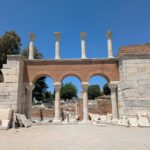
- Basilica of St. John, Ayasuluk Hill (~1 km): A large 6th-century Byzantine basilica built over the traditional burial site of the Apostle John, with views across the Selçuk plain. Covered by the Museum Pass The Aegean.
- Ayasuluk Castle (~1 km): A medieval fortress on the hill above the Basilica of St. John, with panoramic views and well-preserved walls.
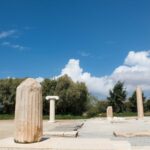
- Temple of Artemis ruins (~1.5 km): The remains of one of the Seven Wonders of the Ancient World. A single column and scattered foundations survive at ground level. Free to visit.
- Şirince Village (~8 km by road): A small hilltop village known for its Ottoman-era architecture, fruit wines, and local handicraft shops. Accessible by dolmuş or taxi from Selçuk.
What to visit tomorrow: other archaeological museums within two hours
- İzmir Archaeological Museum, İzmir (~70 km, ~1 hour): A large state museum in the İzmir city centre holding major finds from across the Aegean region, including sculptures from Smyrna and Pergamon. Covered by the Museum Pass Türkiye.
- Miletus Ancient City, Balat (~90 km, ~1.5 hours): The well-preserved ruins of a major Ionian city, including a large Roman theatre. A small site museum displays finds from the excavations. Covered by Museum Pass Türkiye.
- Didyma (Temple of Apollo), Didim (~90 km, ~1.5 hours): One of the largest temples of antiquity, with substantial standing columns. The site museum holds decorative fragments and inscriptions. Covered by Museum Pass Türkiye.
- Aphrodisias Ancient City and Museum, Geyre (~140 km, ~2 hours): A UNESCO World Heritage Site with an exceptionally well-preserved stadium and a high-quality on-site museum housing sculptures from the excavations. Covered by Museum Pass Türkiye.
- Manisa Museum, Manisa (~80 km, ~1.5 hours): A regional archaeological museum holding Lydian, Greek, and Roman finds from the surrounding area, including material from the ancient city of Sardis.
More Turkey travel
Other Turkey travel articles on Planet Whitley include:
- The best entrance gate for Ephesus.
- Why bother seeing the Nike relief at Ephesus.
- The best time to visit the House of the Virgin Mary near Ephesus.
- Planning a visit to the Basilica of St John in Ephesus.
- Cappadocia red tour vs green tour: Which should you choose if you can only pick one?