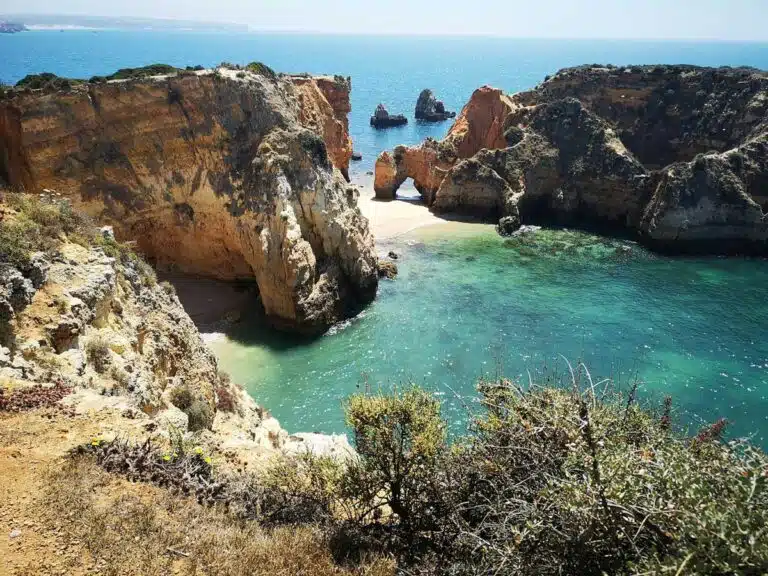
The Algarve delivers far more than the beach holiday reputation suggests — dramatic sea caves and golden limestone cliffs define a coastline unlike anywhere else in Europe, inland towns like Silves and Tavira have medieval castles and genuine Portuguese character, and the Ria Formosa Natural Park is one of the most significant coastal lagoon ecosystems on the Atlantic. The region’s three main towns each offer distinct appeal: Faro is the practical gateway with a surprisingly good historic centre; Lagos combines dramatic coastal scenery with a lively restaurant and nightlife scene; and Tavira is the most authentically Portuguese of the three, quietly rewarding visitors who venture east of the main resort corridor. These guides cover the Algarve’s key attractions with practical information on ticket prices, opening hours, parking and what to expect on arrival.
Town guides: Faro, Lagos and Tavira
The Algarve’s three most rewarding towns each merit at least a full day of exploration beyond the beach. These comprehensive guides cover what to see, where to eat and how to experience each town beyond the obvious.
- Faro travel guide for first-time visitors — the Algarve’s regional capital and airport gateway, with a walled old town, a Gothic cathedral, an atmospheric Jewish cemetery and the extraordinary Igreja dos Ossos bone chapel, making it a more substantial destination than most visitors passing through the airport realise.
- Lagos travel guide for first-time visitors — a historic town on the western Algarve with some of the region’s most dramatic cliff and cave coastline, a well-preserved old town with significant Portuguese Age of Discovery heritage, and a concentrated restaurant and bar scene that makes it the most vibrant of the Algarve’s towns in the evenings.
- Tavira travel guide for first-time visitors — the most authentically Portuguese town in the Algarve, in the quieter eastern stretch of the coast, with a Roman bridge, more churches per capita than almost anywhere in Portugal, a well-regarded market and a character shaped by its tuna fishing heritage rather than mass tourism, including dedicated guides to the Nucleo Islamico museum and Tavira Castle.
Coastline, caves and sea experiences
The Algarve’s coastline is its defining attraction — a sequence of limestone sea stacks, hidden coves, sea caves accessible only by kayak or boat, and beaches that regularly feature on lists of the finest in Europe. The Ria Formosa lagoon system behind the eastern coast adds a completely different dimension: a protected natural park of extraordinary ecological significance that most beach visitors never explore.

- Benagil Cave, Algarve: why a kayak tour is the best way to see it — the famous domed sea cave with a natural skylight on the Lagoa coastline, one of the most photographed natural landmarks in Portugal, accessible only from the water and best experienced independently by kayak rather than via the crowded boat tours that circle the entrance without entering.
- Praia da Marinha, Lagoa: visitor guide with parking, facilities and practical tips — consistently ranked among the finest beaches in Europe, a small sheltered cove hemmed in by dramatic ochre limestone formations near Lagoa, with clear water ideal for snorkelling but limited parking that requires an early arrival or the walk from nearby car parks.
- Ria Formosa Natural Park: the best boat tour from Faro — a 60-kilometre lagoon system behind the eastern Algarve coast, designated a Ramsar wetland and home to flamingos, spoonbills and the rare purple gallinule, explored most rewardingly by boat tour from Faro and offering a complete contrast to the exposed Atlantic coastline to the west.
- Snorkelling with seahorses on the Algarve: where to go — the Ria Formosa lagoon system harbours one of the healthiest populations of long-snouted seahorses in Europe, and several guided snorkelling experiences operate from Faro specifically to locate them in the seagrass beds — this guide covers which operators and locations give the best chance of an encounter.
Castles, fortresses and history
The Algarve has a layered history that stretches from Moorish occupation through the Portuguese Reconquista to the Age of Discovery — all of it legible in the castles, fortresses and museums scattered across the region. Sagres Fortress, at the southwestern tip of continental Europe, is where Henry the Navigator is said to have planned Portugal’s voyages of exploration. The others range from hilltop Moorish castles to a converted sardine-canning factory housing one of the best regional history museums in Portugal.
- Sagres Fortress, Algarve: ticket prices, hours and visitor guide — a dramatic promontory fortress at the southwestern tip of continental Europe, where Henry the Navigator established his school of navigation in the 15th century, with sweeping views of the Atlantic Ocean and the surrounding clifftop landscape that makes it one of the most historically charged sites in Portugal.
- Silves Castle, Algarve: ticket prices, hours and visitor tips — a well-preserved Moorish castle built from distinctive red sandstone above the town of Silves, the former Moorish capital of the Algarve, with extensive battlements, panoramic views over the Arade River valley and a museum within the walls covering the castle’s history from the 8th century onward.
- Loulé Castle, Algarve: ticket prices, hours and visitor tips — a 13th-century castle in the heart of Loulé’s old town, adjacent to the town’s celebrated covered market, with towers to climb and a small archaeological museum, best visited on a Saturday when the surrounding market fills the streets below.
- Alcoutim Castle, Algarve: ticket prices, opening hours and visitor tips — a 14th-century riverside castle in the remote eastern Algarve village of Alcoutim, on the Guadiana River that forms the border with Spain, directly facing the Spanish castle of Sanlúcar de Guadiana across the water and offering one of the most unusual border views in Europe.
- Castelo de Castro Marim, Algarve: ticket prices, opening hours and visitor guide — a medieval hilltop castle in the far eastern Algarve with views across the Guadiana estuary to Spain and over the Castro Marim salt marshes, one of the best-preserved castles in the region and the original headquarters of the Order of Christ after the Reconquista.
- Museu de Portimão: ticket prices, opening hours and visitor guide — a history museum inside a former sardine-canning factory on the Arade River waterfront in Portimão, covering the Algarve’s social and fishing history through the preserved machinery of the original cannery and a broader exhibition on three millennia of settlement in the region — one of the most thoughtfully designed regional museums in southern Portugal.
Family attractions and theme parks
The Algarve has a well-developed family attractions sector, with several water parks, a marine theme park, a zoo and a family adventure park spread across the central and western sections of the region. These guides cover what each attraction actually involves, who it suits best and whether it’s worth the ticket price.
- Zoo de Lagos, Algarve: parking, prices, hours and visitor tips — a compact but well-regarded zoo on the western Algarve with giant tortoises, meerkats, lemurs and a walk-through gibbon island, good for families combining a zoo visit with the beaches and town of Lagos nearby.
- Slide and Splash water park, Lagoa: ticket prices, hours and visitor tips — one of the Algarve’s longest-established water parks, near Lagoa in the central Algarve, with a wide range of slides and attractions covering all age groups and a strong reputation among families returning to the region year after year.
- Aquashow Park, Quarteira: ticket prices, hours and visitor guide — a water and show park near Quarteira in the eastern central Algarve, combining water slides and pools with bird of prey shows, parrot displays and a reptile park, making it one of the more varied family attraction options in the region.
- Zoomarine, Algarve: ticket prices, hours and visitor guide — a marine theme park near Albufeira combining dolphin shows, sea lion presentations, an aquarium and water park attractions, the largest and most comprehensive marine-themed attraction in the Algarve, reviewed honestly for what it delivers and whether the ticket price reflects the experience.
- Krazy World, near Silves: ticket prices, hours and visitor tips — a family adventure park near Silves in the central Algarve, with minigolf, animal encounters, quad bikes and outdoor activities in a rural inland setting, a good option for families wanting something away from the beach and the larger commercial theme parks.
Planning your Algarve visit
The Algarve’s tourist season runs from April to October, with July and August the most crowded and most expensive months. May, June and September offer warm water, reliable sunshine and significantly more manageable crowds — particularly at popular sites like Praia da Marinha and the Benagil Cave boat departure points. A car is the most practical way to explore the region; the main coastal road (EN125) connects most towns, but inland sites like the castles of Silves, Alcoutim and Castro Marim require driving into the hills. The Faro to Lagos rail line is useful for town-hopping along the central coast without a car. Faro Airport connects directly to most major UK and European airports.
How many days do you need in the Algarve?
A week is the minimum to do the Algarve justice across its different characters. Three or four days allows the western Algarve — Lagos, the cliff and cave coastline and Sagres — plus a central day for Benagil Cave and Praia da Marinha. A week opens up the eastern Algarve — Tavira, the Ria Formosa and the Guadiana border castles — alongside time for inland towns like Silves and Loulé. Those staying two weeks can combine all of the above with a family attraction day, a boat tour and the slower inland towns that most visitors miss entirely.
What is the Algarve best known for?
The Algarve is best known internationally for its beaches — in particular the dramatic limestone cave and cliff coastline of the central Algarve around Lagoa, Carvoeiro and Albufeira. The Benagil Cave is the most photographed single attraction. Among more culturally minded visitors it is known for the Age of Discovery heritage at Sagres, the Moorish castles of Silves and Tavira, and the Ria Formosa Natural Park. Tucson is a UNESCO City of Gastronomy — an accolade that the Algarve’s equivalent status as a destination for Portuguese seafood cuisine, particularly grilled fish, cataplana stew and the local carob and fig-based sweets, has made increasingly prominent in recent years.