The famous squares of Rome
There’s a certain romance to the grand piazzas of Rome. Bernini’s symmetry and classicism makes St Peter’s Square justifiably revered worldwide, the grand fountains of Piazza Navona provide a glorious focal point for the café terraces and elsewhere, restaurants spill onto a glut of little squares.
But after hours and hours of walking around the city, I noticed that there were usually two things missing from Rome’s piazzas.
Why book the Roma Pass for your visit?
- Free entry to top attractions: Enjoy complimentary admission to many of Rome’s leading museums and archaeological sites with a Roma Pass.
- Public transport included: Use buses, trams and the metro across the city without needing separate tickets throughout the pass validity.
- Flexible duration options: Choose between 48-hour or 72-hour passes to suit how long you’re exploring Rome’s sights.
- Skip-the-line entry: Access select sites faster with priority or skip-the-line benefits where available.
- Cost-effective sightseeing: Save money compared with buying individual tickets, especially if you plan to visit several museums and landmarks.
What’s missing from Piazza Colonna?
Take a look at the photo below. It’s of Piazza Colonna. It gets its name from the Column of Marcus Aurelius, which has been there since the second century AD. I’ve not picked this square as a particularly notable one, it’s just the one where I got my camera out after spotting a pattern I’d seen elsewhere.
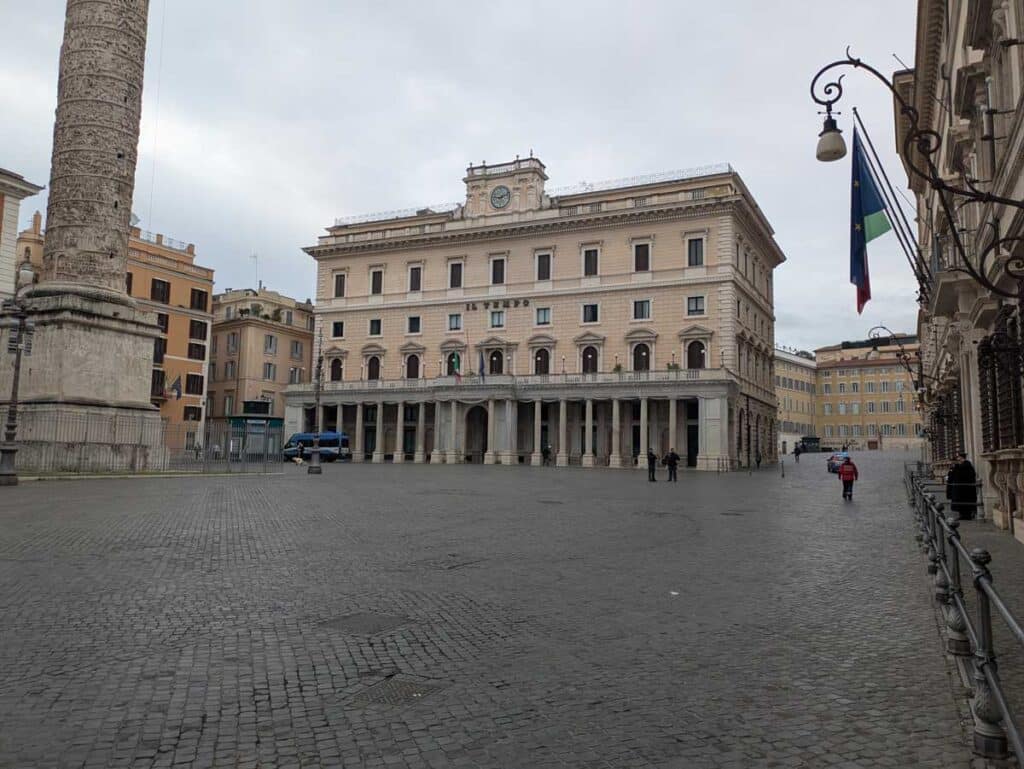
Here’s another view of Piazza Colonna. Can you see what’s missing from it?
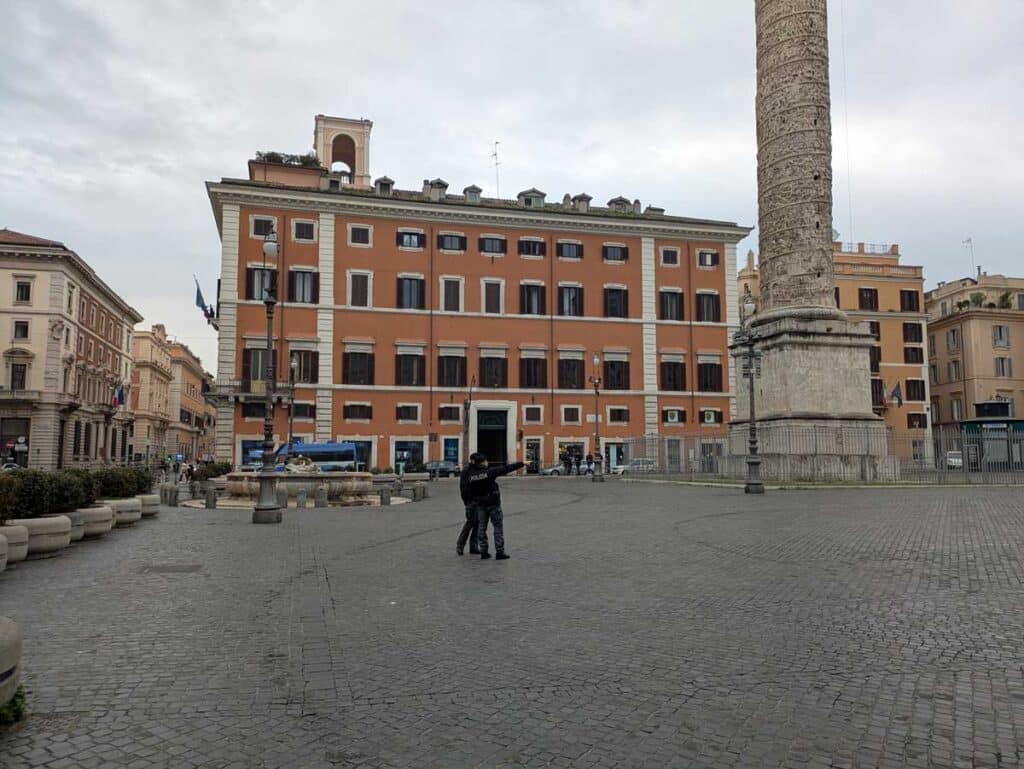
Where to sit down?
If you said ‘benches’, well done. Rome is a city you need to sit down in occasionally. The historic centre is almost entirely cobbled, and it is murderous on the ankles.
It’s also a city where you can happily eat takeaway pizza slices and gelato all day. But the problem is that there’s often nowhere to sit down and eat them.
It’s all very well having restaurant terraces all over the place, but sometimes you just want to sit down for a minute or two without having to order food and drinks. Rome probably doesn’t realise it’s doing it, but it is conducting a War on Bums.
Elsewhere, a square like Piazza Colonna would at least have a few rudimentary benches around the edges for gelato-slurpers to perch on. And, elsewhere, that square would be notably more likeable.
5 great Rome experiences to book
- 🏛️ Skip the queues on a small group tour of the Vatican, Sistine Chapel and St Peter’s.
- 🍝 Discover the tastes of Trastevere on an expert-led food tour.
- 💀 See Rome’s darker side on a combo tour of the catacombs and Capuchin Crypt.
- 👩🍳 Learn how to make fettuccine, ravioli and tiramisu at a hands-on Roman cooking class.
- 🖼️ Explore a quieter side of the city on a small group tour of the Villa Borghese Gallery and Gardens.
Green spaces in Rome
But it’s not just seating that Rome’s piazzas lack. It’s greenery, too.
Piazza Colonna has got a few token plants in ugly, circular concrete holders along the edge. But otherwise, it’s a dreary blast of grey stone and concrete. This lack of greenery is another thing that crops up time and time again. Rome really isn’t a very green city, with the major parks pushed to the edges of the historic centre, and minor parks essentially not existing.
Rome’s squares are entirely paved over. They lack the tiny gardens and flower beds that can turn an otherwise mundane square into somewhere with a sprinkling of natural charm.
Improving Rome’s public spaces
Rome is a beautiful city, drenched in history. But it can feel gruelling to get around. A few benches and plants in those fabled piazzas wouldn’t half improve that situation.
Things to do near Piazza Colonna
- The Pantheon – One of Rome’s best-preserved ancient buildings, the Pantheon is a former Roman temple with a vast concrete dome and central oculus. It is a natural companion to Piazza Colonna for visitors exploring the historic centre and ancient architecture.
- Colonna Palace – This private Baroque palace is home to the Colonna family and contains an extensive collection of paintings, sculpture and richly decorated rooms. It provides a more intimate alternative to Rome’s major public museums and is particularly relevant to Piazza Colonna’s historic setting.
- Trevi Fountain – One of Rome’s most famous fountains, Trevi Fountain is a short walk from Piazza Colonna through the historic streets around the Quirinal and Via del Corso. It is an easy addition to a visit focused on the central piazzas.
- Piazza Navona – This large public square is known for its three fountains, including Bernini’s Fountain of the Four Rivers. It offers another example of Rome’s Baroque public spaces and is a useful contrast with Piazza Colonna’s more formal setting.
- Capitoline Museums – On the Capitoline Hill, these museums contain major collections of ancient sculpture and Roman art. They provide a substantial indoor museum experience for visitors interested in the history and architecture surrounding Piazza Colonna.
Alternative attractions
- Palazzo Altemps – This Renaissance mansion houses part of the National Roman Museum and contains an important collection of classical Greek and Roman sculpture. It is a particularly relevant alternative for visitors interested in the historic palazzos and art collections around Piazza Colonna.
- Church of St Ignatius of Loyola – This spectacular Baroque church is known for its illusionistic ceiling frescoes and painted dome. It provides another opportunity to explore Rome’s artistic and architectural heritage in the historic centre.
- Basilica of Saint Mary of Minerva – Located near the Pantheon, this Gothic basilica contains works by Michelangelo and other important artworks. It is a useful alternative for visitors interested in Rome’s historic churches and the art they contain.
- Fountain of the Four Rivers – Bernini’s famous fountain in Piazza Navona depicts four major rivers through monumental figures and sculptures. It is a particularly relevant alternative for visitors interested in the public art and fountains that give Rome’s piazzas their character.
- Capuchin Crypt – Beneath the church of Santa Maria della Concezione on Via Veneto, this unusual attraction has chapels decorated with the bones and skulls of Capuchin friars. It offers a very different experience from the grand piazzas and palaces of central Rome.
More Rome articles
Other Rome stories on Planet Whitley include:
- Why I hated the Sistine Chapel.
- How Julius Caesar’s assassination site became a cat sanctuary.
- Why Rome is a brilliant city for solo travellers.
- In praise of the decent restaurant within a short walk of your hotel.
You can also test your knowledge on a Rome quiz over on sister site, Geograquiz.