The site of Julius Caesar’s assassination is now a Roman cat sanctuary. Discover the fascinating history of Largo di Torre Argentina.
Visiting Largo di Torre Argentina
Largo di Torre Argentina in Rome is a very odd place. Roads fairly heavy traffic flank what should be another concrete-heavy piazza. But instead of a square, there is a pit.
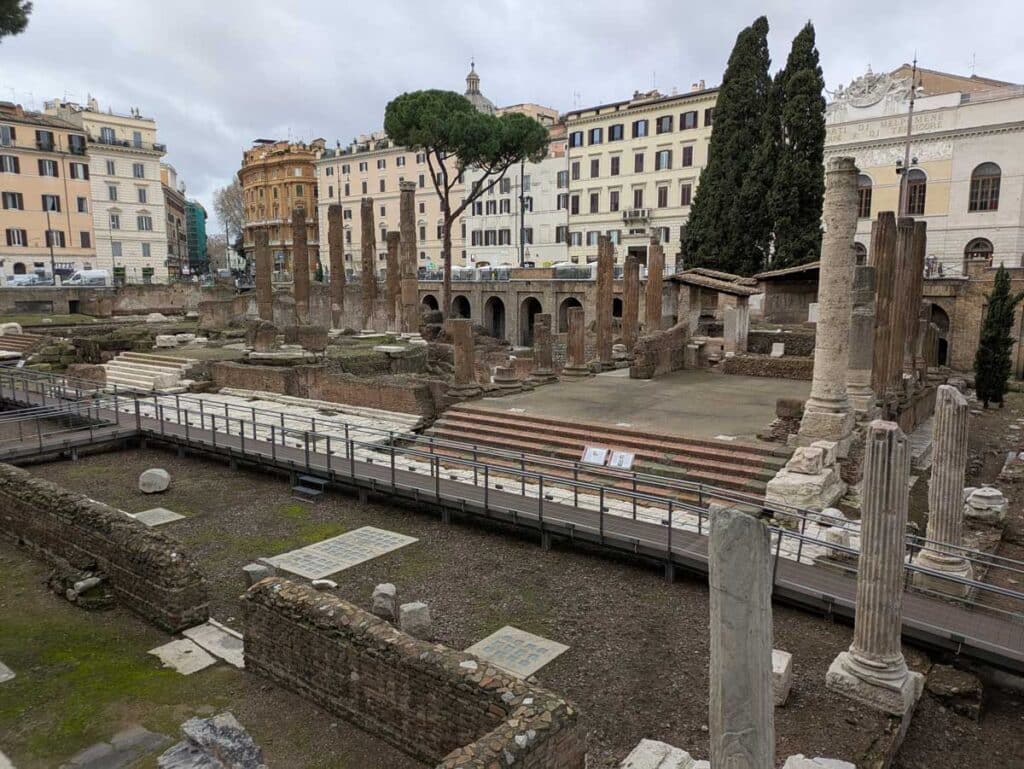
In the 1920s, demolition work to destroy the buildings of an old neighbourhood uncovered ruins from Ancient Rome. These include the Theatre of Pompey, and the Curia of Pompey next to it, where Julius Caesar was stabbed to death in 44BC.
Where was Julius Caesar assassinated?
Excavations at Largo di Torre Argentina continued until the 1970s, with four temples from the era of the Roman Republic also uncovered.
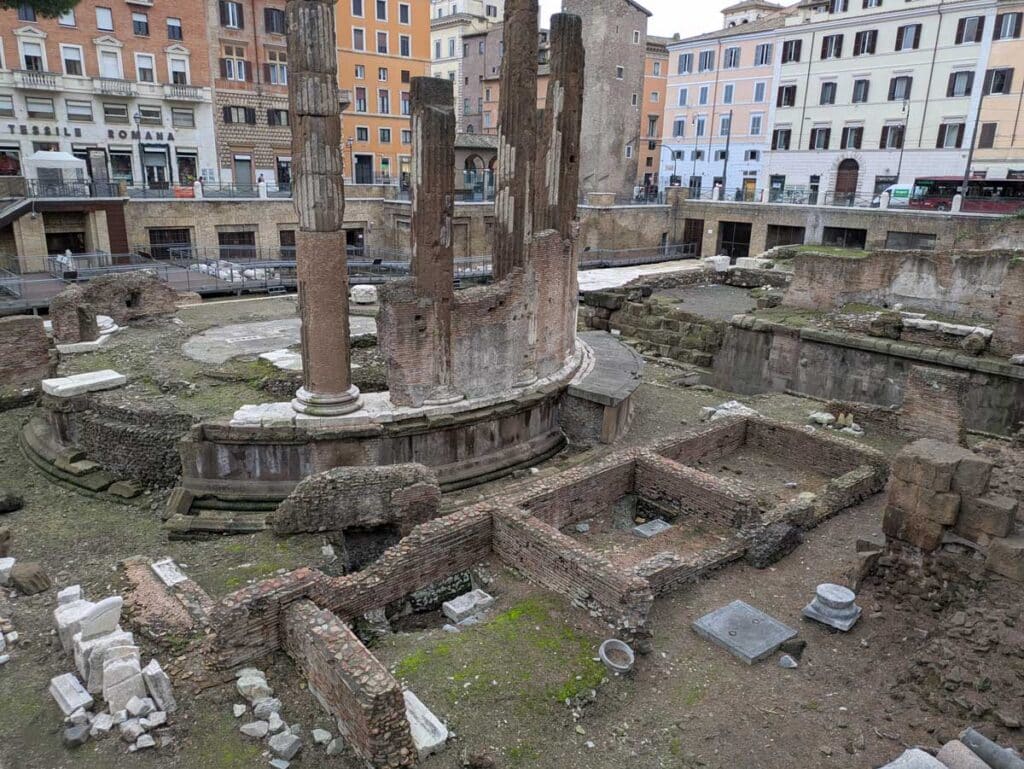
In 2019, walkways and signs were installed so that visitors can walk through the ruins of Largo di Torre Argentina. They don’t extend to Caesar’s assassination site, so if you want to see that, you’ll have to look from above. Brutus and his co-conspirators stabbed Julius Caesar to death roughly where the square foundations in front of the circular temple are.
The cats of Largo di Torre Argentina
What you might not be expecting when you visit Caesar’s assassination site is this little lady.
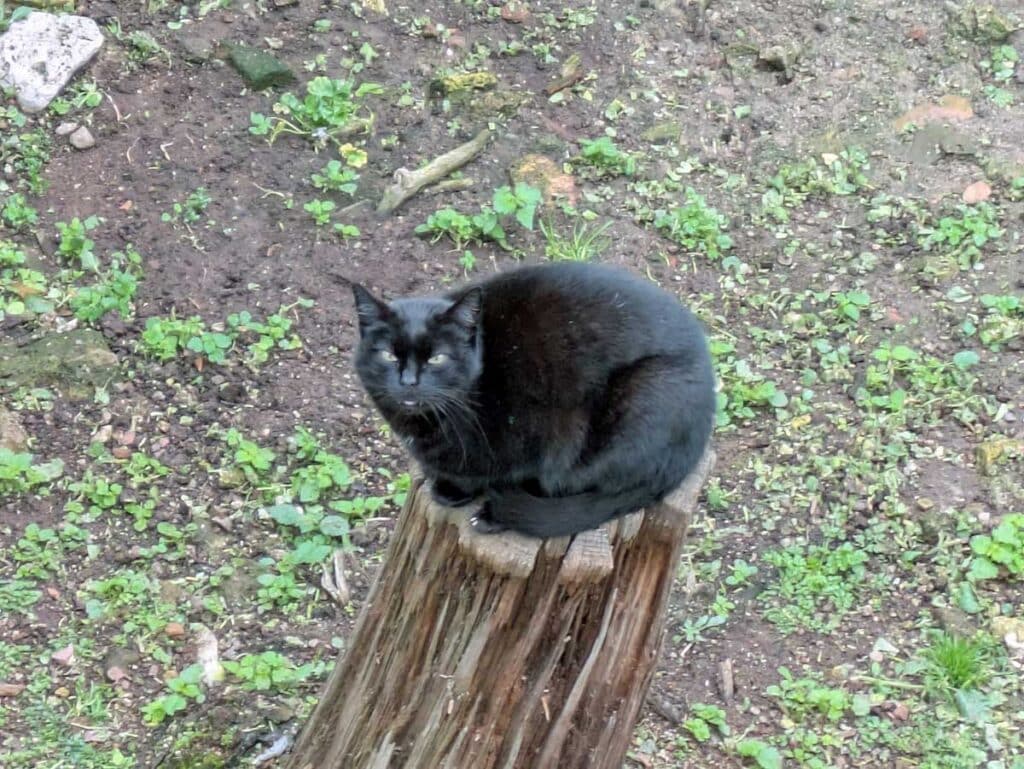
Or, indeed, her friends.
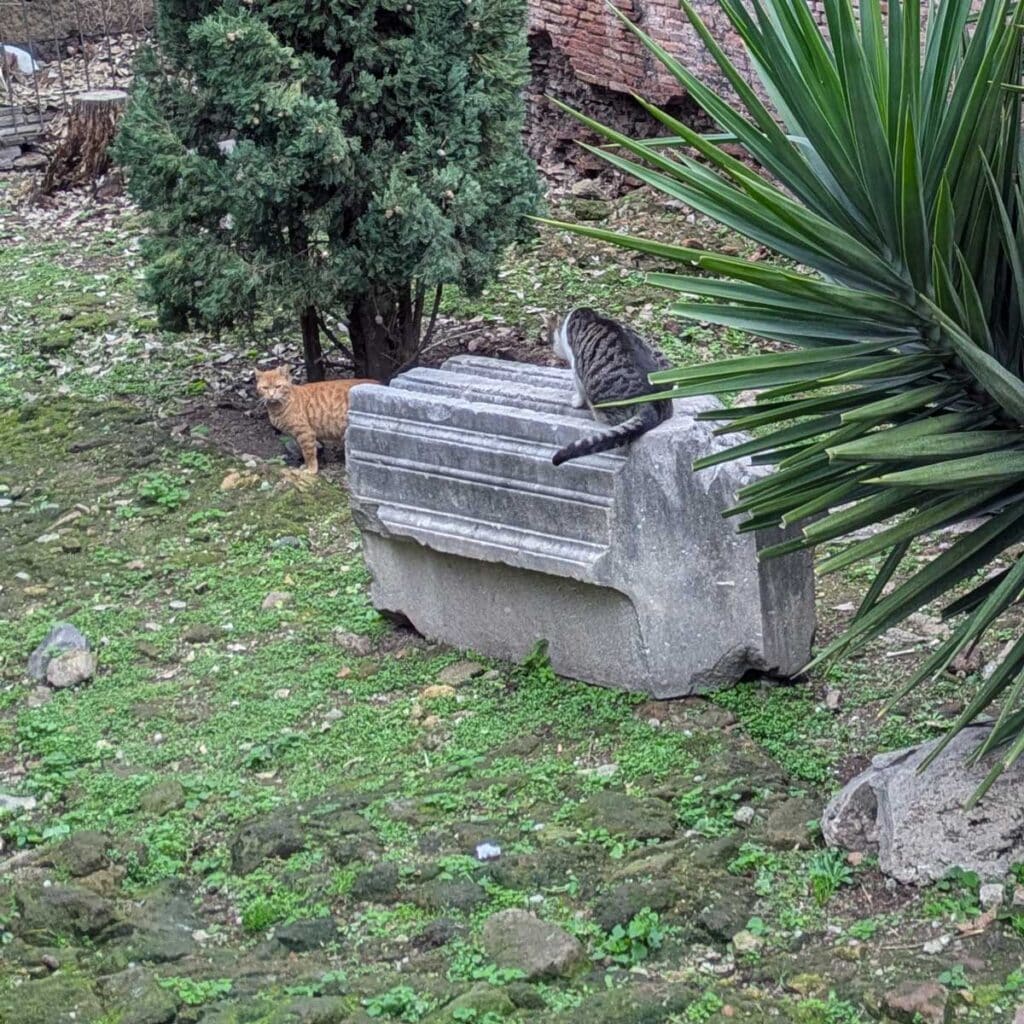
Several cats roam the ruins of Largo di Torre Argentina, and they started arriving shortly after the excavations started. The dug-out pit below street level provided cave-like shelters – the perfect place for cats to call home.
The cats were soon noticed by local women, who started to leave food for the cats.
Why book the Roma Pass for your visit?
- Free entry to top attractions: Enjoy complimentary admission to many of Rome’s leading museums and archaeological sites with a Roma Pass.
- Public transport included: Use buses, trams and the metro across the city without needing separate tickets throughout the pass validity.
- Flexible duration options: Choose between 48-hour or 72-hour passes to suit how long you’re exploring Rome’s sights.
- Skip-the-line entry: Access select sites faster with priority or skip-the-line benefits where available.
- Cost-effective sightseeing: Save money compared with buying individual tickets, especially if you plan to visit several museums and landmarks.
The creation of a cat sanctuary
Over time, the cat colony at the Largo di Torre Argentina became a permanent fixture. Feeding the cats morphed into spaying, neutering and getting veterinary treatment for the cats. By the 1990s, the Largo di Torre Argentina had become a semi-formal cat sanctuary, staffed by volunteers, and attracting attention from around the world.
These days, the Largo di Torre Argentina cat sanctuary has its own (somewhat idiosyncratic) website, allowing admirers to adopt the cats from afar or donate via Paypal to help maintain the feeding, sterilisation and care.
For visitors to Rome, however, the cats make the Torre di Largo Argentina a Roman ruin site with distinctive difference. It’s less Et Tu Brute, more Et Tu Cutie.
5 great Rome experiences to book
- 🏛️ Skip the queues on a small group tour of the Vatican, Sistine Chapel and St Peter’s.
- 🍝 Discover the tastes of Trastevere on an expert-led food tour.
- 💀 See Rome’s darker side on a combo tour of the catacombs and Capuchin Crypt.
- 👩🍳 Learn how to make fettuccine, ravioli and tiramisu at a hands-on Roman cooking class.
- 🖼️ Explore a quieter side of the city on a small group tour of the Villa Borghese Gallery and Gardens.
Things to do near Largo di Torre Argentina
- The Pantheon – A short walk away in Piazza della Rotonda, this ancient Roman temple is known for its vast concrete dome, central oculus and tomb of the artist Raphael.
- Church of St Ignatius of Loyola – This Baroque church is famous for its illusionistic ceiling fresco, which creates the impression of a dome and an extended architectural space.
- Piazza Navona – This large Baroque square is lined with cafés and historic buildings, with Bernini’s Fountain of the Four Rivers at its centre.
- Campo de’ Fiori – This lively square hosts a morning produce market and has restaurants and bars around its perimeter. A statue of philosopher Giordano Bruno stands in the centre.
- The Leonardo da Vinci Exhibition – Near Campo de’ Fiori, this interactive exhibition displays models of Leonardo’s machines and inventions inside the Renaissance Palazzo della Cancelleria.
Alternative attractions
- The Temple of Vesta – In the Roman Forum, this circular temple was associated with the Vestal Virgins, who maintained Rome’s sacred fire. Its surviving columns and foundations help convey the layout of the ancient sanctuary.
- The Colosseum and Roman Forum – Explore Rome’s best-known ancient complex, combining the amphitheatre with the remains of temples, public buildings and political spaces at the centre of the Roman Empire.
- The Baths of Caracalla – These extensive brick ruins preserve the remains of a huge imperial bath complex, with surviving halls, mosaics and evidence of the elaborate facilities used by ancient Romans.
- Castel Sant’Angelo – Originally built as Emperor Hadrian’s mausoleum, this riverside fortress later served as a papal refuge and prison. Its museum and upper terrace offer views over the Tiber and the city.
- The Capuchin Crypt – Beneath the church of Santa Maria della Concezione, this unusual attraction has chapels decorated with the bones of thousands of Capuchin friars, alongside displays about the order’s history.
More Rome travel
Other Rome articles on Planet Whitley include:
- Why I hated the Sistine Chapel.
- Plan your visit to the Borghese Gallery.
- Trevi Fountain visitor guide: Why you now have to pay to get close.
- Rome’s palaces: Plan your visit to the Palazzo Altemps and Colonna Palace.
- Rome cooking class vs food tour: Which is the best to book?
For a good selection of Rome tours and activities, hunt here.